In Tokyo, Ueno Park stands out among tourists. The park is one of the city’s largest and most accessible, and it is an easy addition to any itinerary because it is steps away from Ueno JR Station. The park was part of a temple complex owned by the Tokugawa clan during the Edo Period. Today, Ueno Park is like the 5th Avenue in New York, the Museumufer in Frankfurt, or the Museum Island in Berlin – a complex of monuments, temples, parks, and gardens (including a zoological garden), and, most importantly, museums with exhibitions ranging from collections in ethnology, anthropology, ancient art, medieval art, modern art, contemporary art, biological artifacts, and science and technology collections.
In Ueno, the complex is composed of six museums: the Tokyo National Museum, the National Museum of Nature and Science, Tokyo Metropolitan Art Museum, Ueno Royal Museum, Shitamachi Museum, and the National Museum for Western Art. These museums will not be missed by first-timers because these monuments are the first megalithic structures they will see as they come out of the train station.
I am emphasizing the Ueno museums in this post because one of them is a UNESCO World Heritage Site. That’s not the Tokyo National Museum. Although this museum is significant for those who would like a glimpse of Japan’s cultural history. This museum is the oldest and largest museum in Japan, and it is made up of multiple buildings, each like a separate museum in itself – somewhat like the important museums in New York City and London: the Metropolitan Museum and the British National Museum, respectively. The museum is of significant interest because it houses the country’s largest collection of national treasures and important cultural items.
The second on the list is the National Museum of Science and Nature, which features both scientific displays and the country’s natural history, including hands-on physics and robotics experiments and an impressive collection of mounted animals. The highlight of the museum is the 360-degree virtual theater, which was closed when I was there. And nope, this is not a World Heritage Site.
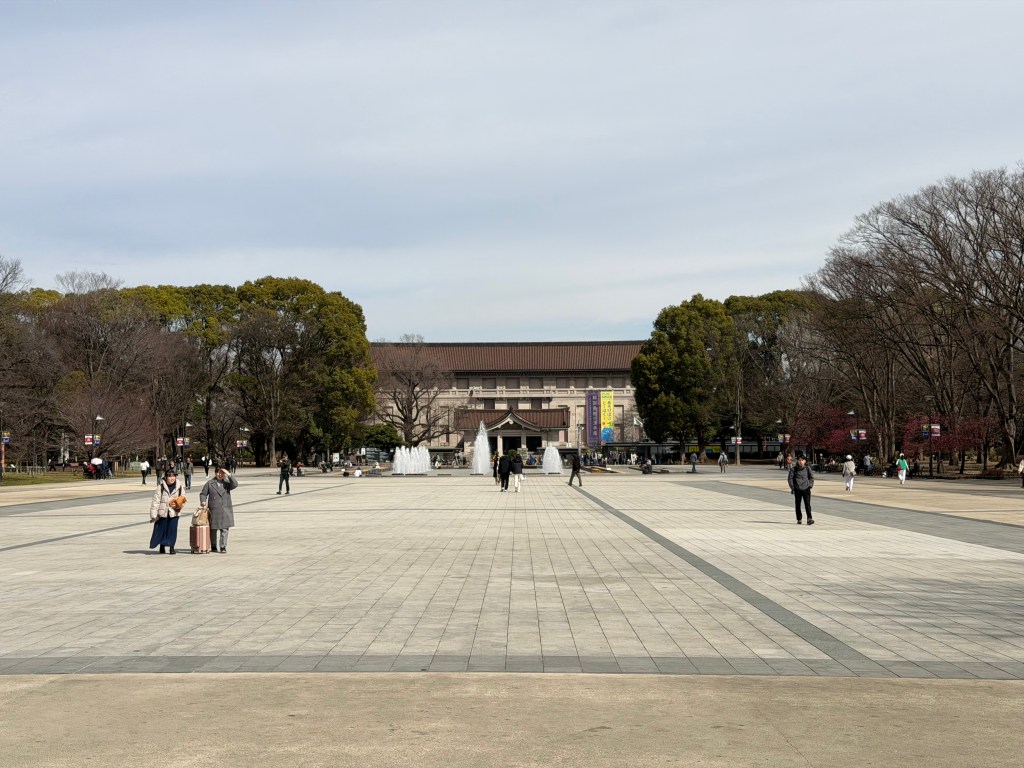
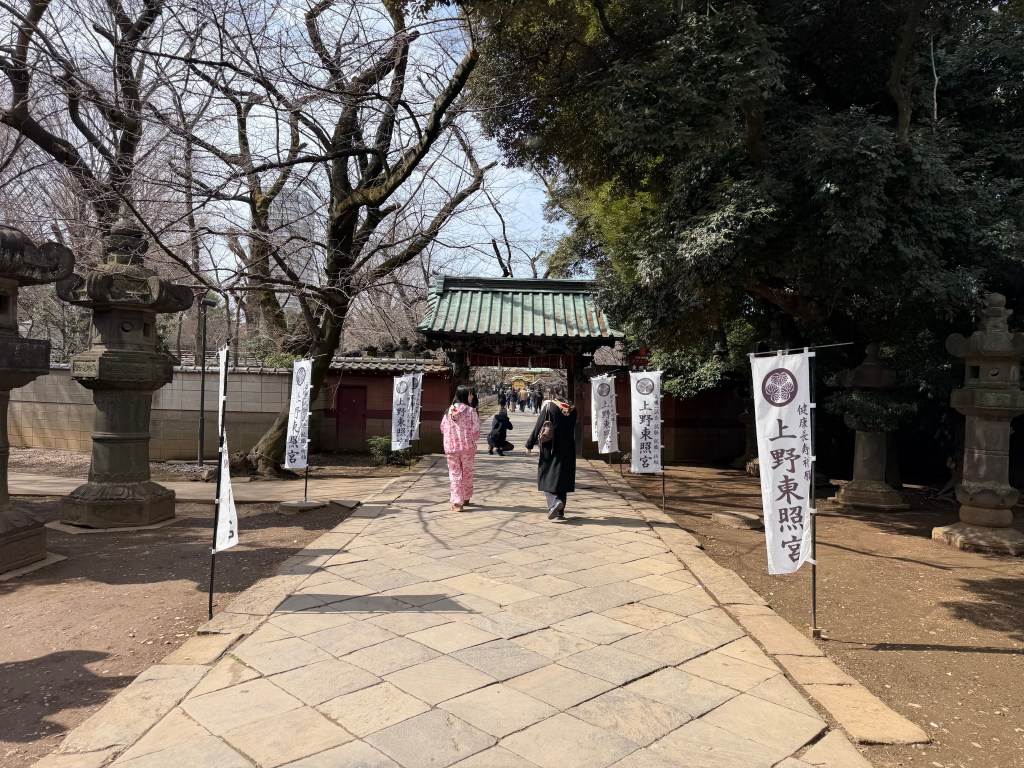
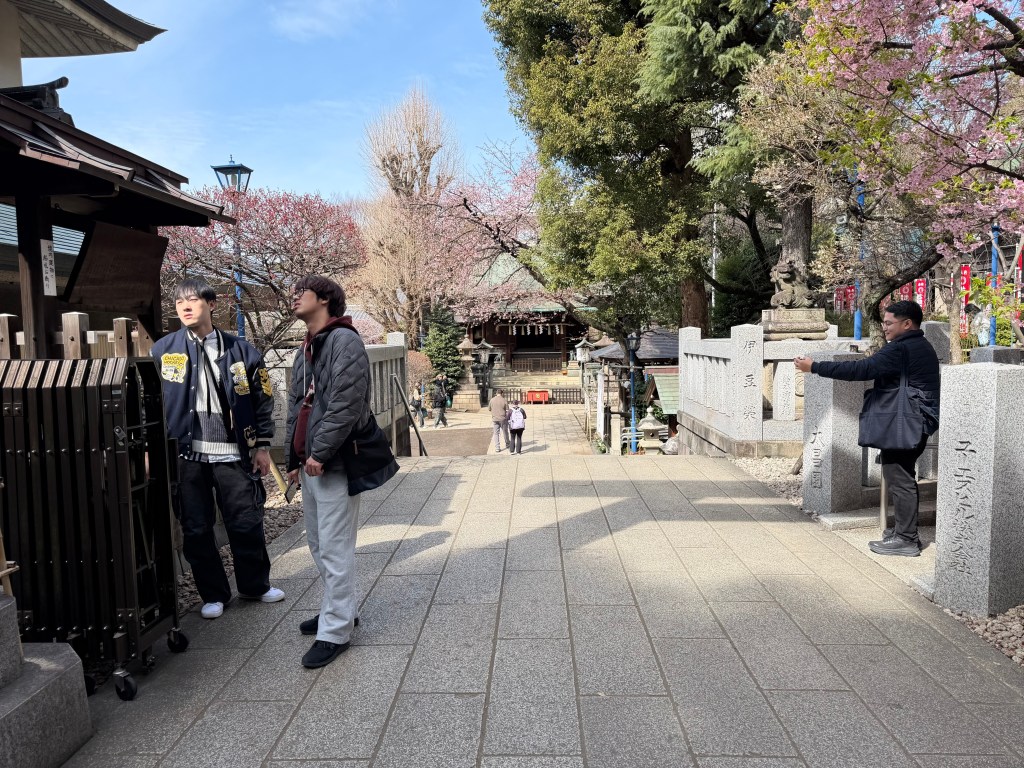
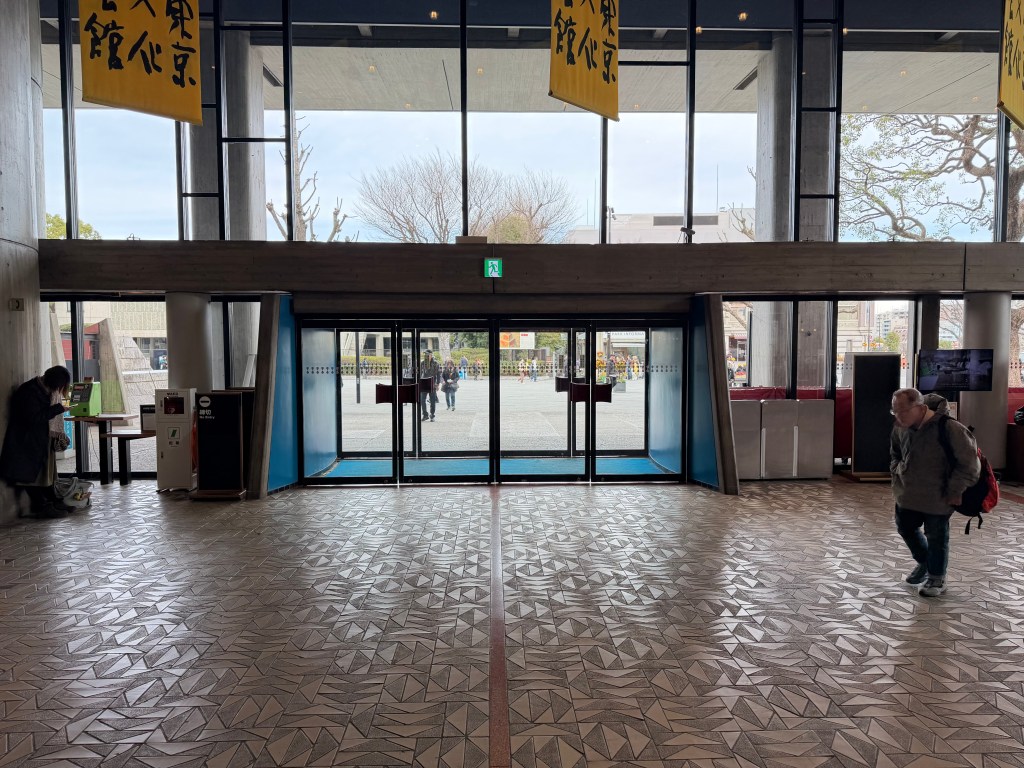
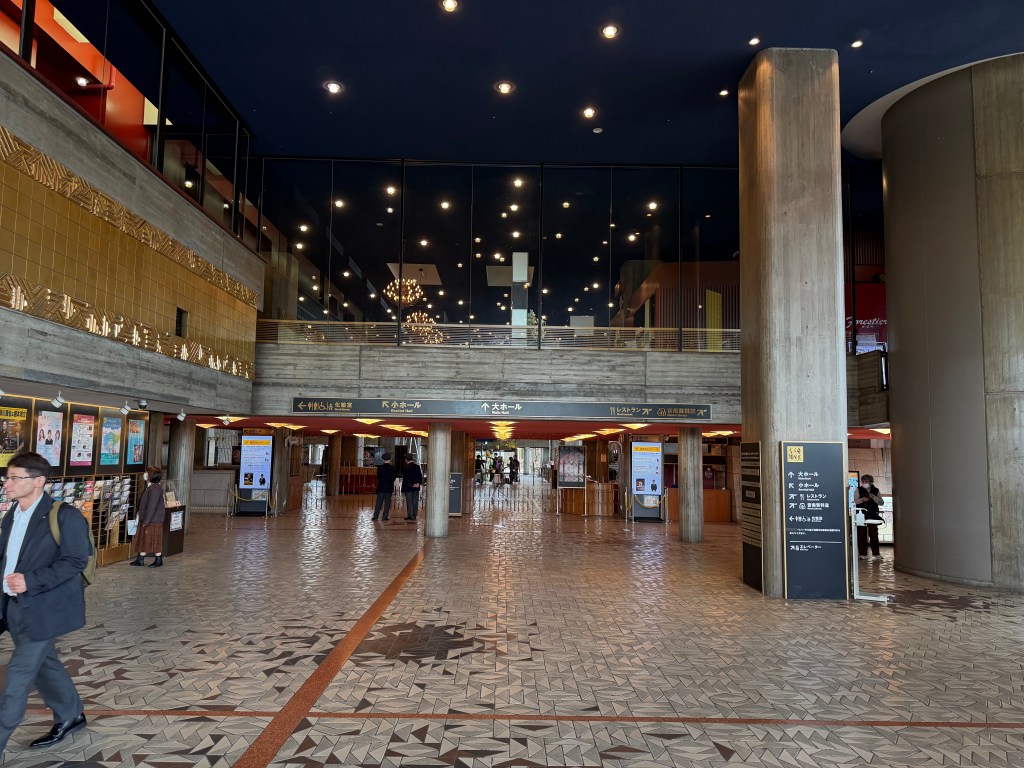
Not far from the zoological garden (Ueno Zoo) is the Tokyo Metropolitan Art Museum, Japan’s first public art museum, which opened in 1926 as the Tokyo Prefectural Art Museum. The current name was adopted only in 1943, after Tokyo became a metropolitan prefecture. The museum’s current building was constructed in 1975 and designed by the modernist architect Kunio MAYEKAWA; it remains one of his most important works today. Maekawa began to articulate his architectural language after establishing his firm in 1935, maintaining a continuous creative tension between traditional Japanese design and European modernism, particularly the works of his mentors Le Corbusier and Antonin Raymond. To understand Maekawa’s architectural aesthetics, Japanese art critic Shuichi Kato once said: “Tokyo streets have no order. MAYEKAWA Kunio has consistently sought to create small urban spaces in this chaotic context by arranging plural building volumes on the site. The courtyards and voids within the building’s walls perform not only as passageways but as open spaces to breathe, relax, meet people, and talk. His buildings, this is to say, contain harmonious urban spaces on a reduced scale.” But still, this is not the World Heritage structure I was keen to discuss.
Behind the Tokyo Metropolitan Festive Hall (an opera house, a music hall, and a theater hall in one) is the Ueno Royal Museum. Managed by the Japan Art Association and opened in 1972, this hall is the only private art museum in Ueno Park. There are no permanent exhibitions here, but the museum hosts a range of special exhibitions showcasing contemporary art, calligraphy, manga, hanga prints, and ukiyo-e from the museum’s collection, among others. Although the building is aesthetically inspiring, it is not a World Heritage Site because of its more recent construction and its non-permanent exhibitions.
There’s also this quaint hall called Shitamachi, located somewhere in the so-called artisan district of the complex, near Shinobazuno Pond and opposite Ueno subway station. This museum evokes nostalgia – serving as a memory rain as it exhibits a reconstruction of how Tokyo life was during the late Meiji to the early Showa periods. But despite the evocation of cultural memory, the World Heritage Structure is the museum that greets visitors as soon as they exit Ueno JR Station: the National Museum of Western Art.
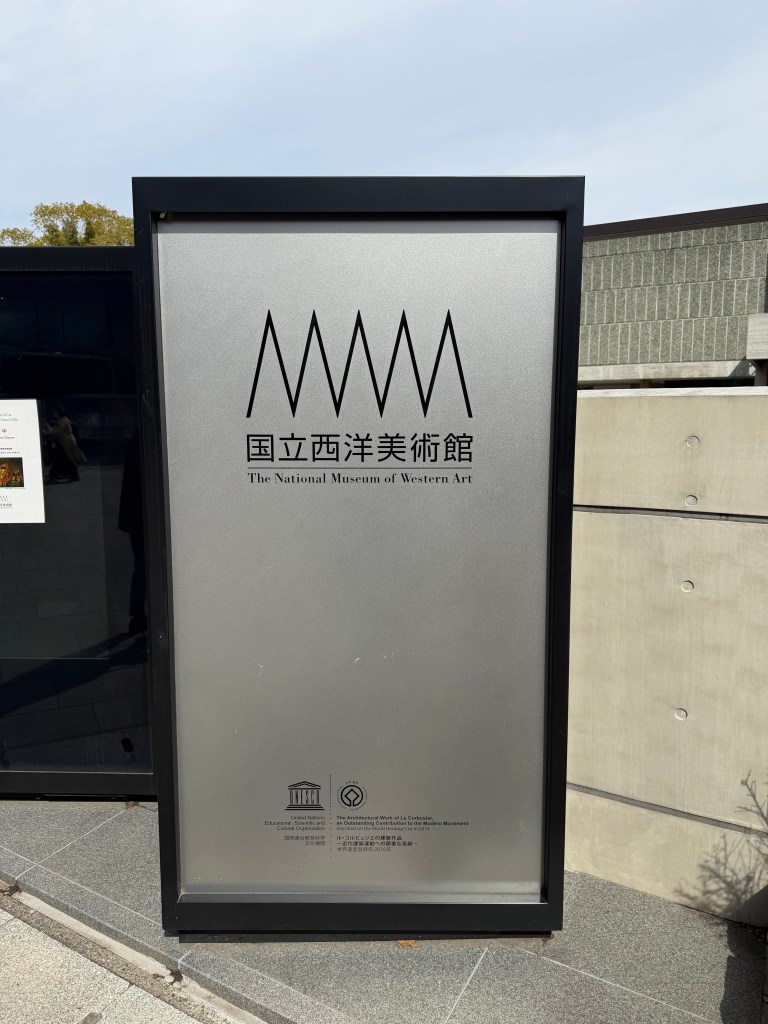
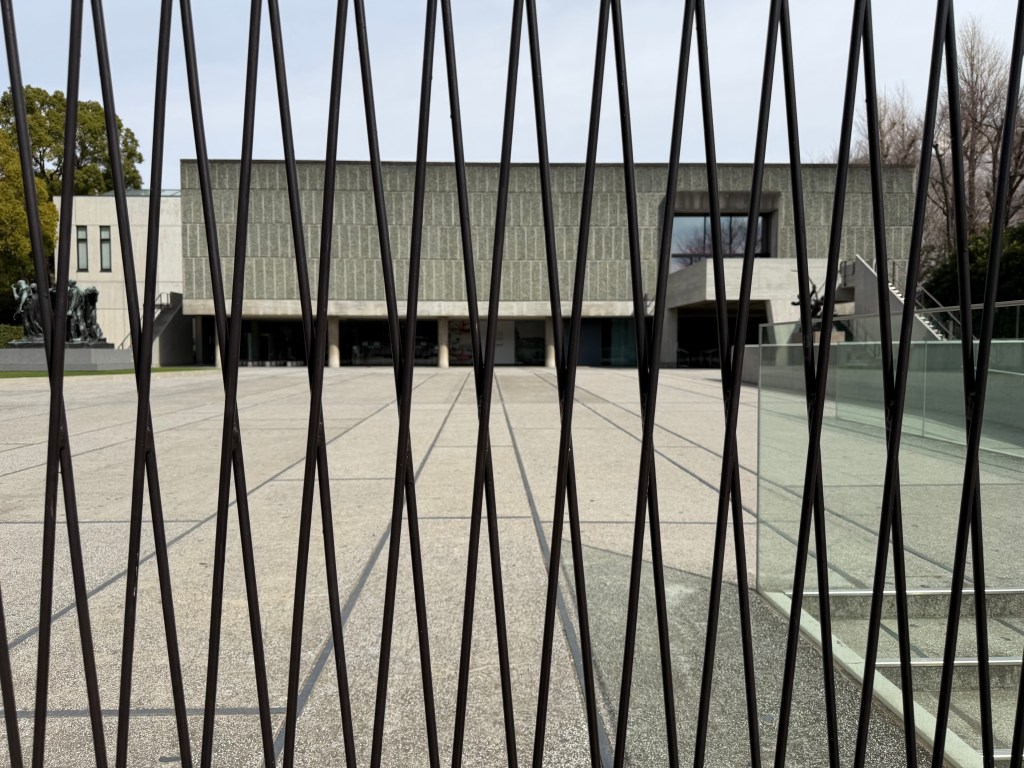
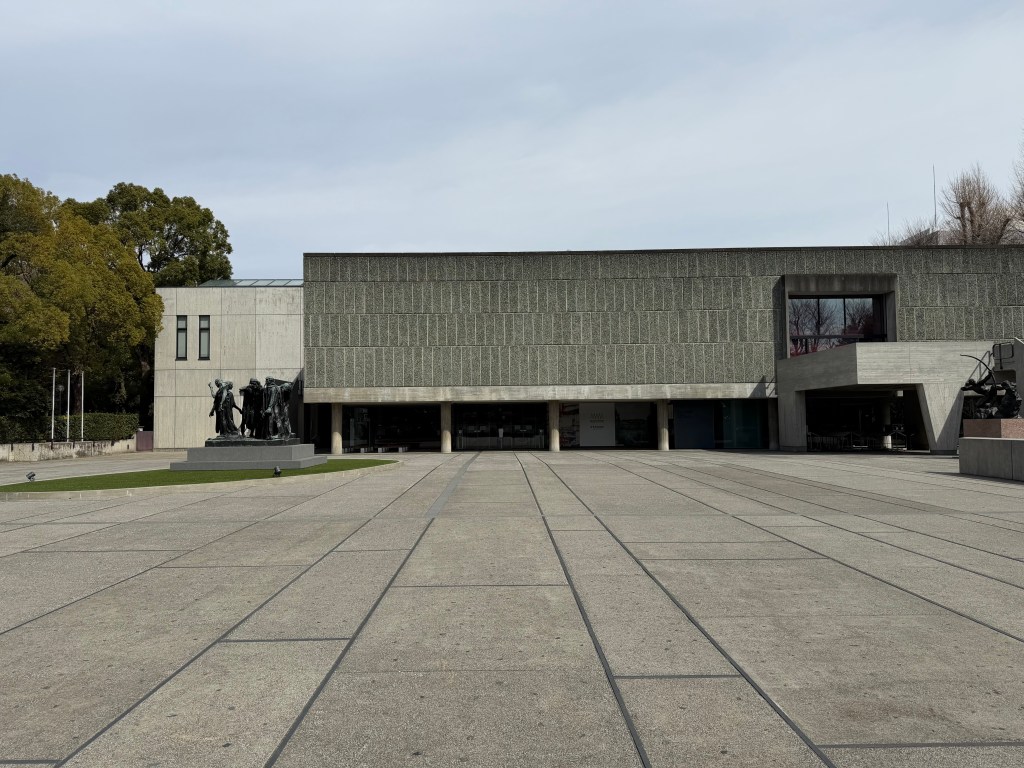
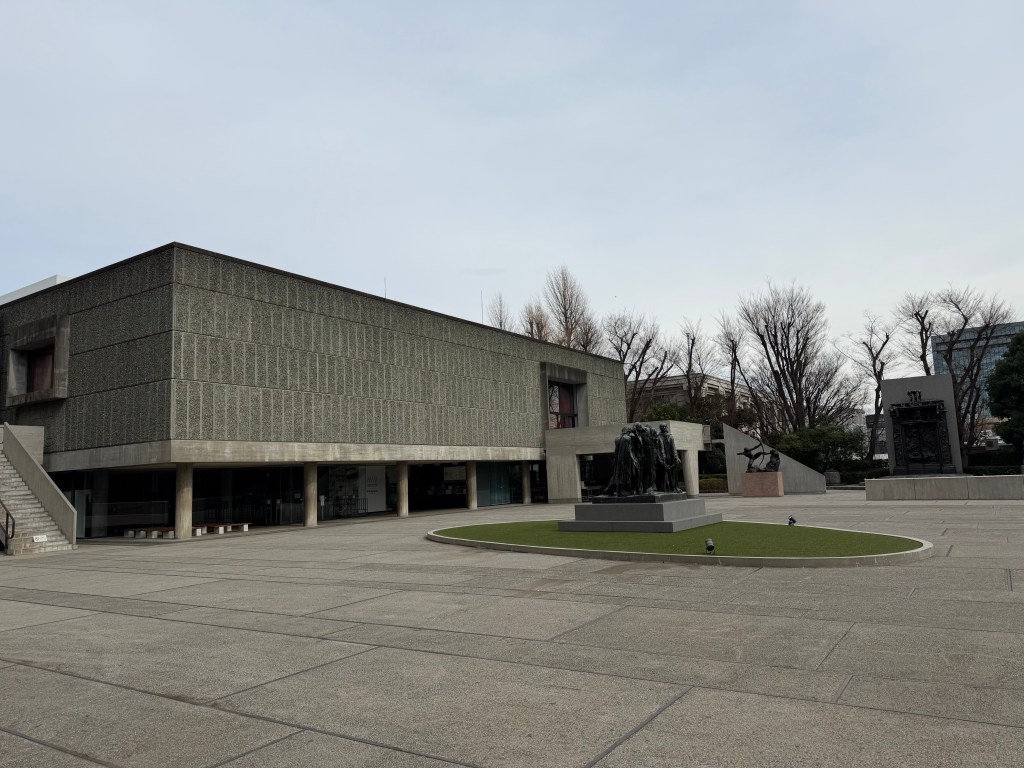
The National Museum of Western Art displays “Western” art, primarily by European artists. The museum features rotating exhibitions from its collection, as well as temporary special exhibitions. The museum is attributed to Kōjirō Matsukata, a Japanese businessman who, in parallel with his professional activities, devoted his life and fortune to amassing a collection of Western art, which he hoped would become the nucleus of a Japanese national museum focused particularly on masterworks of the Western art tradition. His collections were never displayed at the National Museum but eventually became the permanent collections at the National Museum of Western Art.
Today, the Museum’s important collections include Claude Monet’s Water Lilies: Reflection of Willows (1916), Poplars in the Sunlight (1891), and On the Boat (1887); Auguste Rodin’s extensive sculpture collection, including The Gate of Hell and The Thinker, located in the front garden; Impressionist and Post-Impressionist paintings by Renoir, Paul Gauguin, Camille Pissarro, and Vincent van Gogh; and other European Paintings (14th–20th Century), such as Georges de La Tour’s Saint Thomas, Veronese’s Madonna and Child, and works by Rubens. All of which were acquired by Matsukata during his travels in Europe.
The museum is Japan’s only building designed by Le Corbusier and has been designated a World Heritage Site alongside 16 other buildings all around the world (mostly in France, in Switzerland, India, Argentina, Belgium). Le Corbusier is hailed in the arts world as the founder of “modern architecture.”
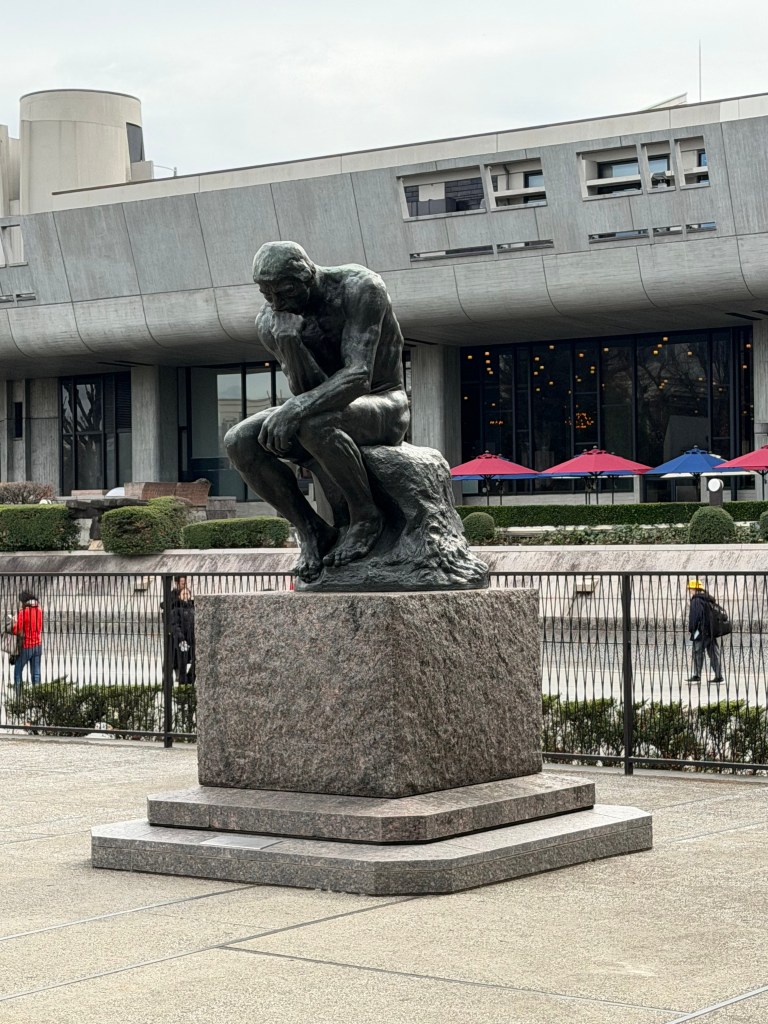
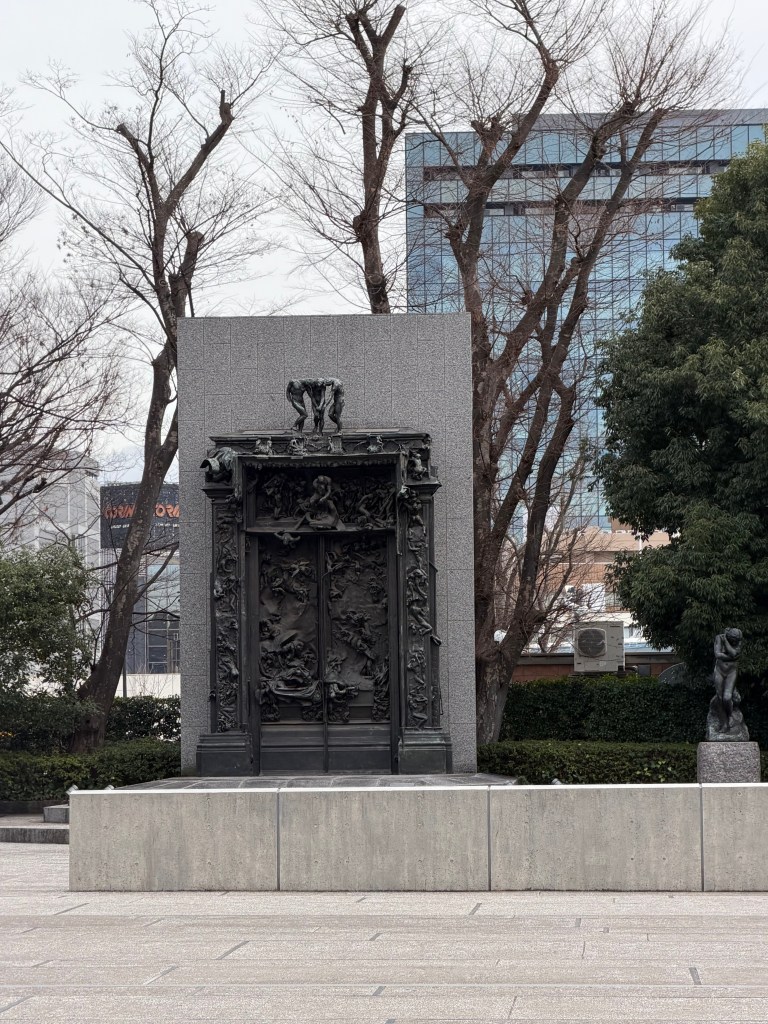
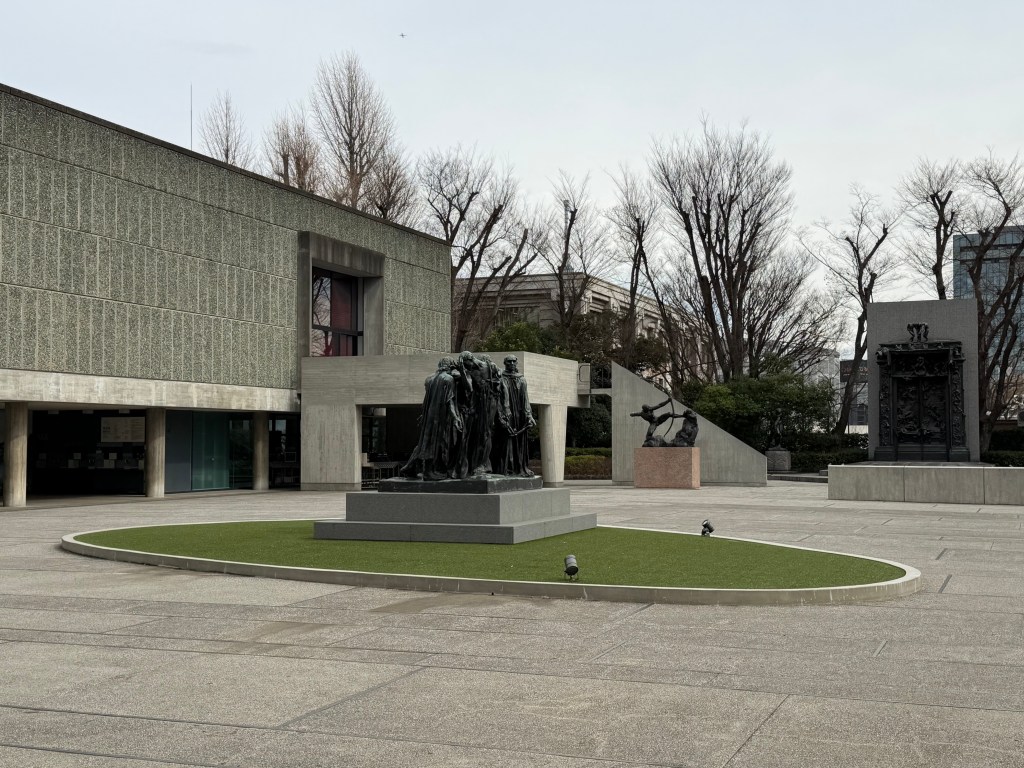
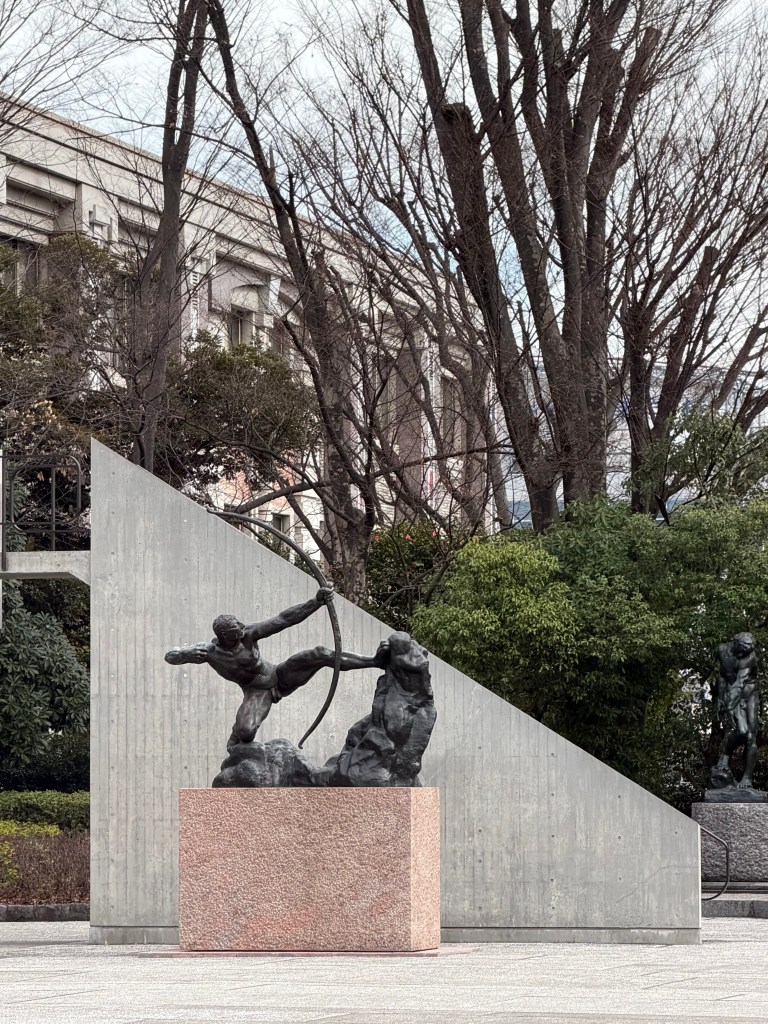
Modern architecture, also called “the modern movement”, is an architectural style prominent in the early 20th century. Modern architecture developed from the principles of functionalism (in simple terms – the form is functional) and the philosophy of minimalism (the thesis of “less is more,” or prioritizing quality over quantity), resulting in constructions with little ornament, usually built with recently developed techniques and newly available materials (particularly glass, steel, and most importantly concrete).
So far, this is the only Le Corbusier structure I have gotten closer to. Unfortunately, the museum was also closed the day I was in Ueno. But the building was so fabulous that a review in the New York Times by cultural commentator Ray Folk stated that when it opened in 1959 the building itself presented an “artistic significance and beauty” which rivaled the paintings inside. The multi-story, reinforced concrete building was a symbol of the resumption of diplomatic ties between Japan and France after World War II as indicated in various websites.

