
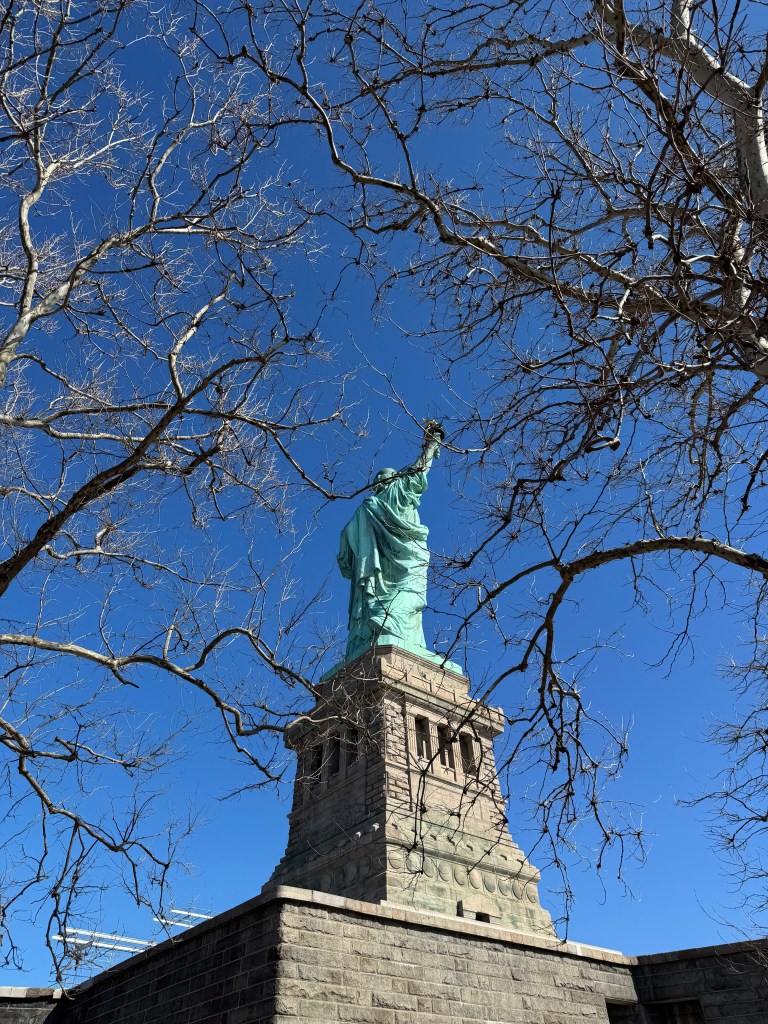
The Statue of Liberty on Liberty Island is arguably the most popular UNESCO World Heritage Site in the United States. Many foreigners, especially my fellow Filipinos, commonly think of Miss Liberty as the ultimate symbol of the United States. When asked what they think about it as a symbol, often, one gets the “land of the free” as an answer.
My late partner Alonzo Gabriel opted not to walk on Liberty Island during his sporadic visits to NYC. On his death anniversary a few days ago (31 March), I posted on my Instagram that he wanted to see the island and Miss Liberty up close with me when we traveled together in the Big Apple. I remember jokingly responding to the photo he sent me of him posing in front of Liberty during a ferry ride toward Staten Island. I replied that he was too lazy to queue or make online ticket purchases to travel on the island. I was usually the planner and executioner between the two of us, and as I always mocked him, he was the princess!
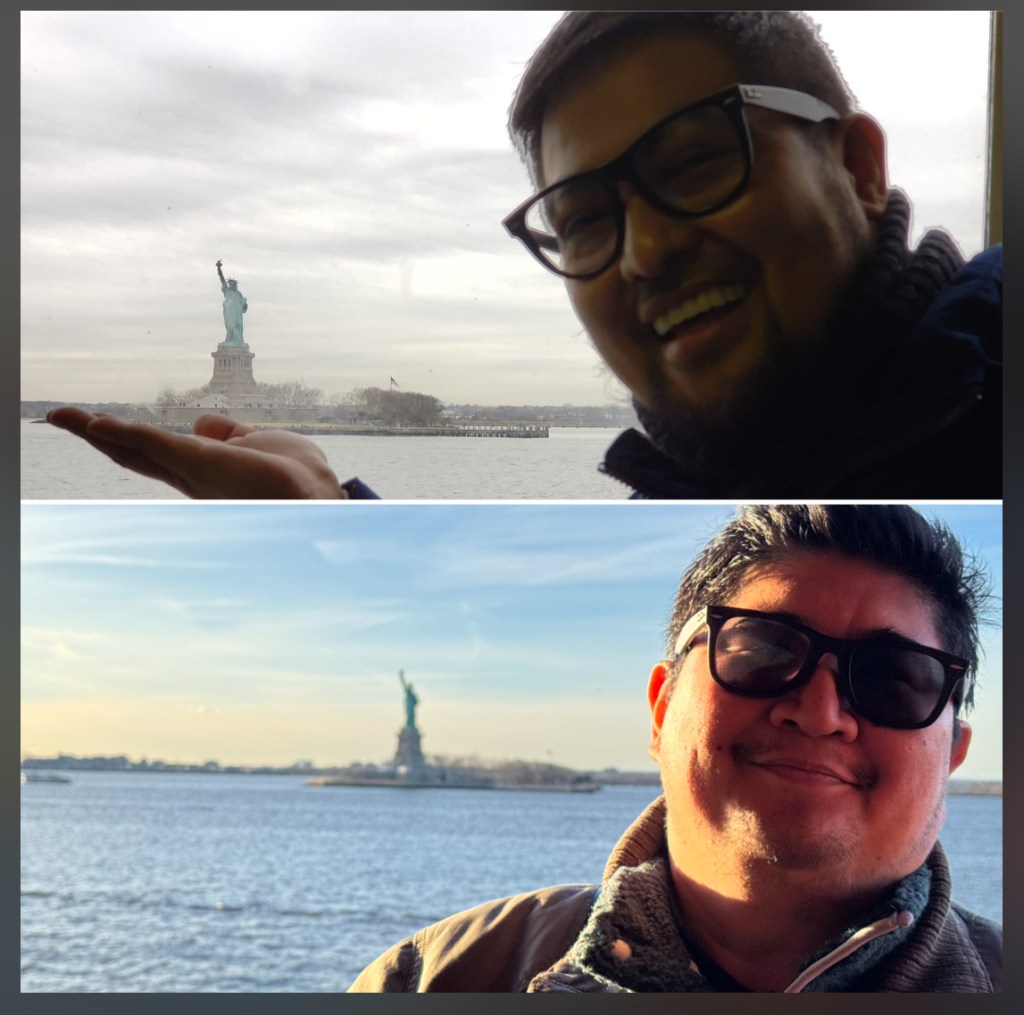
Visiting the island together never happened. However, to commemorate his meaningful life, I traveled to the island and traversed a route that could have been ours. It was not a sad journey because I was with my new-found friends in NYC. Every step I took was somewhat dedicated to him. New York City was his city. He fell in love with the glitz and glamor of the city, telling me that if I were with him, I would definitely fall in love with it as well. Well, he was telling the truth. I have fallen in love with NYC. But I digress and bring back the focus to Miss Liberty. NYC’s story is entangled with the narratives of migrants from all parts of the world. In the earlier history of migration in the city, Miss Liberty is the first figure to welcome these people as they embark on Ellis Island. On this island, the migrants’ documents and possessions where processed and inspected before they were allowed entry to the main island of Manhattan or anywhere else in the State of New York or New Jersey.
Édouard René Lefèbvre de Laboulaye was behind this institutional and diplomatic gift to the United States. He was a wealthy businessman and a strong advocate of anti-slavery from Paris. At the same time, he was a very influential figure in the political landscape of France at that time. An admirer of the US Constitution, particularly the institution of freedom as a right not only for the US citizens but for every person of the world, this paved the way for him to push for the French government to gift the American people the monument that would eventually be recognized as an outstanding symbol of the human spirit. Eventually, the French government contacted sculptor Frédéric Bartholdi to provide the model and later, Bartholdi collaborated with Gustave Eiffel (yes, the same person who created the Eiffel Tower in Paris) to transform the model into the actual size that we see today on Hudson Bay.
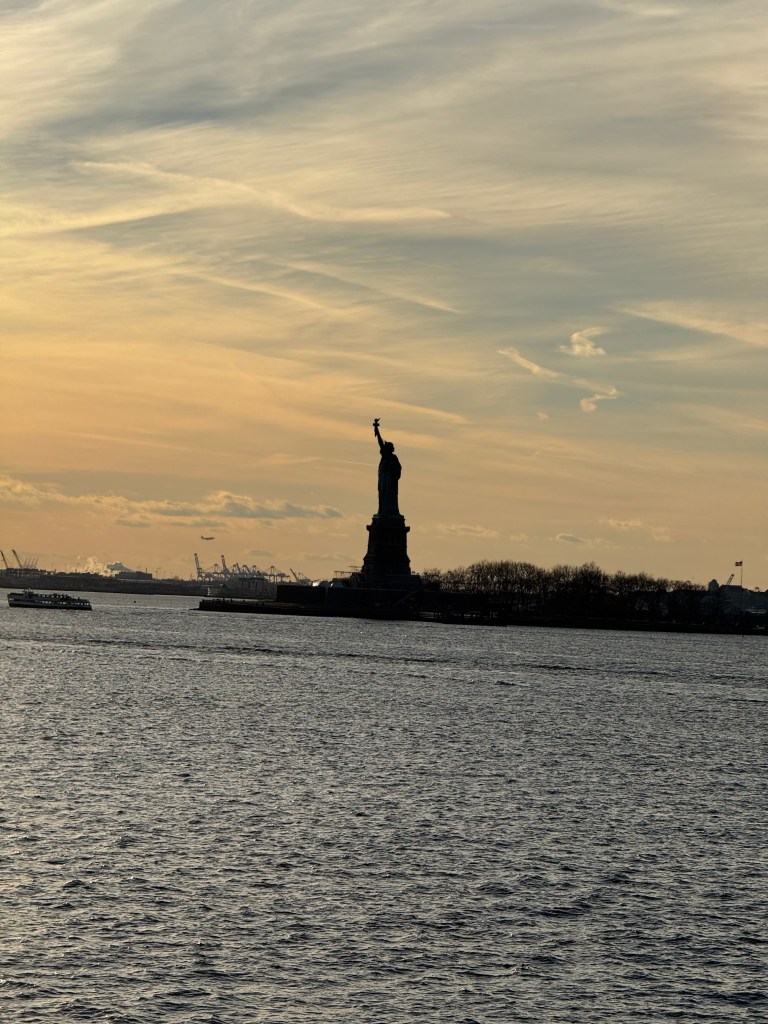
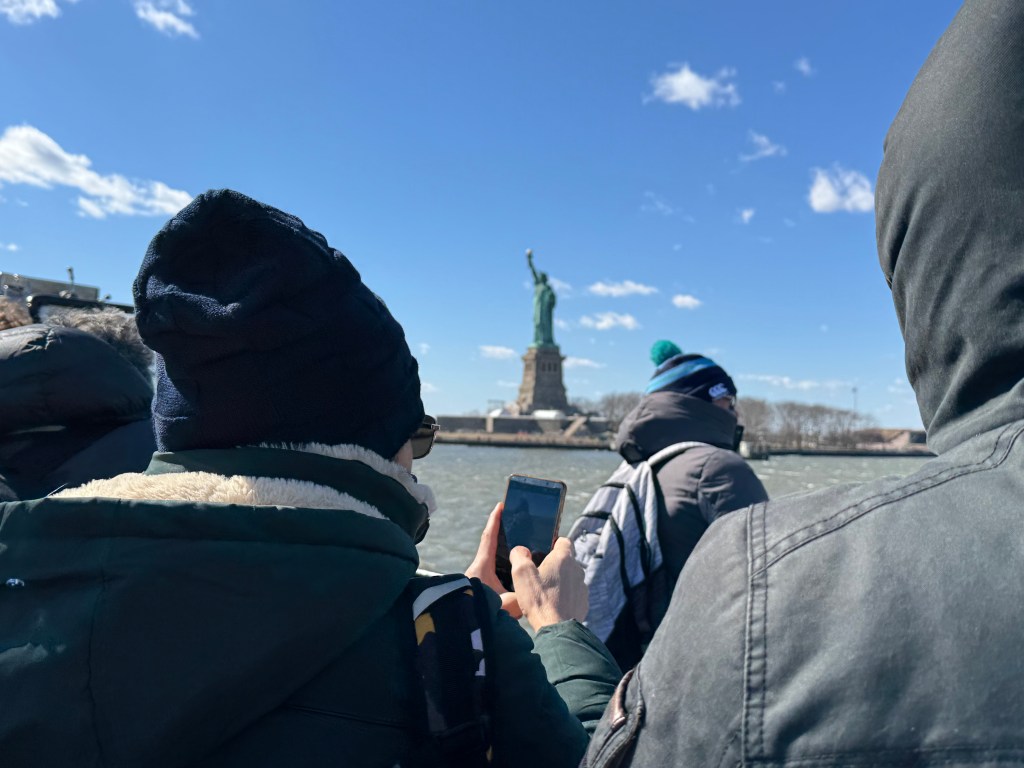
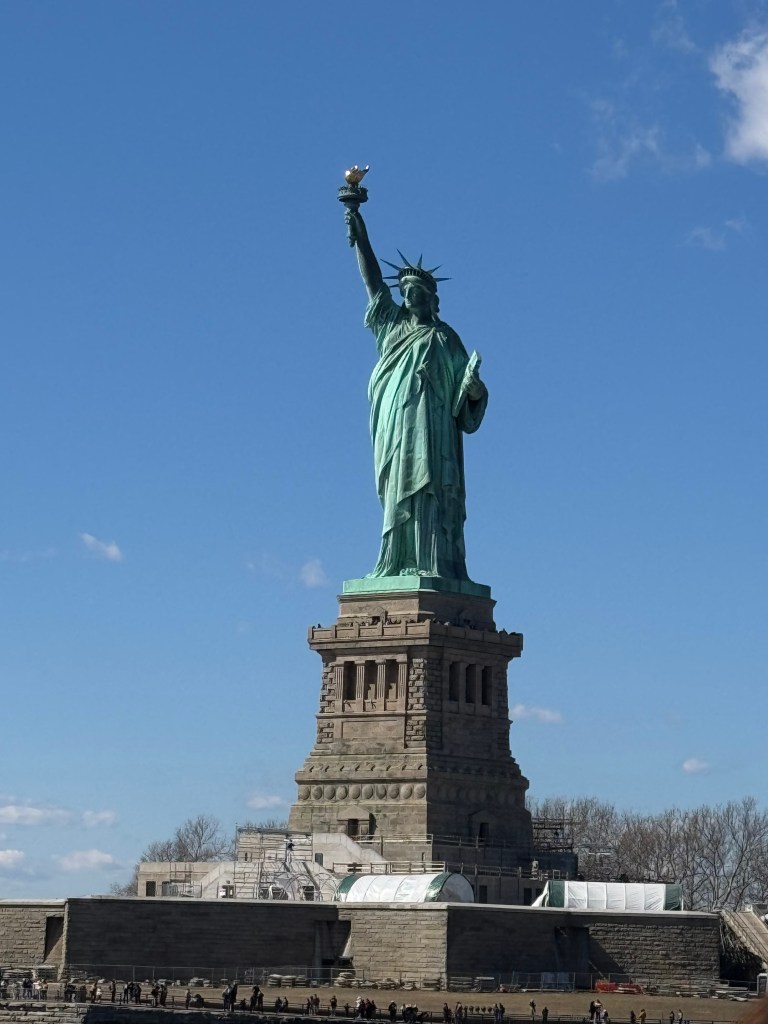
A ferry boat takes tourists, cultural enthusiasts, and explorers to Liberty Island every 20 to 30 minutes. Take note, only one official ferry takes everyone there: Statue City Cruises. This is the only authorized vendor from either Battery Park in Lower Manhattan or Liberty State Park in New Jersey. The ferry ride to Liberty Island takes about 15 minutes. The ticket also takes you to Ellis Island. The ferry docks for about 10 minutes at each island before departing. We got our tickets online. However, in-person tickets are also available in the ticket booth inside Castle Clinton. Take note that online tickets have to be replaced with actual tickets. Do not make the same mistake we did. We ignored the notes on the online purchase. We almost did not make it to the boarding time. We did not realize this until the admitting guard informed us to have our online purchases changed to physical tickets.
As we docked and exited the ferry, I saw the colossal statue in awe and amazement. In my mind, a sea goddess welcomed us into her home, and I thought of her warm welcome as if telling us (especially me) that everything would be alright. I immediately thought of the early immigrants and how the statue became a stronghold of hope as they came closer to their “American Dream.” She was facing away from a distance, beaming her message of freedom and self-determination to all nations in the open seas. She was serious – because freedom, liberty, autonomy, subjectivity – are serious matters. The wind – the gushing wind sings her songs all over the nations of the earth:
Keep, ancient lands, your storied pomp!” cries she
With silent lips. “Give me your tired, your poor,
Your huddled masses yearning to breathe free,
The wretched refuse of your teeming shore.
Send these, the homeless, tempest-tost to me,
I lift my lamp beside the golden door! (Emma Lazarus)
It was windy, really windy. Every step was a woosh of fresh air—as if breathing new life—new adventures. And speaking of adventures – it was a real adventure to reach for the crown of Miss Liberty. As our tickets include access to the crown, I was so excited to see the skyline of NYC and NJ from Miss Liberty’s crown. Again, a reminder to everyone, be aware that no elevators take any individual on top of the statue. In short, I was convinced that an elevator would take me to the top. I was not mentally and physically prepared to do the climb. But with the support of my companions and friends, I decided to embark on this adventure.
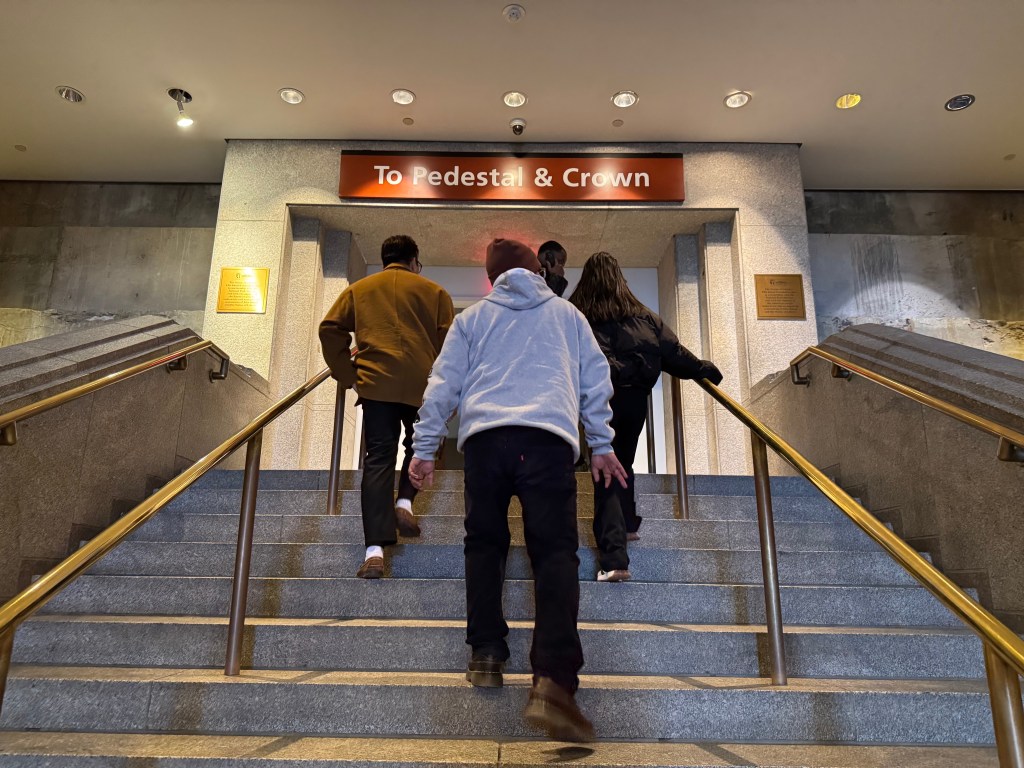
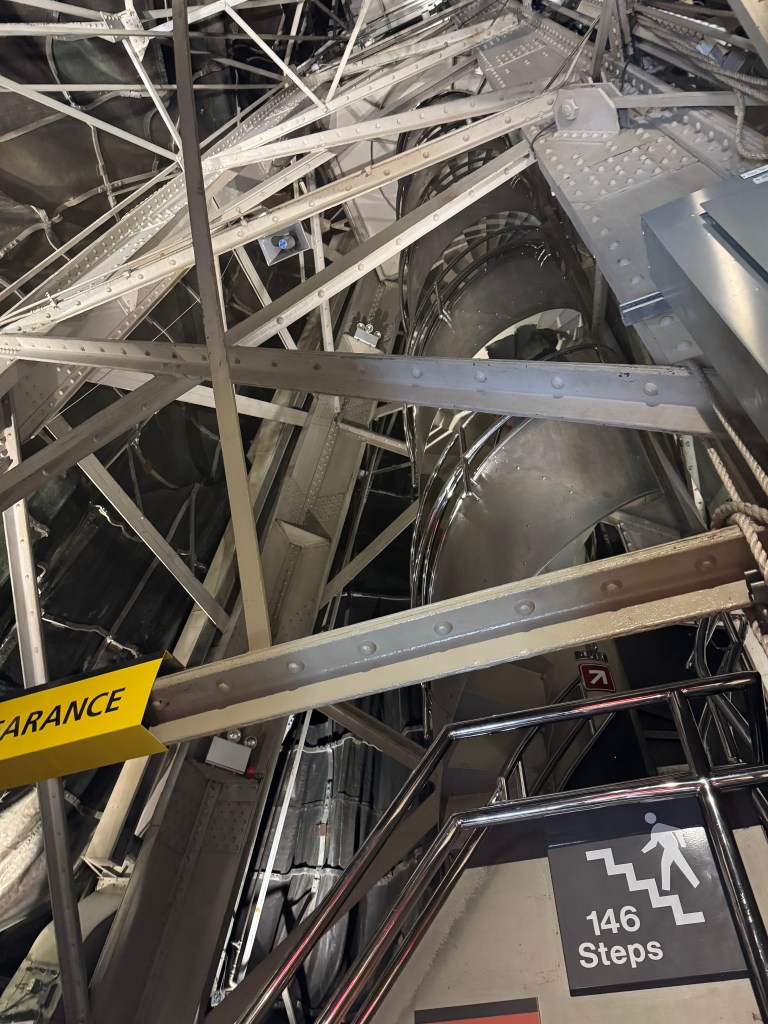
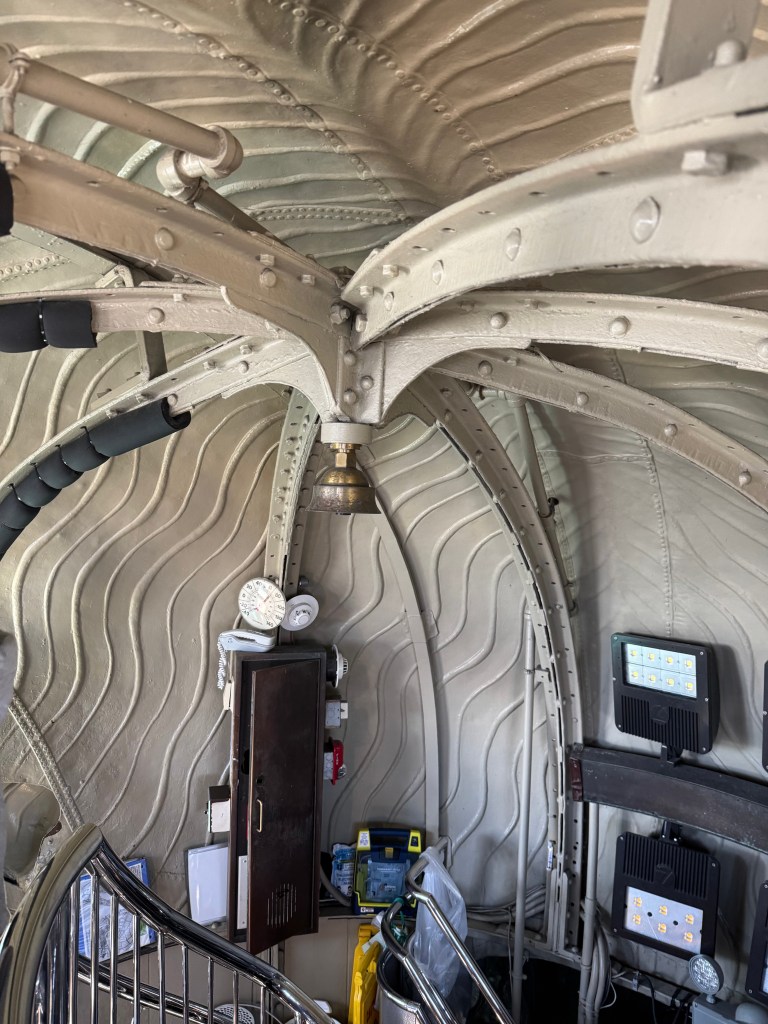
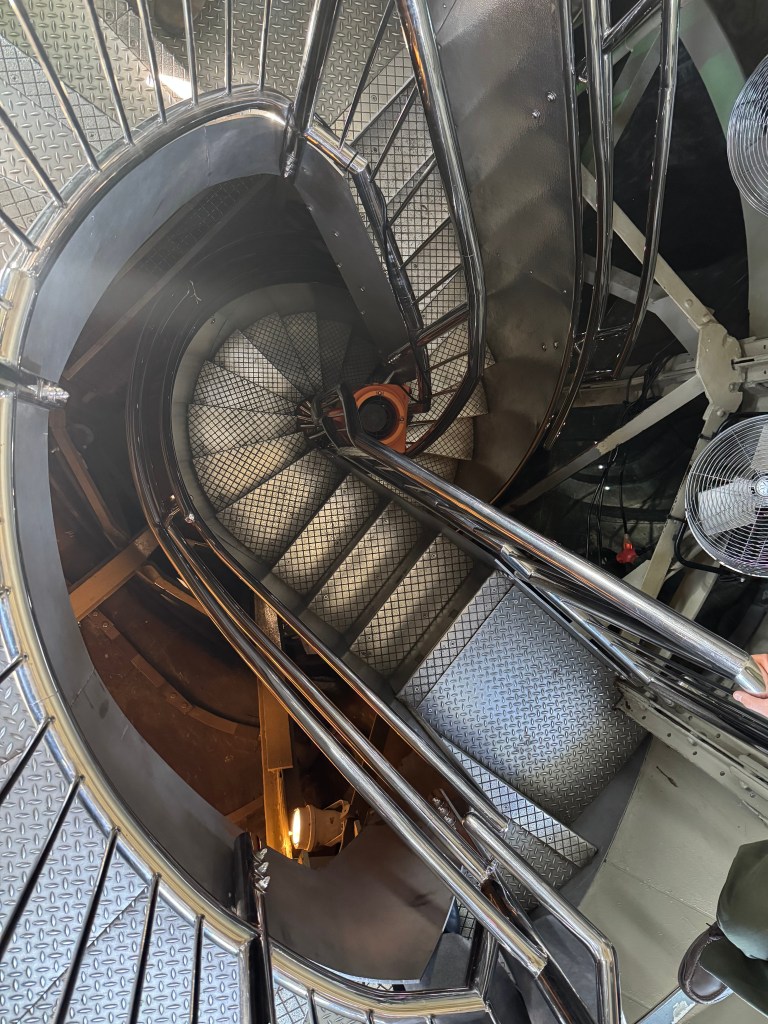
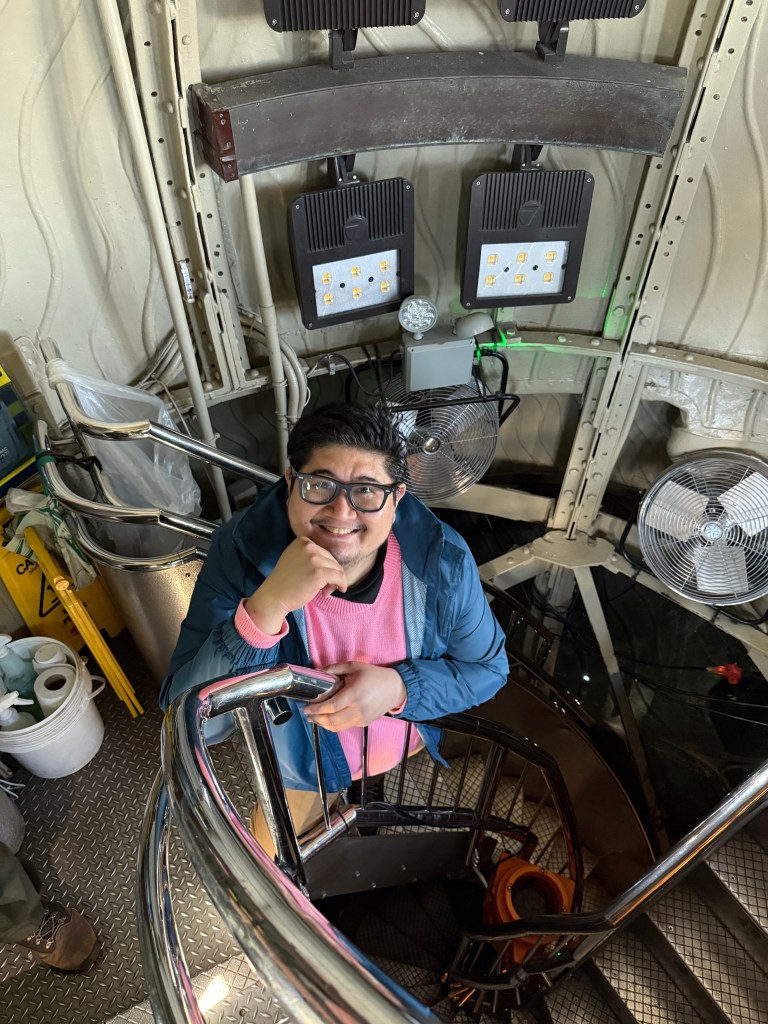
196 plus steps to the crown. Did I say that there was no elevator? But there was – just that the elevator was for emergency only. I asked the ranger about the equivalency of the staircase from the top of Miss Liberty to that of a building’s height. “10 floors plus a lobby,” he said. My heart started to cha cha cha. A lump comes to my throat. Then fear and anxiety crept: From the top of the pedestal (6P Level), 162 stairs were so narrow and steep in dimension. Each step was nine inches in height and eight inches in length. The crown staircase has 196 more steps – narrower than the 22 inches steps to the pedestal.
The staircase was interesting. It was a site of interest in itself. It spoke history. I could imagine Eiffel and the crew being reprimanded or whatever. I could imagine inspections made by both the French and American men.
The staircase was a double helix, with one spiral section ascending and the other spiral descending. Suddenly, I heard my own cry: “I can’t breathe! I can’t breathe!” Goodness, panic struck. I remembered that the first platform was on the 44th step. Inhale—exhale. How many steps have I stepped? You cannot descend, I told myself. Then, the platform. Do I proceed, or do I descend? Thanks to my dearest, dearest friends for being my Pep Squad for an hour, everything ended fabulously.
Lesson learned: manage expectations, expect the worse, prepare mentally and physically. When panic strikes, step aside, deep breathes, focus on one thing. In my case, I focused on the song “I Just Can’t Stop Loving You” by Michael Jackson (MJ). I don’t know why, but MJ helped me overcome my panic attacks. Was it worth the heavy breathes? Thank goodness, I overcame my fear and my unresolved claustrophobia. It was a sight to behold. More so, I was standing on history. For a few seconds, I heard the ships, their horns, people waving at Miss Liberty, the sea goddess, the symbol of America, the statue of freedom, the beacon of hope for these people. Imagine the harbor during the heyday of immigrants coming to NYC: the songs of the seagulls, the smell of the cold winter air, the scent of the ocean. But anyhow, when I was standing on the pedestal above – I said to the ranger: “I just can’t stop loving Miss Liberty!” Then he said, “oh yeah! definitely! She’s Miss America!”
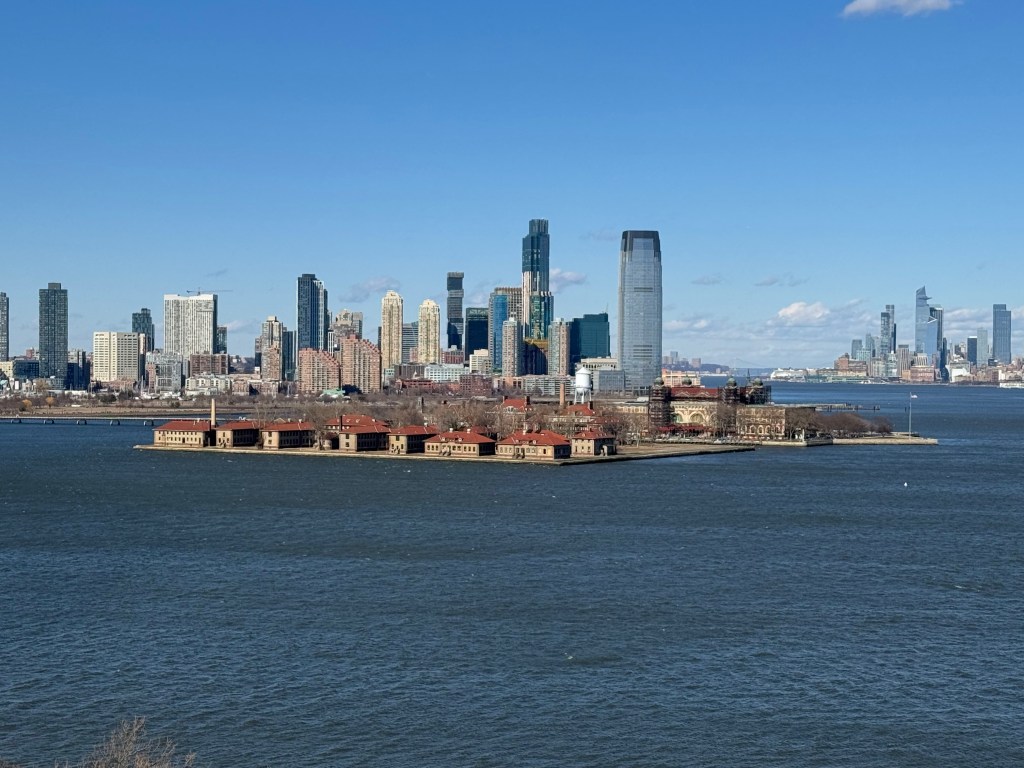
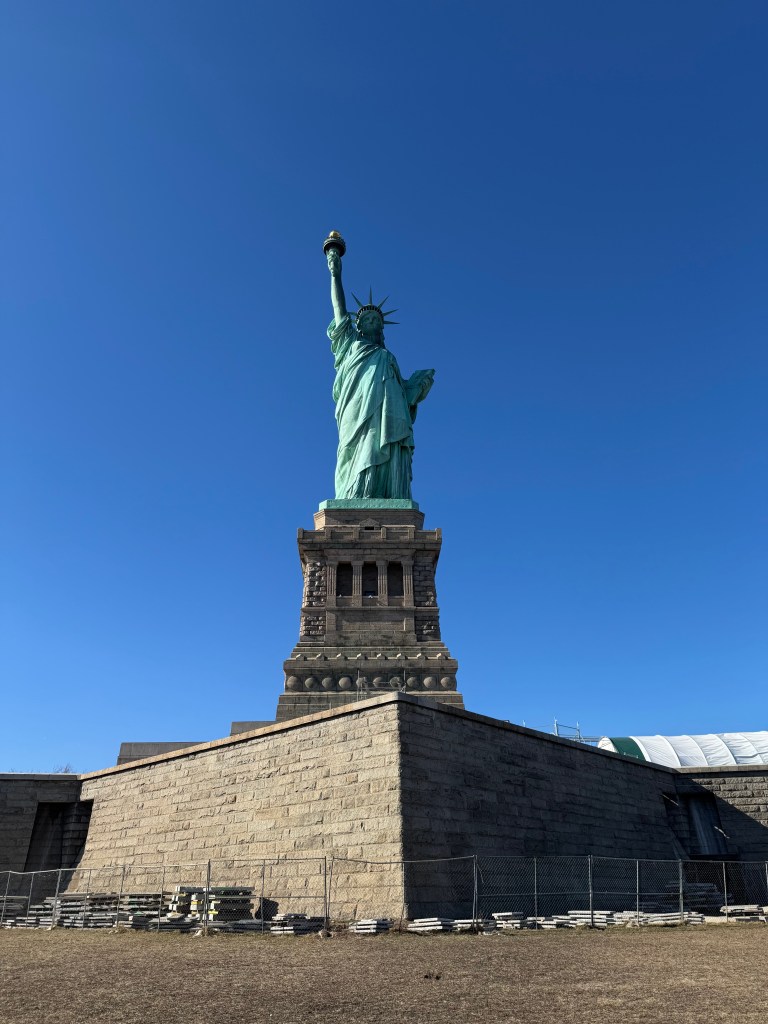
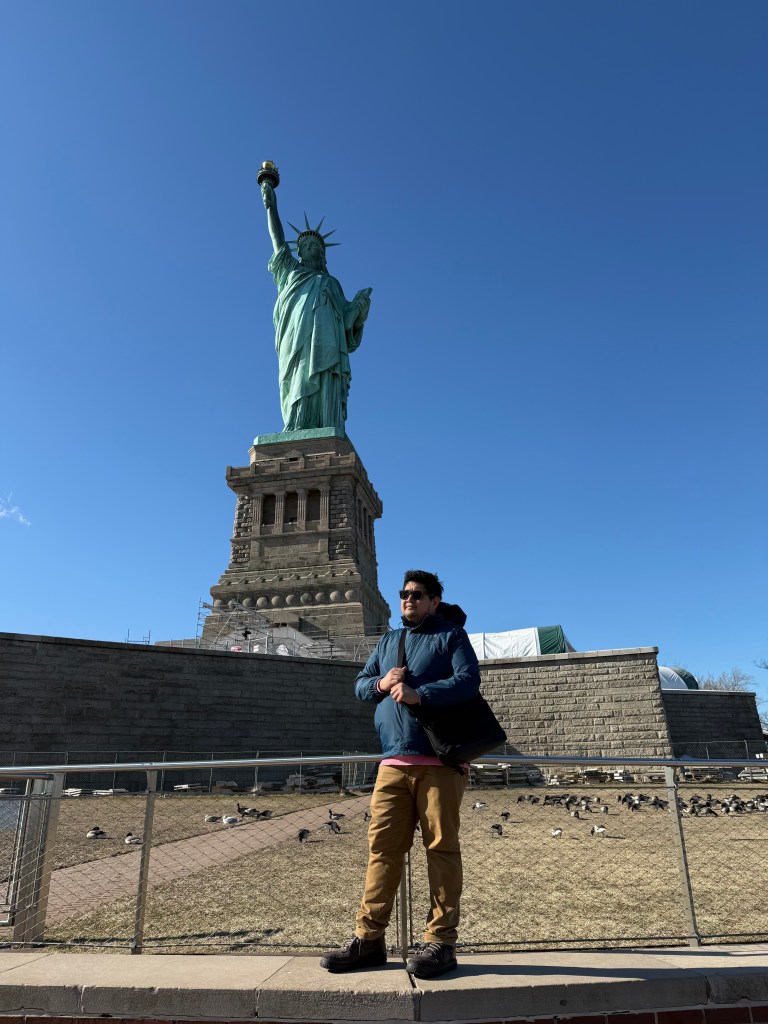
As I noted earlier, this colossal statue was inscribed as a World Heritage Site because it was considered a masterpiece of the human spirit. UNSECO stipulates that the collaboration between the sculptor Frédéric Bartholdi and the engineer Gustave Eiffel resulted in the production of a technological wonder that brings together art and engineering in a new and powerful way. Today, Miss Liberty endures as a “highly potent symbol – inspiring contemplation, debate, and protest – of ideals such as liberty, peace, human rights, abolition of slavery, democracy, and opportunity,” as stated in its inscription as a World Heritage Site.
Al’s visit to NYC was an opportunity. He was a visiting scholar at Pace University and collaborated with one of its scientists. Mine’s also an opportunity for professional development. As of writing this post, I am an NY Fellow of the Asian Cultural Council to undergo training in dramaturgy with institutions like Beehive Dramaturgy, the Graduate Center of the City University of New York, and the New York Theatre Workshop. I guess Liberty is not just a symbol but the presence of opportunities that inspire contemplation, debate, and protest and to add, the scientific and artistic creations of knowledge. To newcommers, I believe that to best appreciate her presence, one must imagine her as a foreigner, a once upon a time shackled, and another, a stranger like you. But one must also extend that imagination toward her transformation as a cosmopolitan figure who possesses an intellectual, ethical, political, and aesthetic stance of openness toward divergent cultural experiences in pursuit of the imaginary connections between self and others and grounded in a vision of conviviality.

