If there is another interesting historical moment in Tallinn that I learned from our trip there, it would be the Baltic Way Revolution, a peaceful political demonstration which took place on 23 August 1989.
An approximately two million people joined their hands forming a 600 km long human chain throughout the Baltic countries (Estonia, Latvia, and Lithuania), thus demonstrating their unity in their efforts towards independence (their second independence; Estonia was first colonized by the Russian Empire and gained independence on 23 February 1918. Then the Soviet Union colonized Estonia after the Second World War). The demonstration is cited as one of few peaceful revolutions in the world that paved the way for the restoration of “social order” of the state involved. An example closer to home is the People Power Revolution in EDSA in 1986 where approximately a million Filipinos blocked the streets to protect Camp Crame and Camp Aguinaldo because the military finally decided to cut ties from the dictatorship of then President Marcos Sr. This led to the dictator’s overthrow and exile and the eventual restoration of democracy and social order in the Philippines.
The Baltic Way was organized by the nationalist movements of the Baltic states: the Rahvarinne (Estonia), the Latvian Popular Front of Latvia and the Sajūdis (Lithuania). The peoples of these Baltic nations gathered in the cities and villages where the campaign was to take place or drove to the less inhabited Baltic territories where the Baltic Way was to wind through. Their weapons: songs about freedom.
The campaign was to restore independence from the Soviet Union. These states were forced to live under the Communist Party where freedom was restricted. In 1986 the Communist Party of the Soviet Union introduced the so-called openness policy in regard to environment protection matters and Stalinism crimes. Newly-formed public organizations started voicing their opinions and discontent about the existing situation more openly. Since then, a series of political events took place and eventually woke up the nationalist spirit of the Baltic communities. And on 21 February 1991, Estonia, together with many other nations within the Soviet Union, proclaimed its independence. The Baltic Way, known as the Laulev Revolutsioon or the Singing Revolution in Estonia, helped the region to restore their independence from any foreign colonizer.
Moving forward to our Tallinn tour, our guide brought us to Tallinn’s Old Town, a UNESCO World Heritage Site cited as “among the most remote and powerful outposts of the colonizing activities of the Hanseatic League in the north-eastern part of Europe in the 13th-16th centuries, provided a crucible within which an international secular-ecclesiastical culture resulting from the interchange of Cistercians, Dominicans, the Teutonic Order and the traditions of the Hanseatic League, formed and was itself exported throughout northern Europe” and as a Medieval City that constitutes “a remarkable reflection of the coexistence of the seat of feudal overlords and a Hanseatic trading centre within the shelter of a common system of walls and fortifications.” Inscribed Historic Centre (Old Town) of Tallinn, has “demonstrated in its existence as an outstanding, exceptionally complete and well preserved example of a medieval northern European trading city that retains the salient features of this unique form of economic and social community to a remarkable degree.”
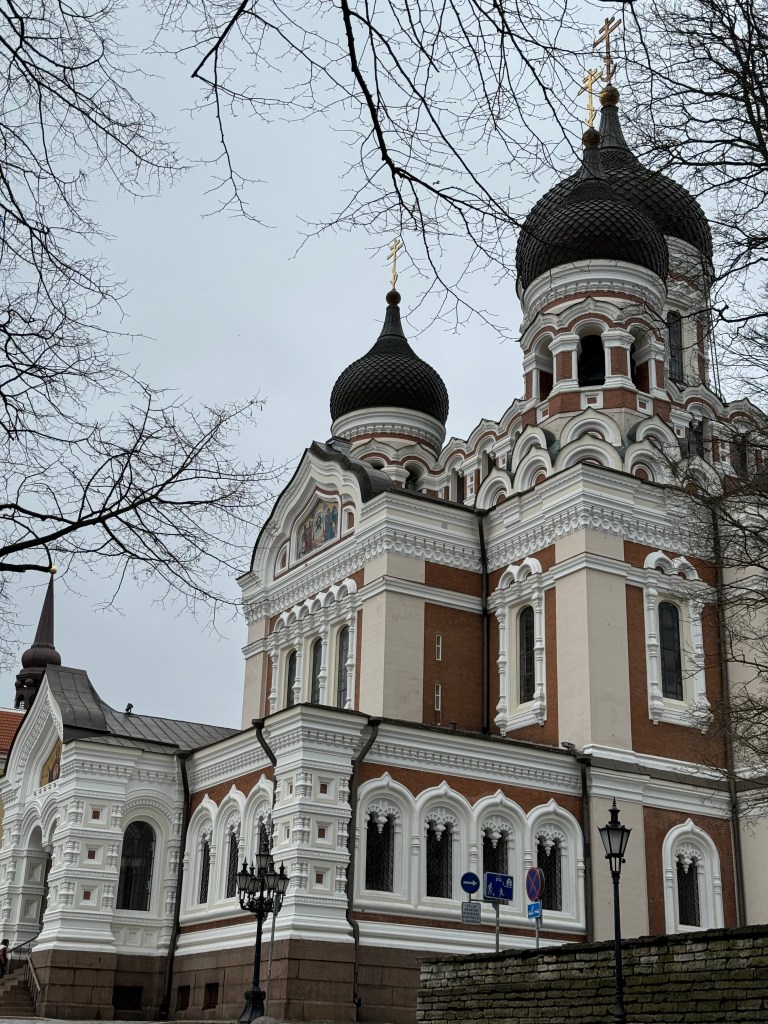
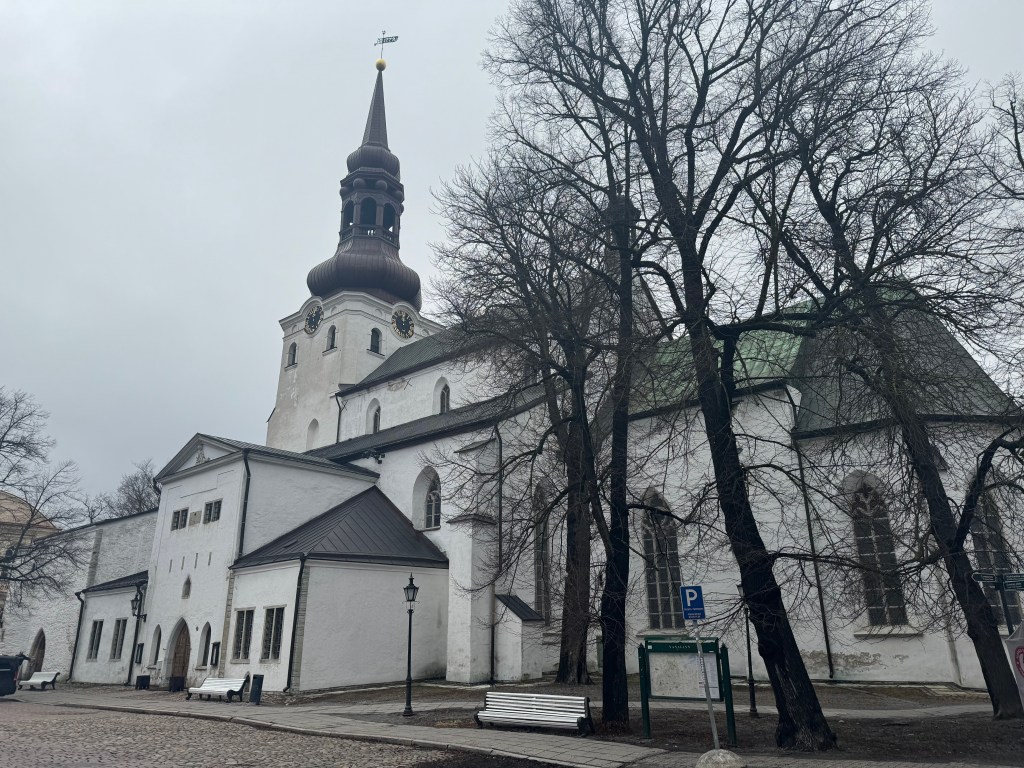
We started our exploration of the old town in the Upper Town or locally known as Toompea, the stronghold of the former Tallinn nobility. We passed by two cathedrals: the Russian Orthodox Alexander Nevsky Cathedral and the Lutheran St. Mary’s Cathedral. The former is really magnificent and a reminiscent of Moscow’s St. Basil’s Cathedral, based on what I saw online (never been to Moscow). We did not have a chance to enter the former – but from the outside it seems to be a massive rectangular structure which reminded me of small churches or the kapilya in the Philippines.
We also had a good view of the Estonian Parliament building inside Toompea Castle, which is just opposite the Alexander Nevsky Cathedral.
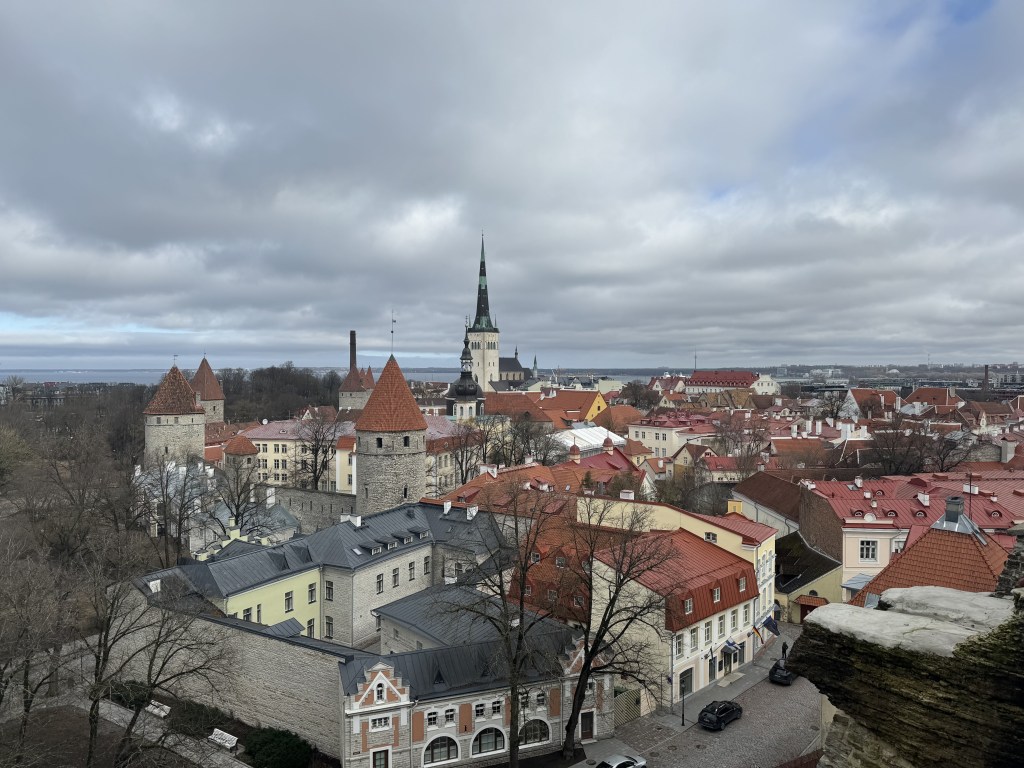
After a few minutes of walking, we had a quick coffee break inside a retrofitted old Medieval house and enjoyed a panorama of the well-preserved Old Town from the Kohtuotsa viewing platform. My immediate thought was simply amazement. It was as if I was looking at a mega-diorama depicting one of the Grimm Brother’s folk stories.
After seeing the Upper Town, we continued to the Lower Town. Here we experienced the medieval merchant’s houses and learned why Tallinn was founded at this particular place, how it developed, why there are so many churches and why they are so tall. Katarina told us that the location was very strategic because it was centermost – not far from the coast. The hill where the old town stands provided a natural fortress from invaders. The stones surrounding the town are both insulators during the winter and coolant during the summer.
Going down along the Long Leg Street, Katarina showed to us St. Olaf’s Church, the highest building in the world during the 16th and 17th centuries. The Long Leg Street was the so called neutral-ground between the nobility and the commoners during the medieval period.
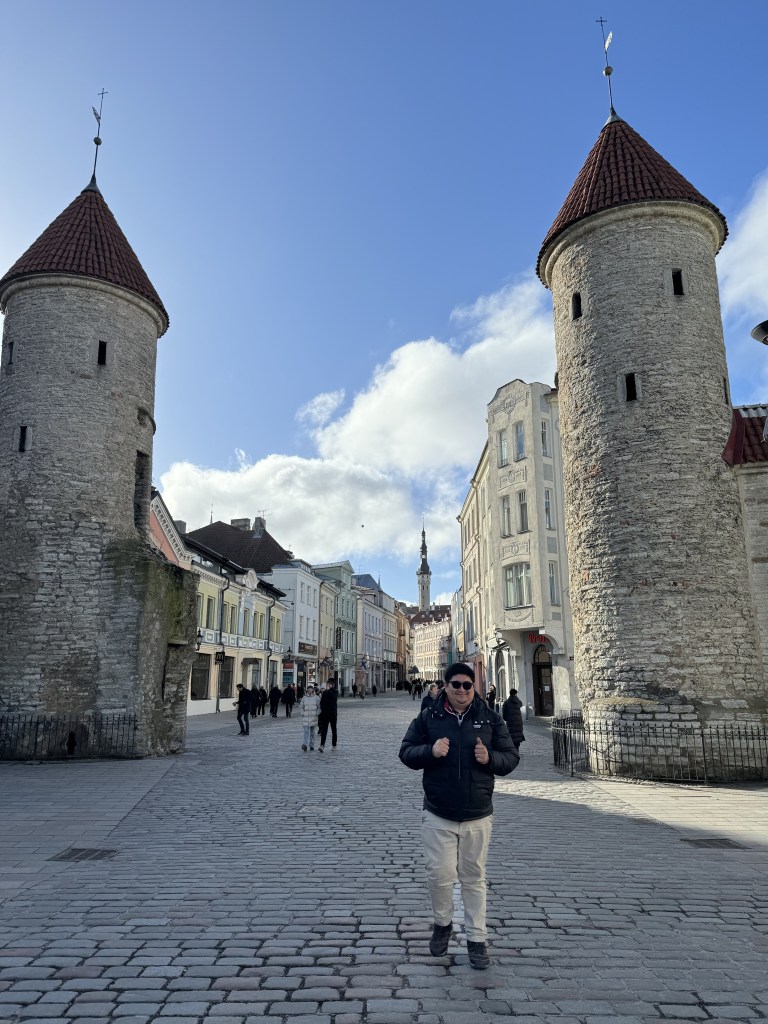
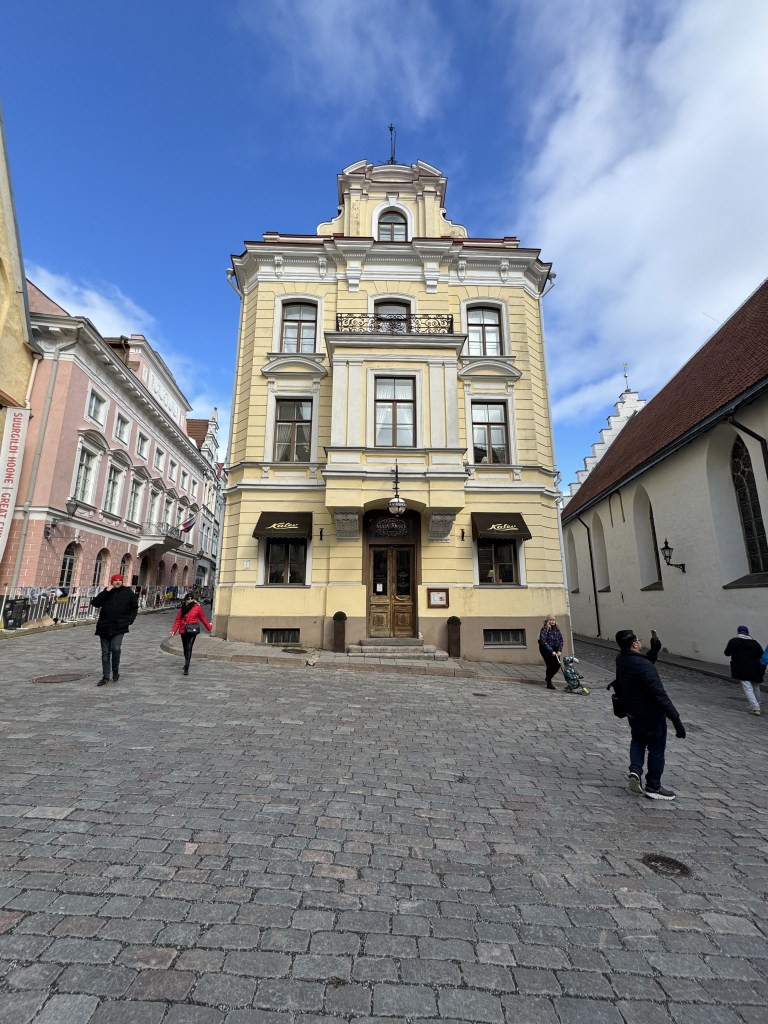
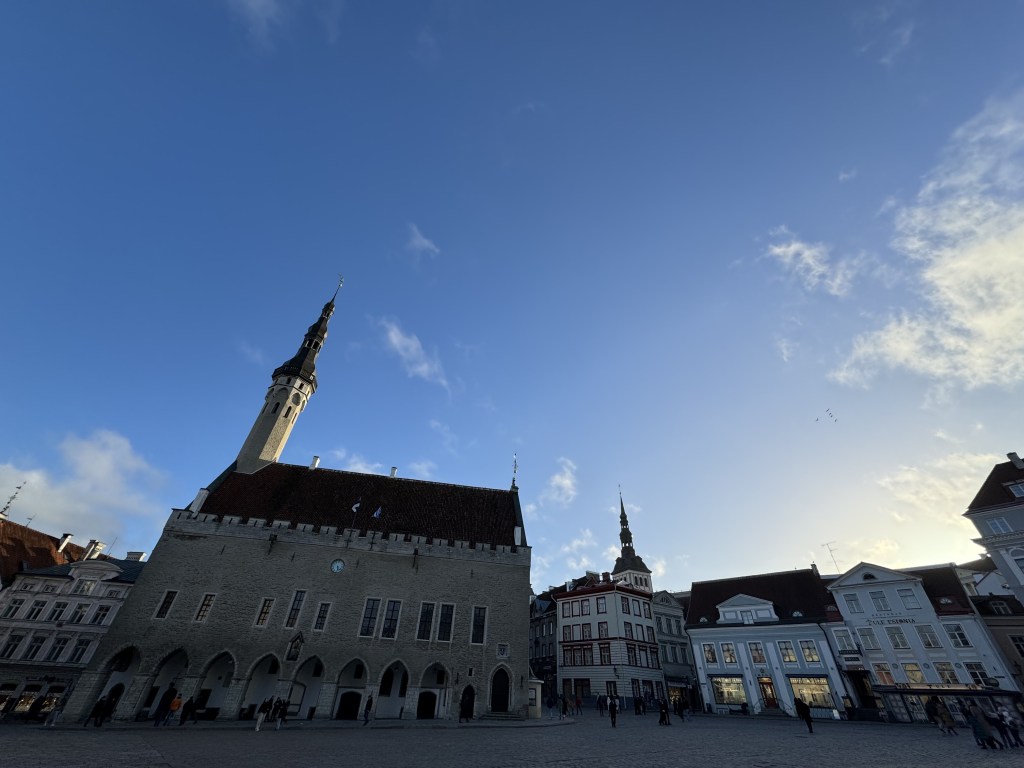
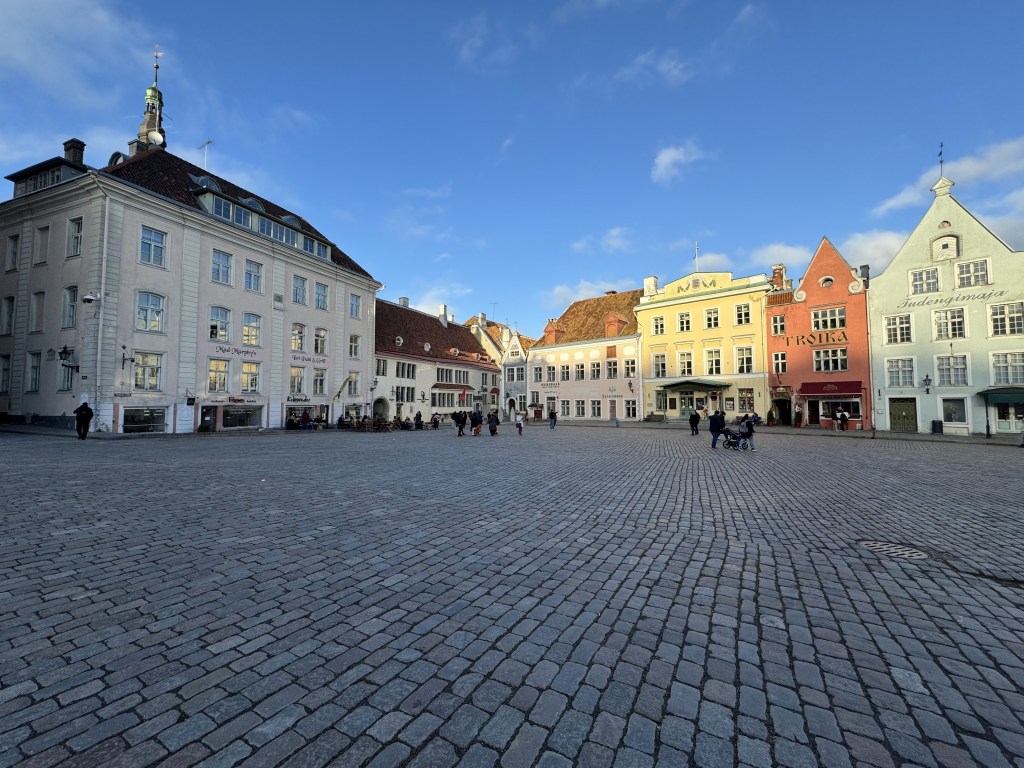
Our tour ended at the Town Hall Square inside Lower Town or locally known as Reval. Lower Town is the larger part of medieval Tallinn. Goods from around the world came in through the Baltic Sea and were traded on the market on Town Hall Square. According to a tourist brochure, “Reval operated autonomously from the rest of the Estonian territories right up until Tsarist Russian times. As in the rest of the country, the real movers and shakers in Reval society were the Baltic Germans, with Ethnic Estonians for most part second-class citizens. However, Estonian peasants from surrounding areas often escaped to the city, where they could eventually be considered free.”
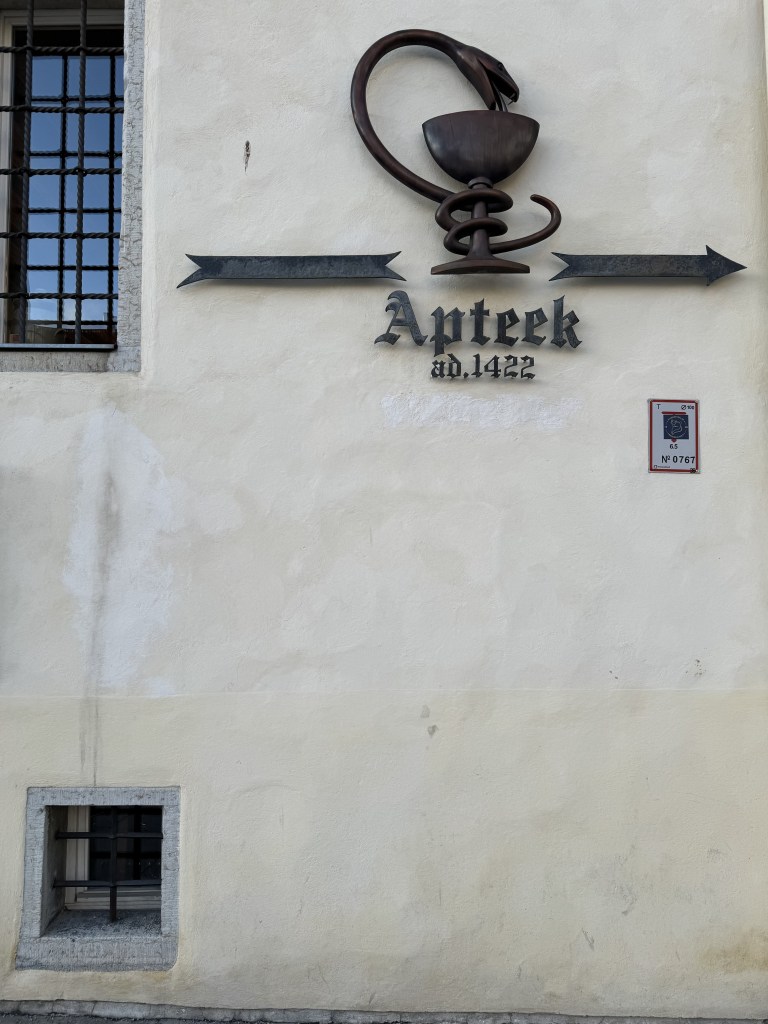
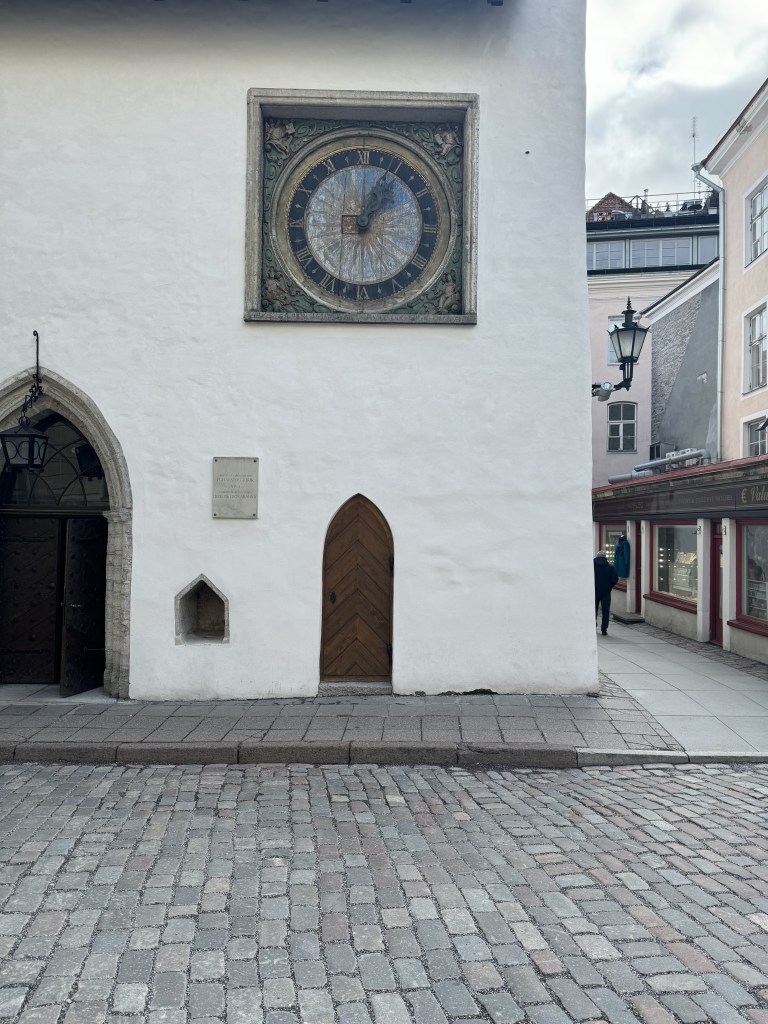
Some of the highlights sites of interest include the Gothic Town Hall, the wooden clock of the Holy Spirit Church, and the oldest functioning pharmacy in the world, Town Hall Pharmacy. The wooden clock is a favorite site. According to culturetrekking.com, the clock has been measuring time since 1684. Located on Pikk Street, it is the oldest clock in Tallinn. The paintings and ornate carvings were created by famous Tallinn master, Christian Ackerman. If you look closely at it, there is an inscription that reads “I strike time correctly for all, for the maidservant, for the master, and for the mistress of the house. No one can reproach me.”
It was a tiring day but it was worth it!
if you get to visit Tallinn in the near future, I recommend that you imagine yourself as a character in any Grimm Brother’s tales or in any fairy tale. Or maybe you have to imagine yourself as one of the characters in Shrek, which for me, is the most Medieval tale among all fairy tales. At the same time, it is for me, the most post-modern narrative, considering the happy ever after in Shrek is decentered. From the usual boy meets girl during the time the girl was in distress and because the boy saved girl, they are married and they live happily ever after, happily ever after is posited as an ideology, perhaps, even an illusion.
But why am I engaging Shrek whence this is not Duloc! This is Tallinn!
 Tanghal Kultura