On the last day of my stay in Tangiers, I initially wanted to stay and see the city. Besides, I was already excited to see Rabat, Marrakech, and Casablanca in the next five days, after a lengthy official meeting with my professional organization. On my last day in Tangiers, I had planned to go spelunking at the Hercules Caves, located 14 km west of the city and a very popular destination. The caves were believed to be a subterranean tunnel passing through the Strait of Gibraltar and leading to St. Michael’s Cave in Gibraltar. In local lore, the Barbary macaques, the popular monkeys in Gibraltar, came from Morocco via the cave’s subterranean tunnel. In the mythological tradition, the cave was a resting place for Hercules before venturing into what is known as the 11th labor – to retrieve the golden apples from the Garden of the Hesperides. Despite this mythological attribution, a friend from Manila messaged me with sarcasm, “Are you sure, a cave?” – well, of course, my closest friends back home know very well that my travels are almost always synonymous with World Heritage Sites – cultural sites, not natural sites.
During the closing dinner, a colleague who has been to Morocco several times did not recommend the cave but suggested that I join a tour to Chefchaouen and Tétouan, two charming cities east of Tangiers. The former is a popular destination, known for its Instagram-perfect, literally blue city, while the latter is a UNESCO WHS. Of course, hearing that there is a nearby WHS really tickled my senses. Immediately after dinner, I opened my notebook and googled tours to either city. Luckily, there was one tour on a popular tour-activity site that brings explorers and culture-buffs to both locations. Without hesitation, I booked the trip, and despite the early travel the next morning, it was a worthy last-minute sign-up.
The tour took us (I was part of a group of seven tourists) first to Chefchaouen – almost three hours away from my hotel in Tangiers. It was not a boring trip, as I was curious about the semi-nomadic people called Amazigh or Sahrawi, who seemed to be enjoying their walks along the highway. The area is primarily rugged and surprisingly green, mountainous (although, once in a while, we passed by some dry plains – almost desert-like landscapes). Our driver informed us that we were passing by the Rif Mountain ranges, which I had to Google and found out that not all of Morocco is desert-dry. In fact, it was only then that I realized the Sahara Desert was somewhere southwest of Morocco, and the surrounding area where I was was lush, green, and maybe even fertile.
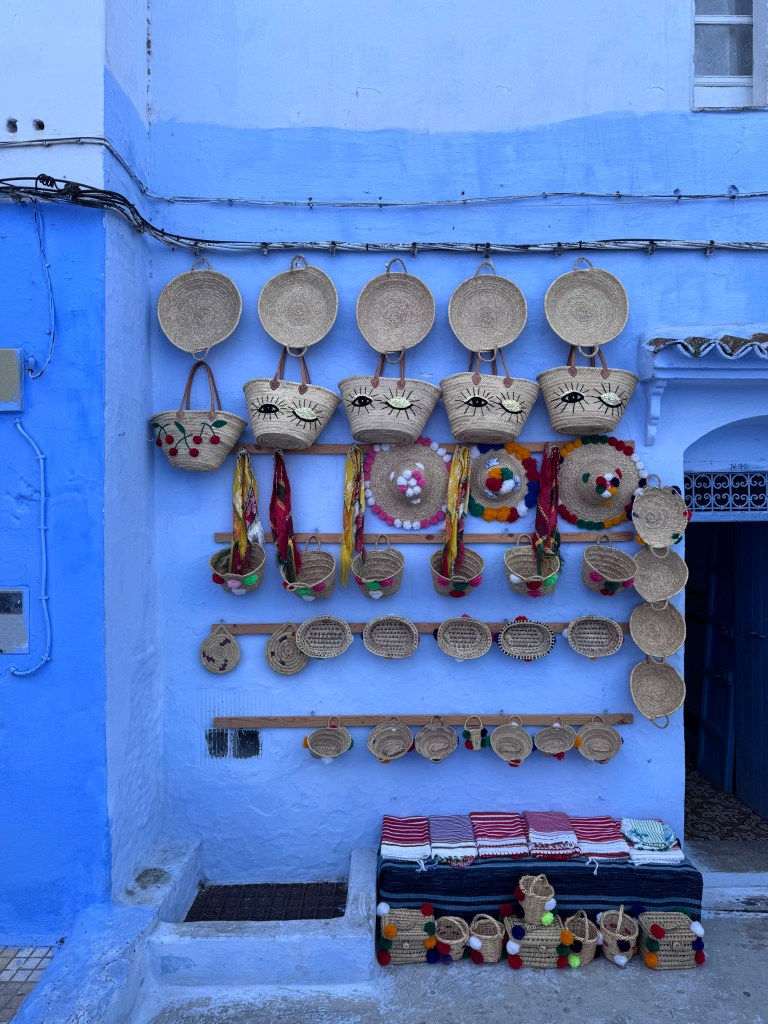
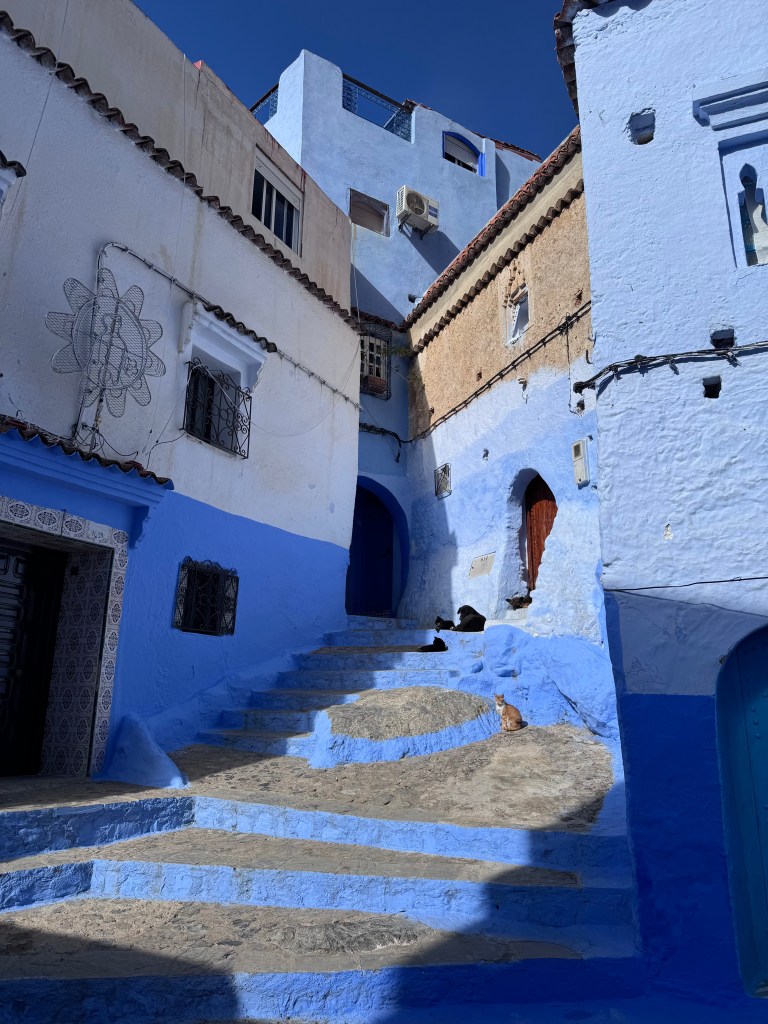
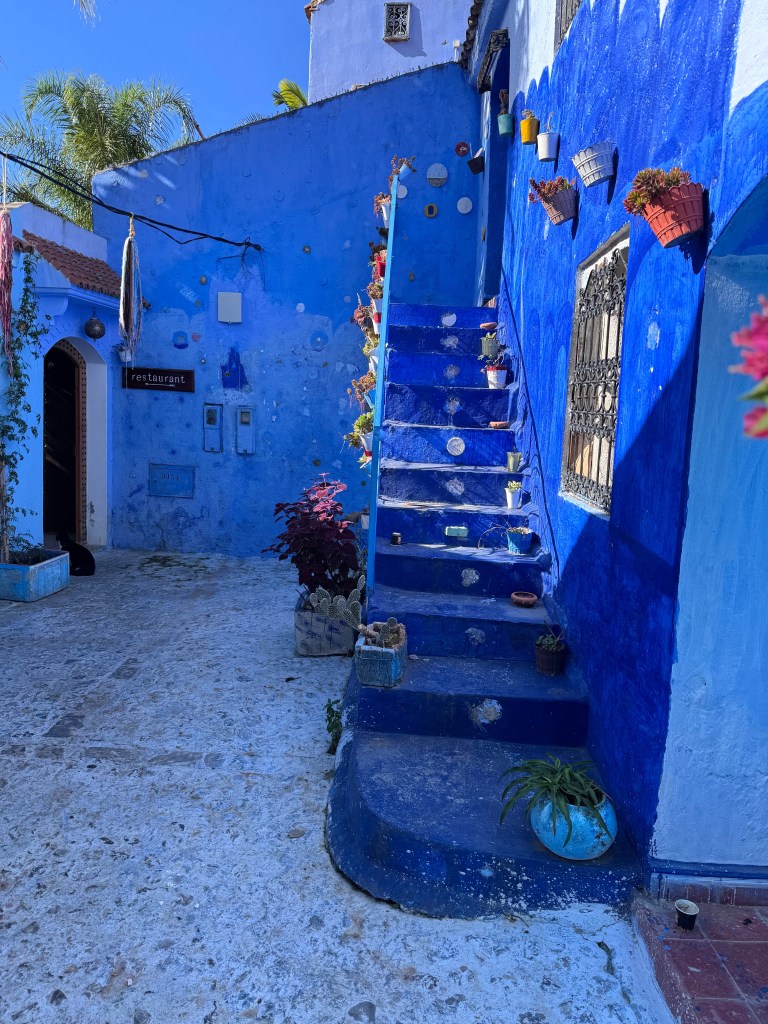
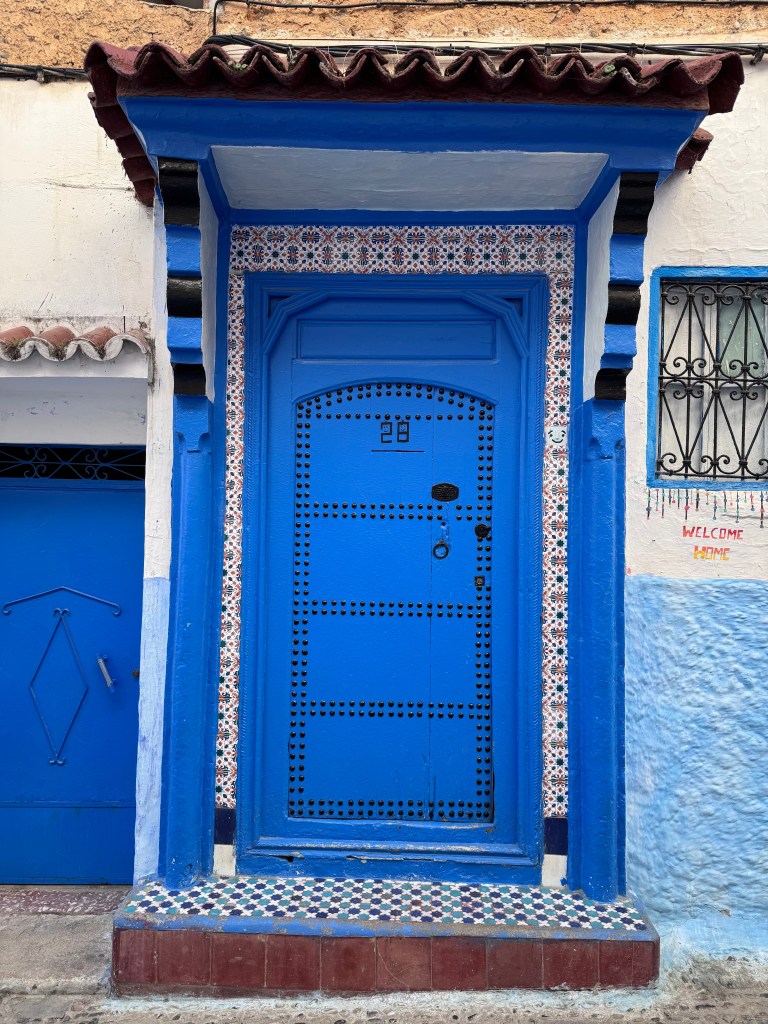
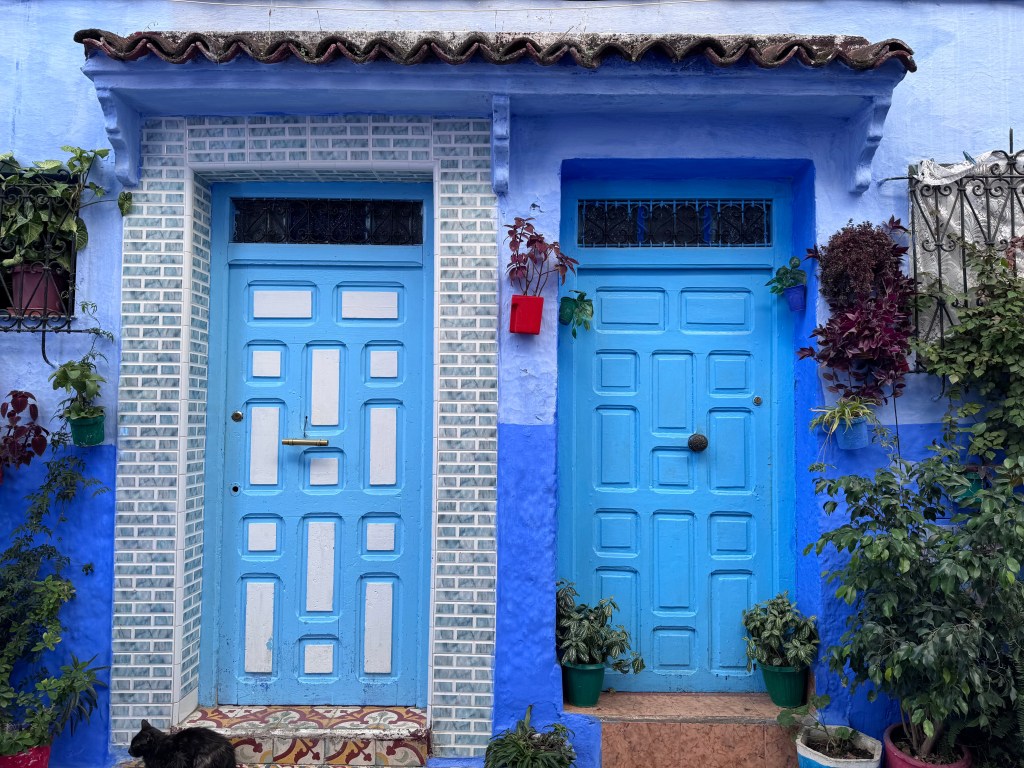
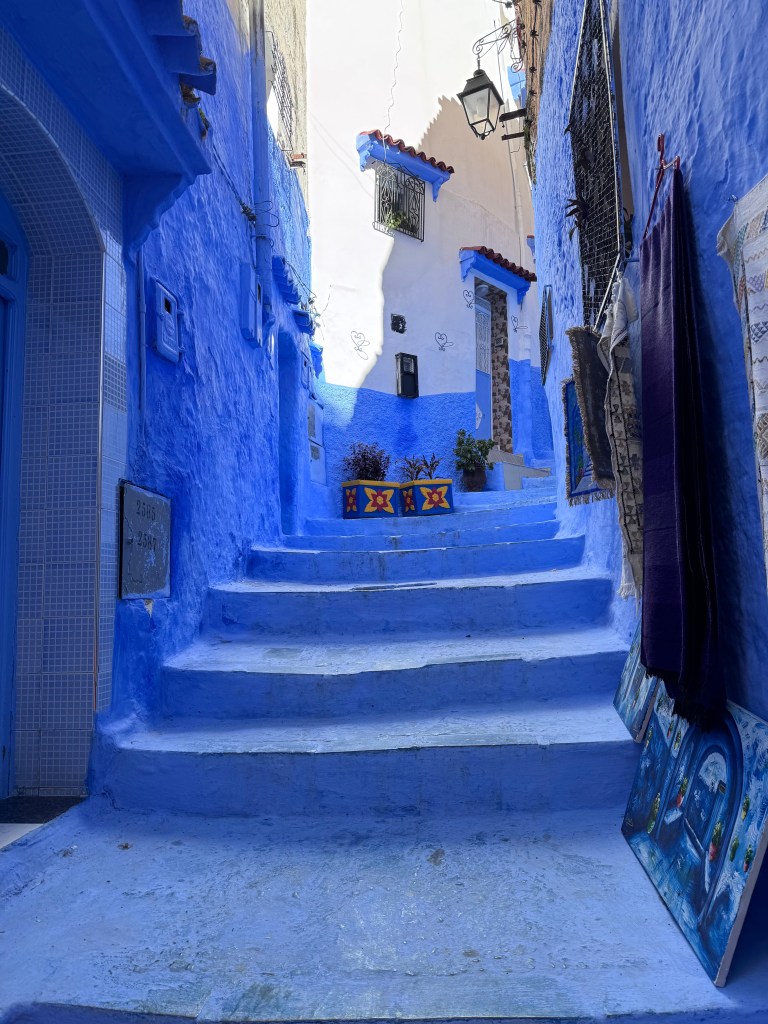
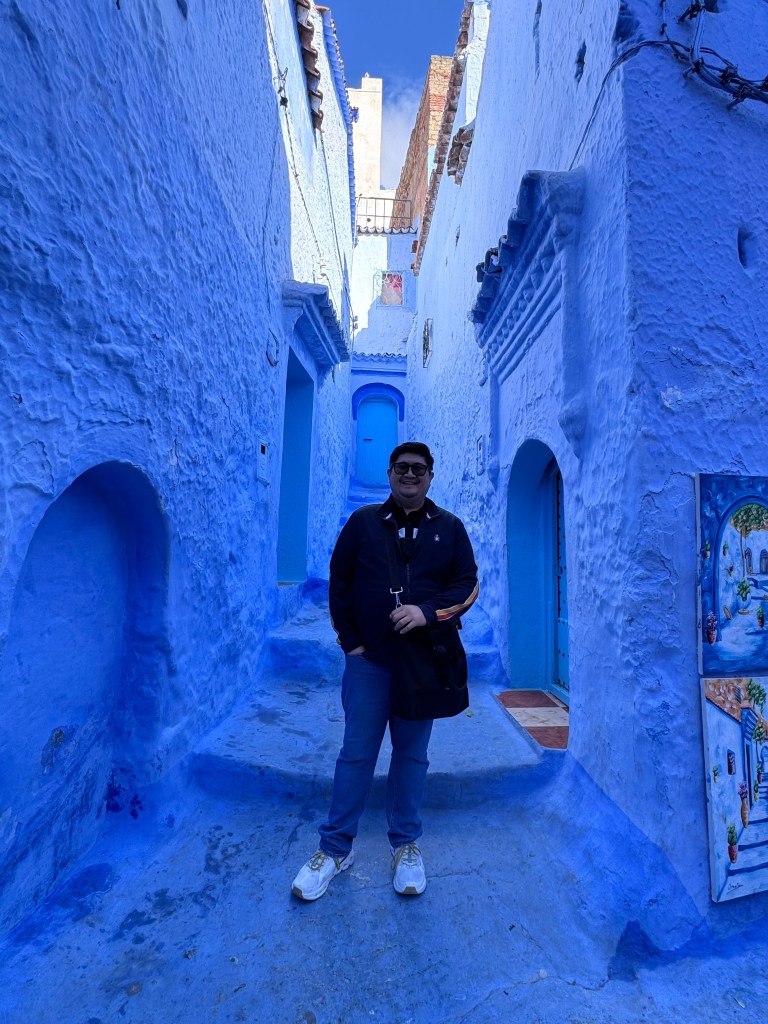
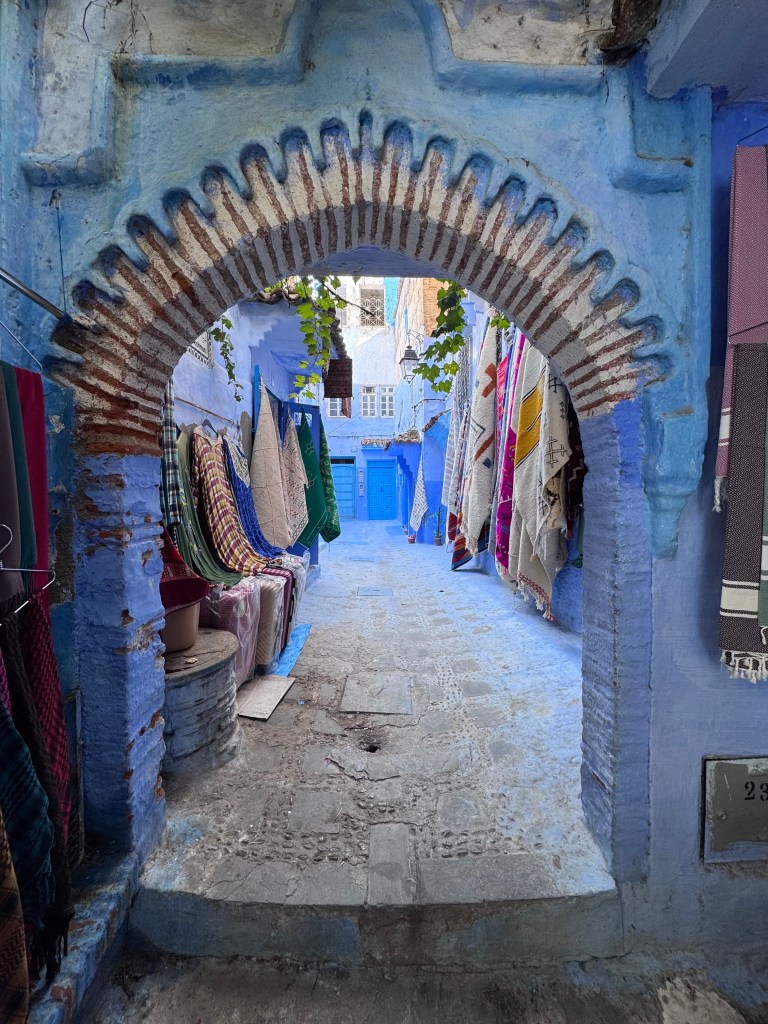
We arrived in Chefchaouen and were literally greeted by blue walls, blue houses, blue lampposts – everything was blue. Chefchaouen is blue primarily because of a tradition introduced by Jewish refugees in the 1930s to symbolize heaven and spirituality. Other popular stories suggest that painting the walls, roofs, or almost everything blue keeps the town cool, acts as a mosquito repellent, or represents the Mediterranean Sea. Many locals believe the blue pigment (often a mixture of limestone and dye) discourages mosquitoes and insects from entering homes. The light blue shades are thought to keep houses cooler during the hot summer months. But there is also a story that the city’s blue coloring is relatively recent. Originally, only a few houses were painted blue in the 1970s. These houses attracted many tourists, and people began investing in painting the town blue to make the city unique and attractive to visitors. Since then, the practice has been maintained to preserve the town’s enchanting motif.
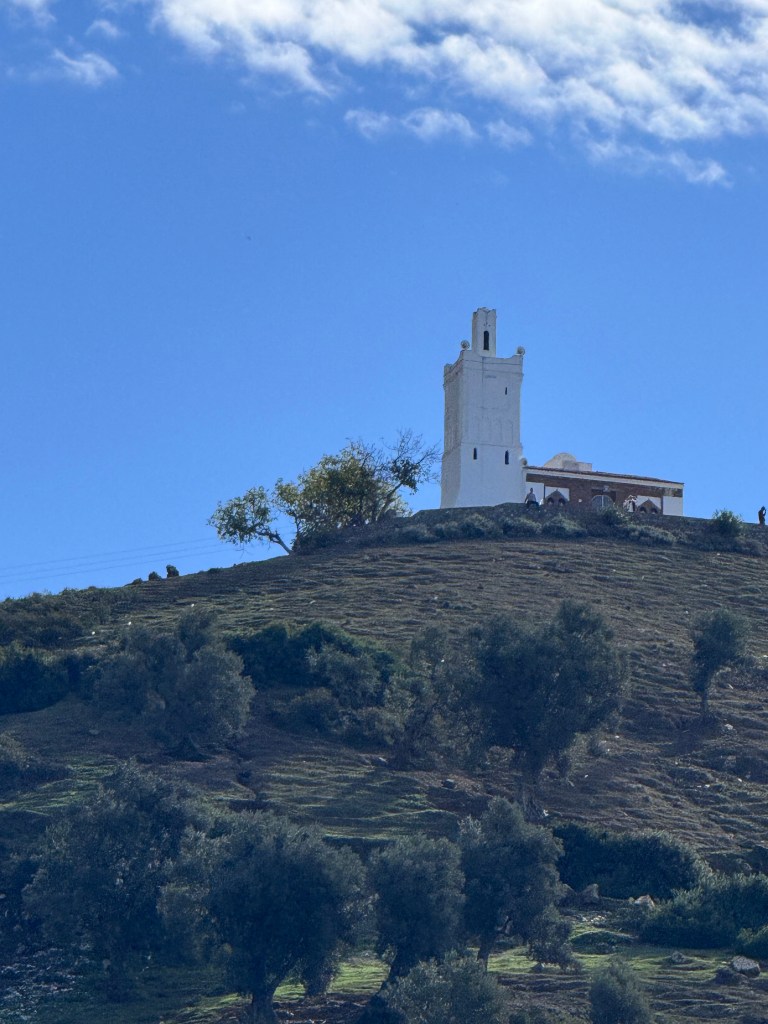
The city’s architecture and culture were deeply shaped by Moorish and Jewish refugees from Spain, giving it a feel distinct from other Moroccan cities in the South. Up in the mountains, above the medina, is an abandoned mosque, which added to the charm of the city’s peculiarity. Speaking of mountains, the city and its medina sit on a mountainside, resulting in many stairs and narrow alleyways that can be challenging for those with mobility issues (like me, hahaha). But honestly, I did not mind these challenges – for some strange reason, the blue walls, the blue everywhere, made everything calmer.
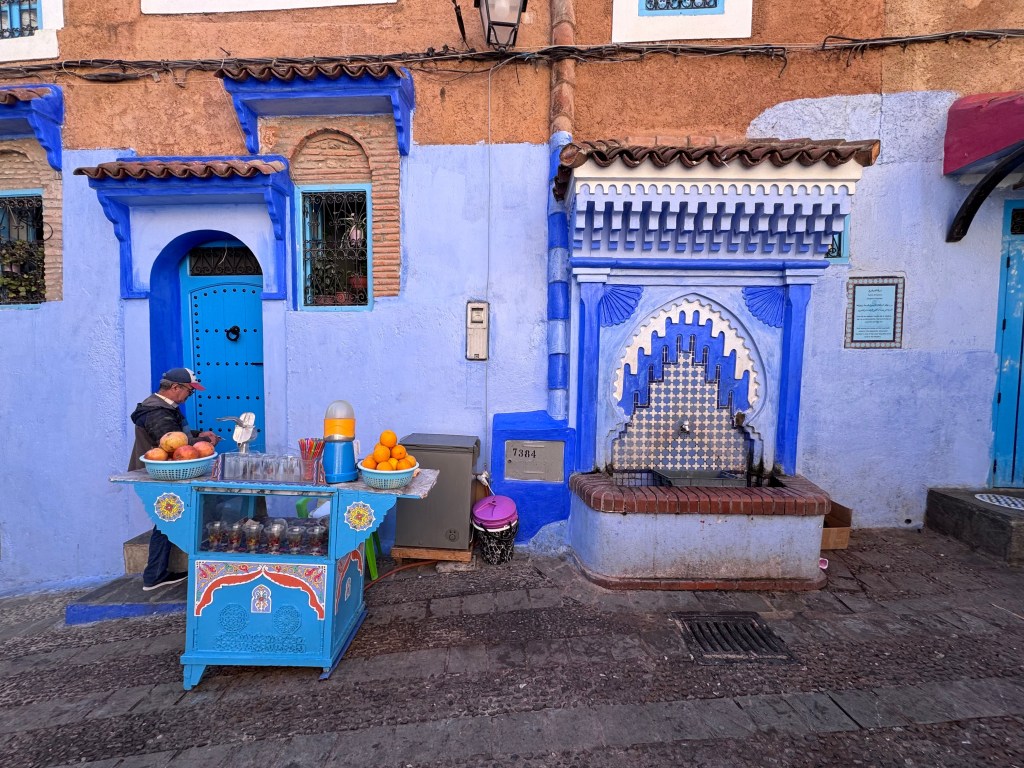
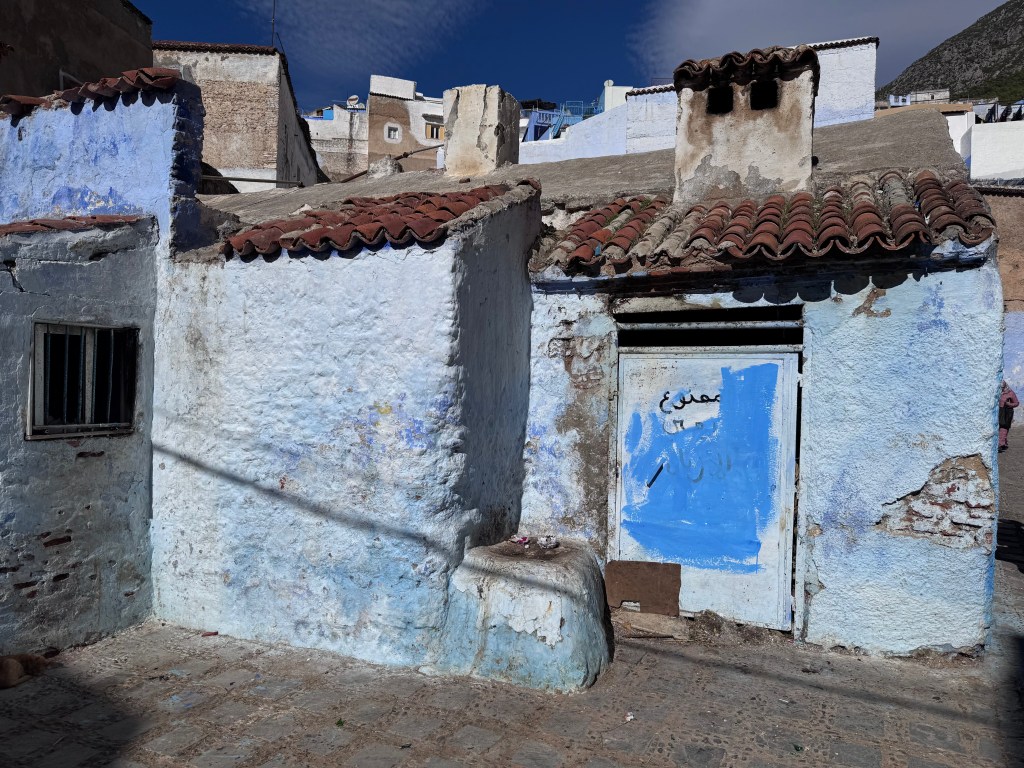
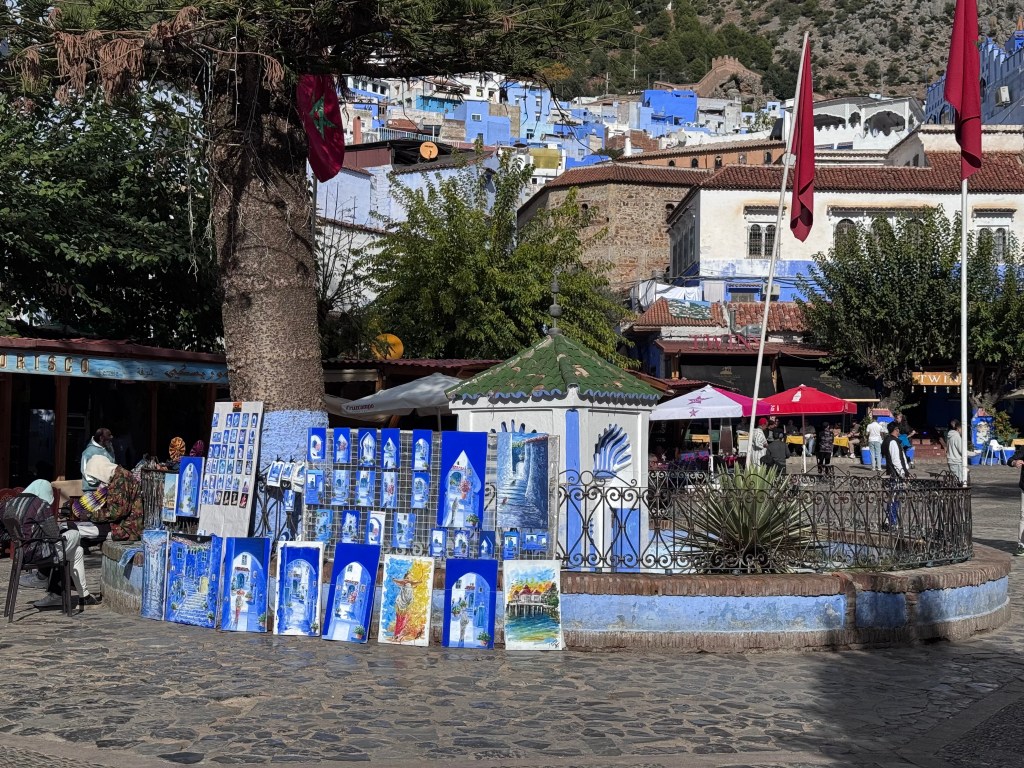
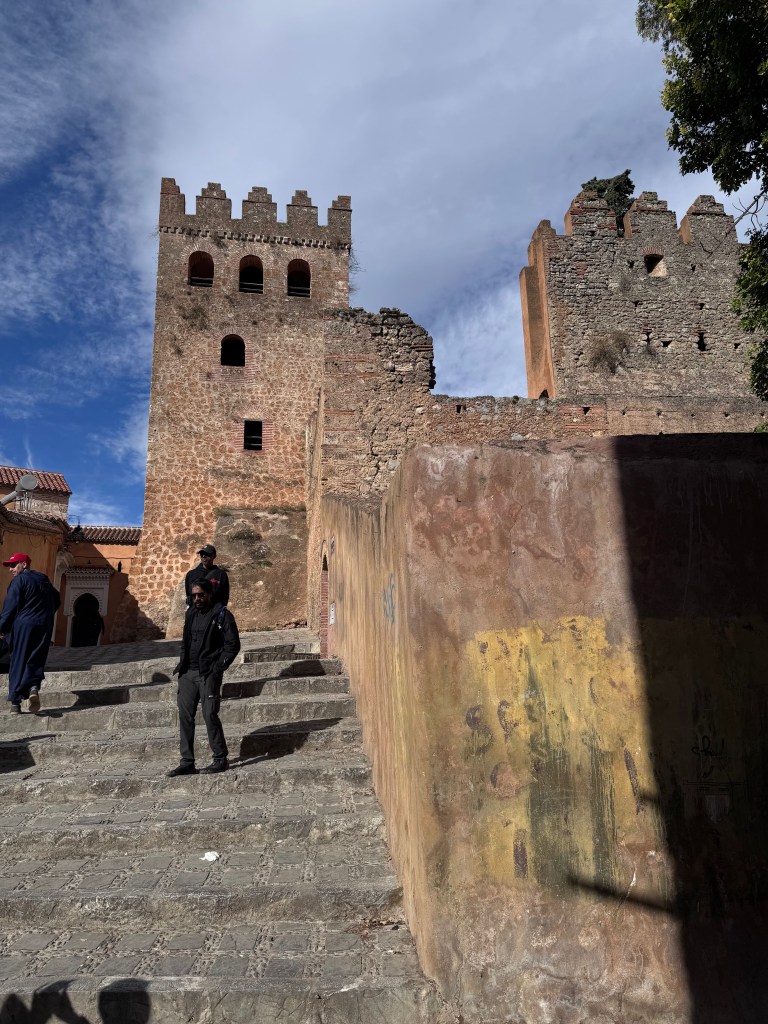
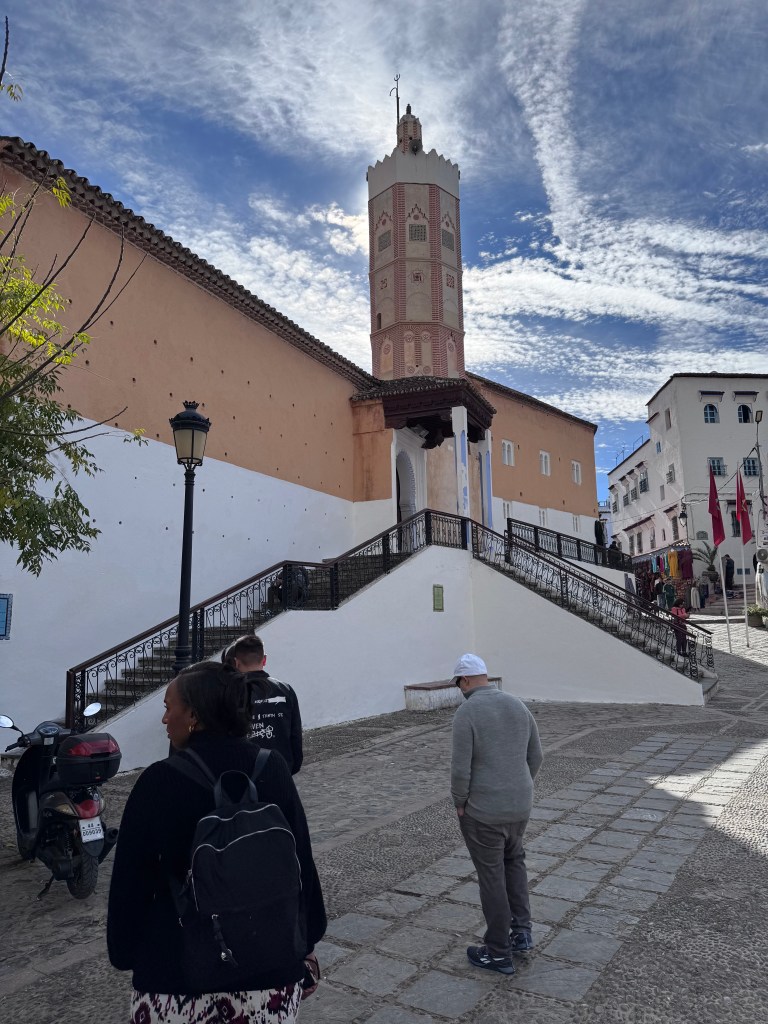
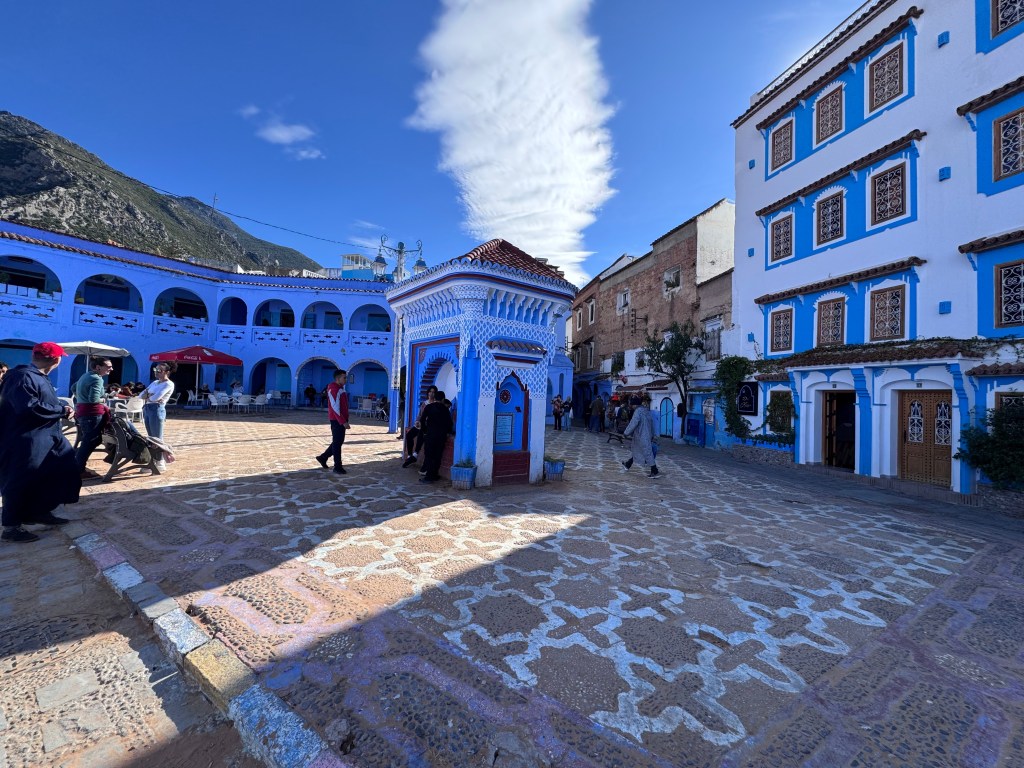
The heart of the city is the kasbah, which houses an ethnological museum, an interior garden, fountains, and patios. The view from the top of the kasbah is also spectacular, offering a view of the city and the surrounding mountains. The kasbah is located on the Outa El Hamman Square, lined with cafes and restaurants, all serving similar Moroccan dishes – I am not sure if it was authentic Moroccan, but it was definitely touristy, as it is the meeting point for those who either start or end their explorations of the city’s medina. There is a huge tree at the center, which I believe is the popular meeting spot for local guides and their tourists. Next to the kasbah is a mosque – nope, a different one from the Spanish Mosque on top of the mountain.
 Tanghal Kultura