
Two years ago, my family and I embarked on what was publicized a “life-changing journey” to the Holy Land. Our travel agency identified three countries belonging to the Holy Land cluster: Jordan, Israel, and Egypt. However, we actually visited four. The agency missed Palestine.
The State of Palestine is literally and figuratively at a crossroads. Palestine encompasses the West Bank, which is currently occupied by Israel. This includes the Eastern section of Jerusalem and the very infamous Gaza Strip. Palestine shares most of its borders with Israel. Nonetheless, it also borders Jordan to the east and Egypt to the southwest. In fact, en route to Israel from Jordan, it is impossible not to notice the Palestinian territory. If I am not mistaken, the border crossing where King Hussein Bridge is located is a Palestinian territory. To date, 146 of the 193 UN member nations recognize the State of Palestine. As of 2012, the State has elevated its status as an “observer entity” from a “non-member observer state.” This means it has the same status as the Holy See or the Vatican City, awaiting recognition as an independent nation-state. It’s just sad that, until today, the Israeli-Palestine conflict has not ended. The senseless conflict annihilated several innocent people, primarily children, senior citizens, and women.
This post is not about the ongoing war in the Israel-Palestine territories. It is about Bethlehem – the highlight of our trip to this Palestinian territory. Cognizant of this is the forthcoming celebration of Christmas Day. Incidentally, NETFLIX has just released a movie Mary (directed by DJ Caruso), which, for me, is a must-watch because it humanizes Mary and brings a deeper understanding of our salvation history or the history of our faith. Besides, it is also essential to think of a historical Mary to grasp connections and empathy. Like us, Mary also trembled, was terrified, petrified, and even ran for her life.
In the movie, Mary tells Anne, her mother, about her pregnancy. To stay away from the judging eye of the conservative mob, Anne sends her to Elizabeth, who is also pregnant. Nonetheless, the news of Mary’s pregnancy begins to spread, and rumors circulate about her being promiscuous. When Mary goes to the city, she meets Joseph, who is surprised to see her big tummy. Nearly stoned by a mob, the confused and angry Joseph helps her escape. Despite the confusion, Joseph commits to stay and promises to take full responsibility for her and the child. And part of this promise and commitment is his submission to love Mary. They are married but soon enter into hiding and travel to Bethlehem.
Bethlehem – the birthplace of Jesus.

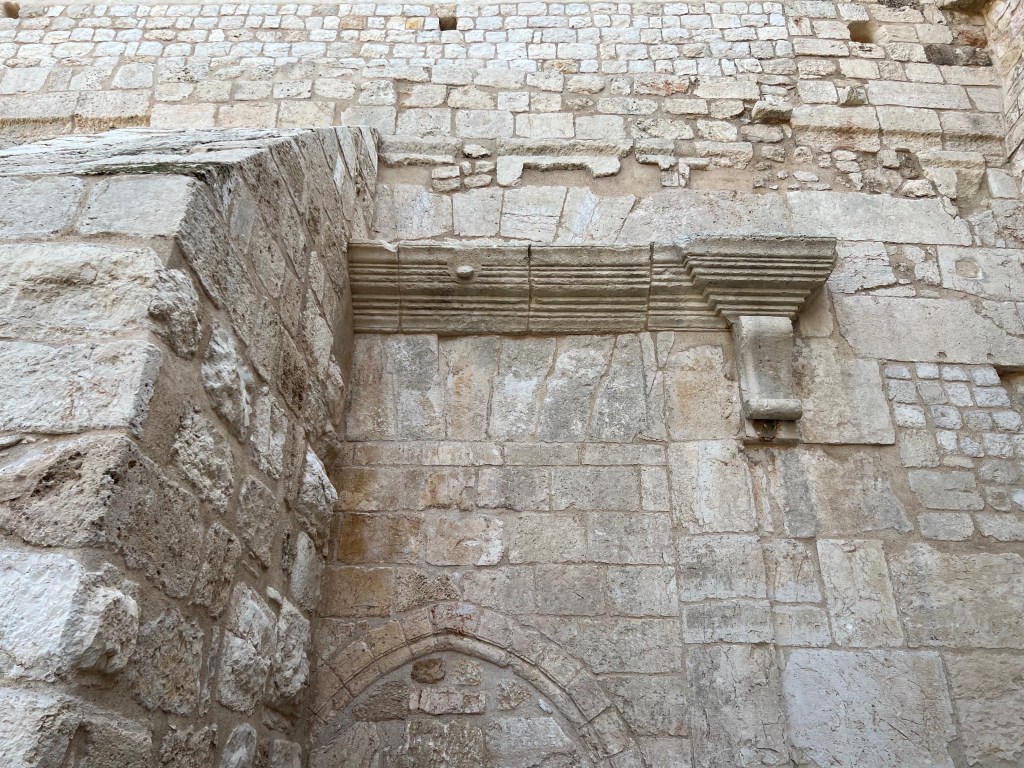


Following the movie Mary, we can also imagine how difficult it was for Jesus to be born in Bethlehem. Traditionally, the faithfuls believe Jesus was born in a manger. Was he? Nobody knows, but that was what the gospels tell us – at least by Matthew and Luke. This narrative is essential. It reminds everyone that the Son of God came from a humble beginning. Thus making the Divine very relatable and close to the common people.
But what if he was born secretly (in a very secret place) because Mary and Joseph were afraid of possible harm from the prejudiced eyes of those who believed that Mary was, in fact, a promiscuous woman. Or perhaps they were on the way back to Nazareth, but by nighttime during their travel, her waterbag had broken, and it was challenging to find a place where Mary could deliver him. What if Jesus was, in fact, the son of Mary and Joseph. And what if Joseph prepared him to be the radical person he was. What if Joseph opened Jesus’ eyes to fight against injustices, oppression, and tyranny.
Many narratives attempt to humanize Jesus. What is essential, I think, is how any of the narratives strengthens one’s faith. For me, this is the significance of Jesus in both the world and salvation history. His story outside theology is more than faith. It is about living an ethical life. It is about respecting differences. Remember, he lived among the lowly. His disciples were the usual outcasts of the society. His profession of justice is a profession of care, responsibility, and love. He predates Levinas’ ethics of the face. He is the very embodiment of “to love another person is to see the face of God.” His divine words, “he has not sin must cast the first stone,” is a cry for justice. His commentary about Cesar’s property indicates his battle against imperialism: “give to Cesar what is to Cesar,” implicitly saying there is nothing to give because he does not own any property – all properties of the land belong to everyone (though the Gospels tell us belong to “God”).
Returning to Bethlehem, Mary first cradled the future savior, messiah, hero, rebel, deliverer, etcetera. A song is currently playing in my head while writing this post: “Mary did you know, that your baby will one day walk on water. Mary, did you know That your baby boy will save our sons and daughters? Did you know That your baby boy has come to make you new? This child that you’ve delivered will soon deliver you” Today, in Bethlehem, the Church of Nativity is believed to be the site of the birthplace of Jesus.
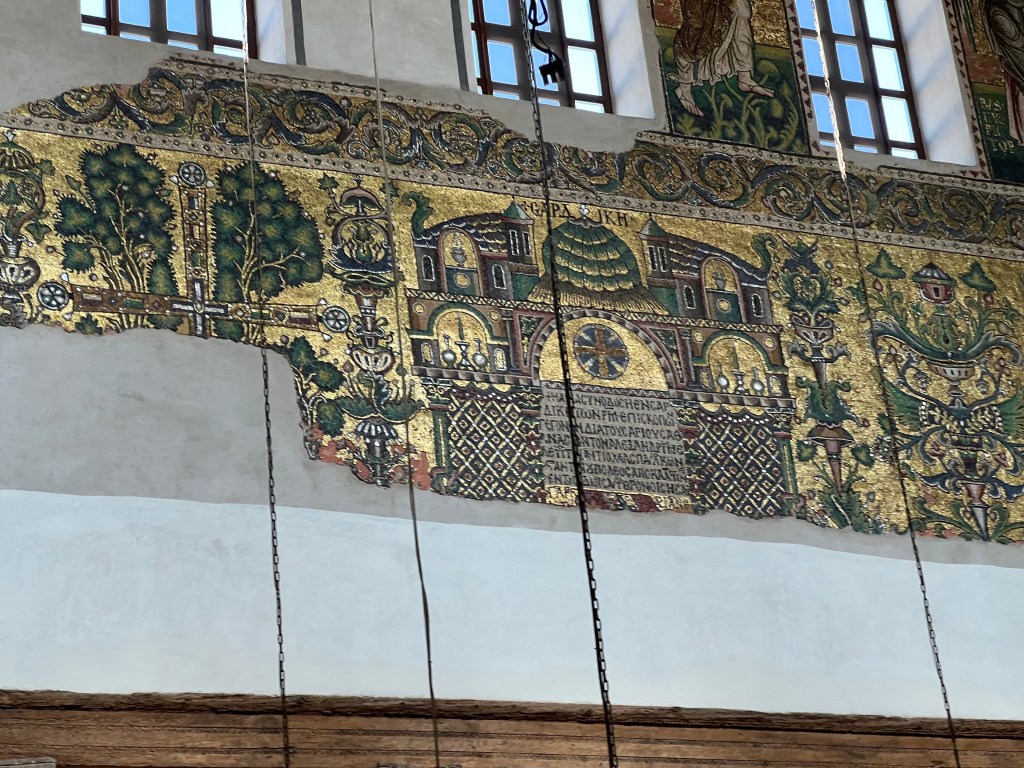
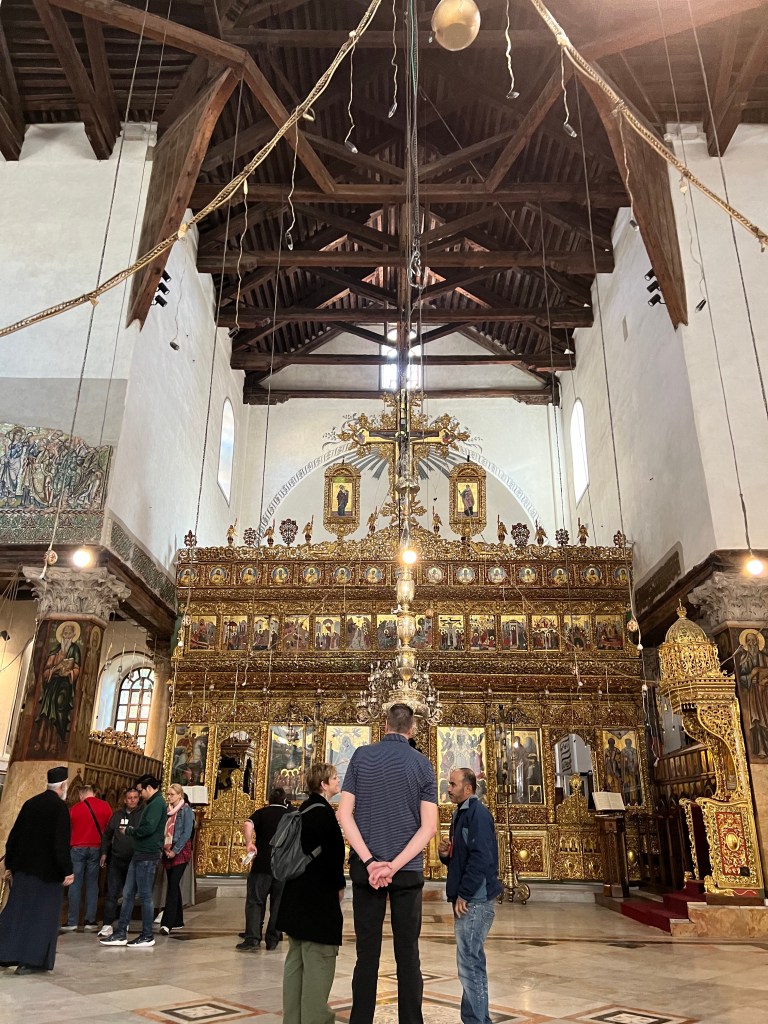


Historically, the site is believed to have started as a grotto – a marker that early Christians visited during their winter pilgrimage. Nonetheless, during the pre-Constantine period, the Christians were the scapegoats of the Romans for their misfortunes. This was the reason why, in ca. 315, a temple dedicated to Adonis, the lover of Aphrodite, the Greek goddess of beauty and desire, was erected on the very site of the grotto by Emperor Hadrian.
In ca. 248, historian Origen wrote: “In Bethlehem, the cave is pointed out where He was born, and the manger is in the cave where He was wrapped in swaddling clothes. And the rumor is in those places, and among foreigners of the Faith, that indeed Jesus was born in this cave who is worshiped and reverenced by the Christians.” No one has ever pointed out where the cave or grotto may be found. But during the heyday of Christianity under Constantine, Helena, his mother, identified the current site as the very site of the nativity. Constantine is believed to be buried inside the church.

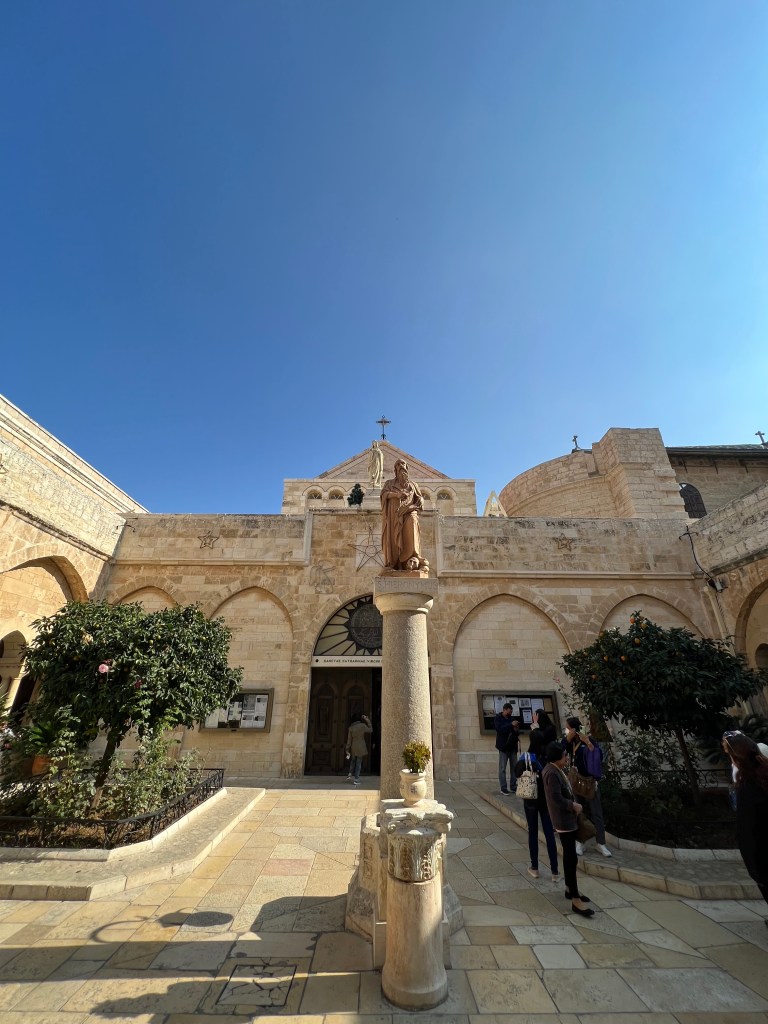
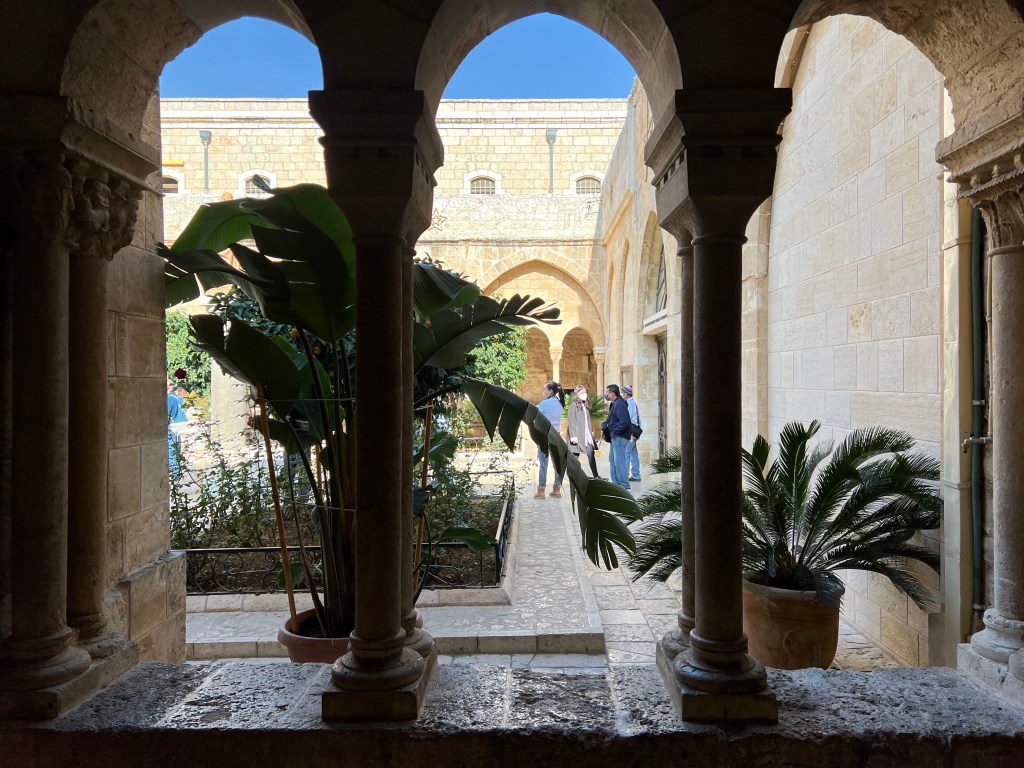
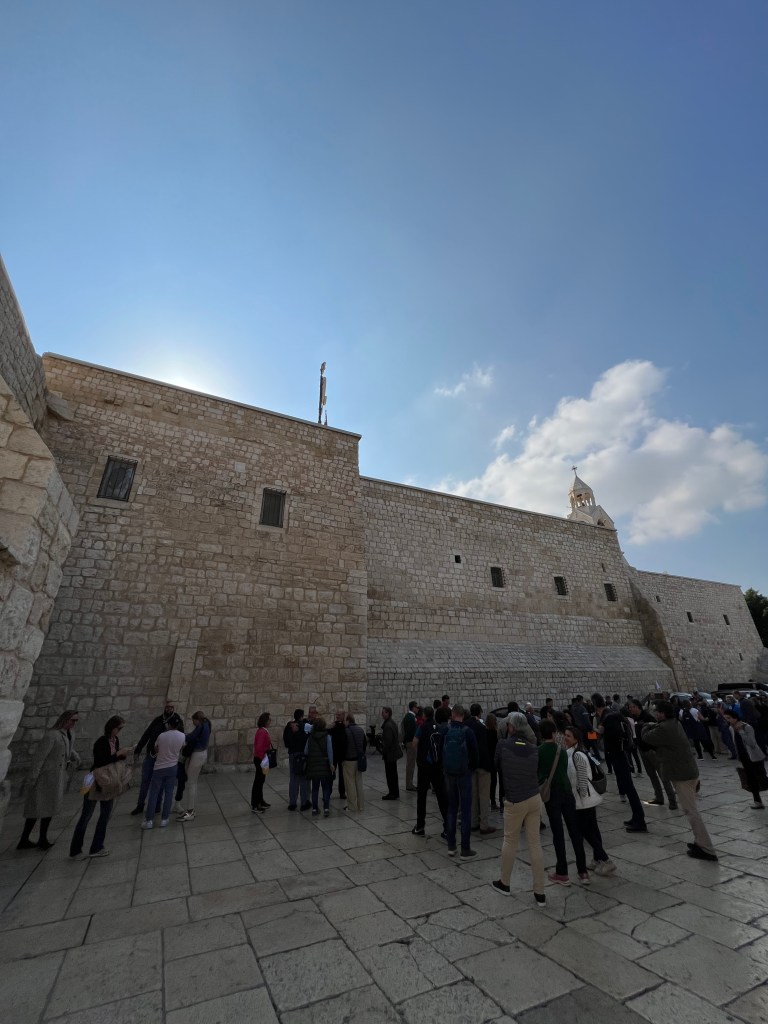
Do note, that Bethlehem is in Palestine. Palestinians themselves consider the birthplace as a very sacred place.
In 2012, the church complex became the first Palestinian site to be listed as a World Heritage Site by UNESCO despite the opposition of Israel and the United States. The enlistment was important because Palestinians wanted the assistance of UNESCO for its preservation and conservation because of wear and tear due to water leaks. UNESCO placed the Church of the Nativity in the list of World Heritage Sites in Danger from 2012 to 2019. The State of Palestine started mobilizing its people to safeguard the very sacred site.
Is it therefore rightful to say that Jesus himself was a Palestinian? I don’t know. Nonetheless, one thing is for sure. If Jesus was alive today, he would definitely join all protesters against the Israeli-Palestinian conflict. And for sure, in his sermon, he would say: “people, you have not learned anything?!”
 Tanghal Kultura