Today is the last day of our Germany-Czech tour before returning to Frankfurt for our flight to Manila. It’s the 31st of October. Commonly, on this day, the Philippines is really busy – cleaning the nitso, the puntod, and the mausoleum of dead loved ones. The next day is All Saints’ Day, and on 2 November is All Souls’ Day. For many Filipinos, the celebration is somehow a family reunion with the dead relatives. It’s the muertos de dias without the make-up. The All Saints’ Day celebration in the Philippines is a grand rehearsal for the grand event during the Christmas season.
It is also common to receive remarks from aunties and lolas about being single: “kailan ka ba mag-aasawa?” As if the end all of being alive is having a husband or having a wife. More so, these gossiping relatives are not tired of intrigues – to the younger, married family members who do have not bore a child, the usual conversational starter of these aunties: “kailan kayo magkaka-anak?” as if bearing a child is simple. Then body shaming follows – “tumaba ka yata” or “hindi ka na yata kumakain, bakit ang payat-payat mo!”
We went to Kutná Horta today – a town in the Central Bohemian Region of the Czech Republic. Incidentally, there is something similar with the way the Filipinos commemorate the dead loved ones in this cute little village.

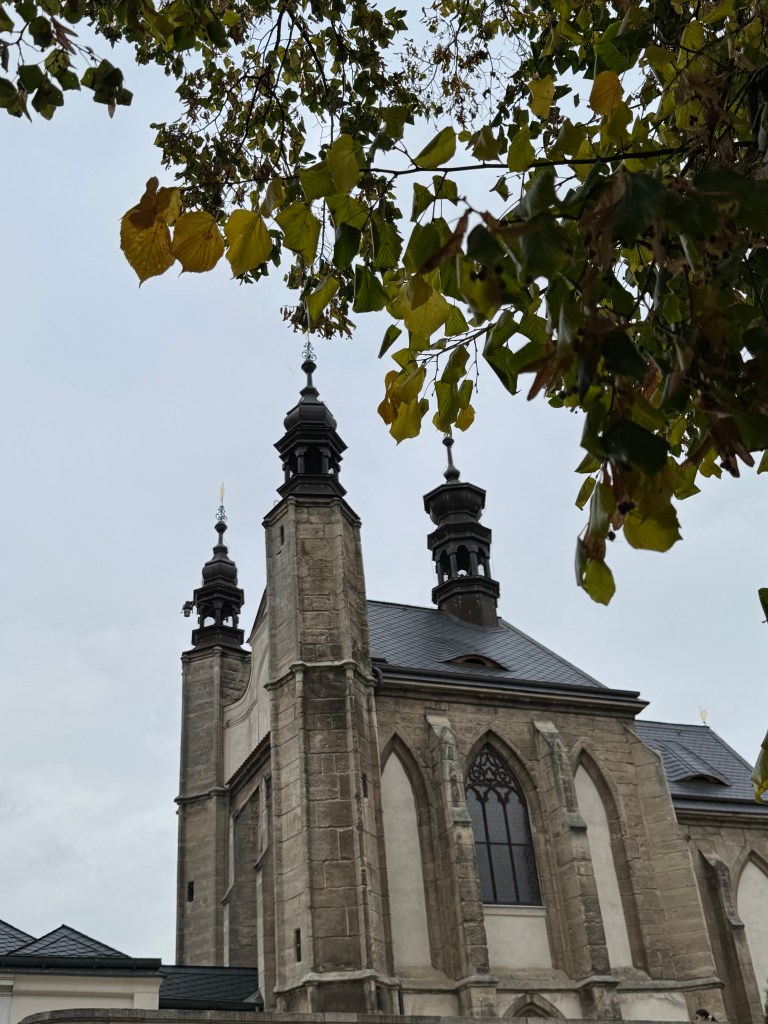

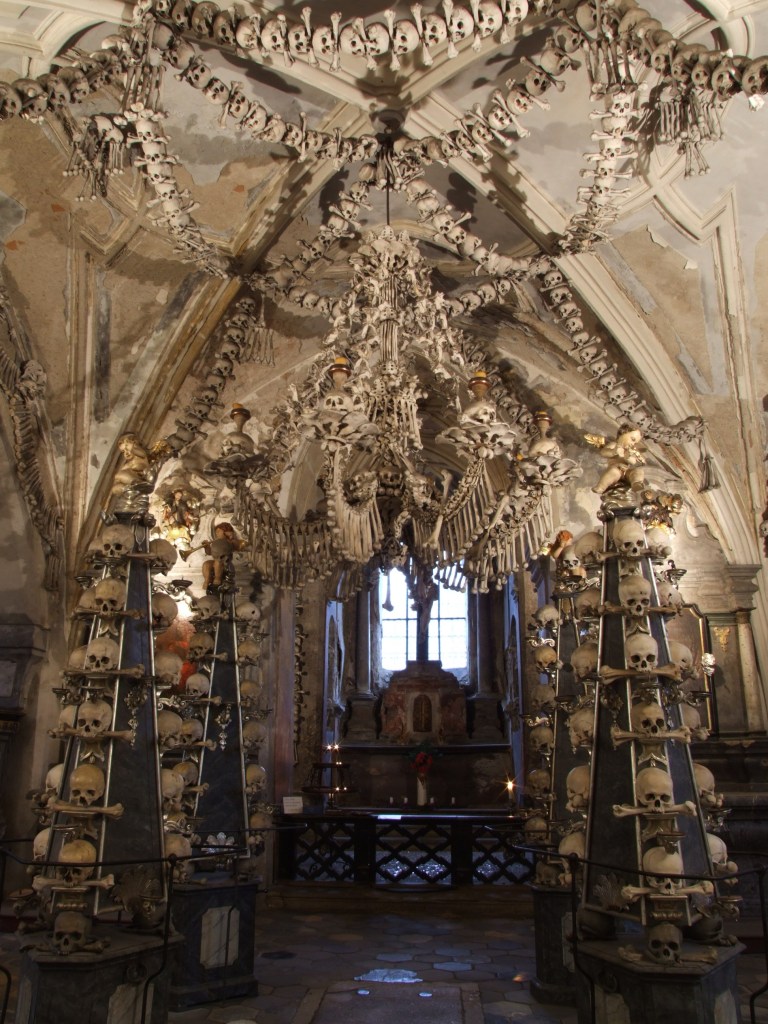

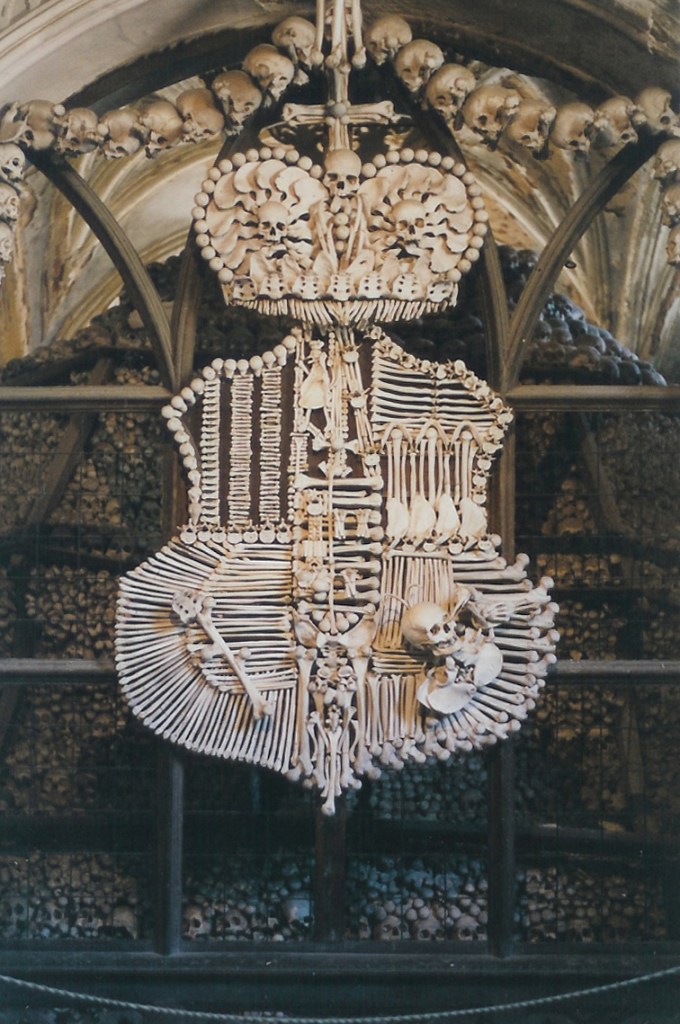
The first “monument” that welcomed us was the Sedlec Ossuary, a Roman Catholic chapel located beneath the Cemetery Church of All Saints. The ossuary is part of the former Sedlec Abbey. What is special about this “monument” is that the ossuary is estimated to contain the skeletons of an estimated 100,000 people, whose bones have been creatively arranged to form decorations and furnishing for the church. Unfortunately, no one is allowed to take photograph inside the chapel. Our tour guide informed us that the Prague Council prohibited taking photos after two teenagers posed before the decorations in their underwear. These teenagers seemed to have forgotten that the ossuary is still a holy location.
The church is both bizarre and beautiful, but in the same way, it is also grotesque and incredible. It is amusing, as much as it is also mysterious. Just imagine a collection of human bones tangled together and hung up as a grand chandelier, the chapel’s centerpiece. There’s also a pile of skeletons clustered together as a grand pyramid. Both the chandelier and the pyramid are imposing structures that are terrifying and exceptional. As I wonder around, I am amused by the creativity of the people who created these decors. However, I could not remove in my head that these were once upon a time belonging to the world of the living.


I guess this is the philosophy and theology of celebrating the dead during All Saints’s Day. I remember Dasein – the ever-present-absent and the ever-absent-present. The being which is in the here and now but also in the then and there. Or the being that is in the then and there but also in the here and now. We have no idea of the afterlife. But so what? What we believe is our dead loved ones are in the here and now despite their absence. They are present despite their being there and then. As a good friend once said, there is no moving on from the loss of a loved one, only moving forward. In this case, November 1 is our way of moving forward: our loved ones can no longer be with us, but during November 1, our memories about them live on. We only move forward because they are no longer physically part of our lives.
By the way, the locals in Kutná Hora will also bring food to the cemetery (Ossuary) – which will not only be shared among family members but to be shared by everyone. The Day of the Dead in this small village in the Central Bohemia Region of the Czech Republic is a community commemoration rather than a familial commemoration.
 Tanghal Kultura
One Comment Add yours