Ayutthaya is located in central Thailand, about 90 km north of Bangkok, the gateway to this popular SEA destination. The city, also known as the Historic City of Ayutthaya, is home to magnificent temples and other structures that are important both historically and architecturally. As one of the world’s largest cities of its time and a major center in the mainland Southeast Asia, Ayutthaya is found in many archives: visitors since the 13th century recorded their observations about the city and their experiences there. According to the World Heritage Convention, the Siamese Royal Court also kept meticulous records; many were destroyed in the sack of the city, but some have remained and are an important source for the understanding of the city’s historical significance in this Asian region. In 1991, Ayutthaya was inscribed a UNESCO World Heritage Site.
The Historical City of Ayutthaya is split up into two main areas being the Historical Park – a UNESCO World Heritage site (Pratu Chai sub-district) and the area outside the Ayutthaya Historical Park (sub-districts of Pratu Chai, Tha Wasukri and Ho Rattanachai), called here Ayutthaya Historical City, within the boundaries of the city island. In 2022, my colleagues and I had a chance to experience the Part Chai sub-district, which is composed of many temple ruins and other sites of historical significance.
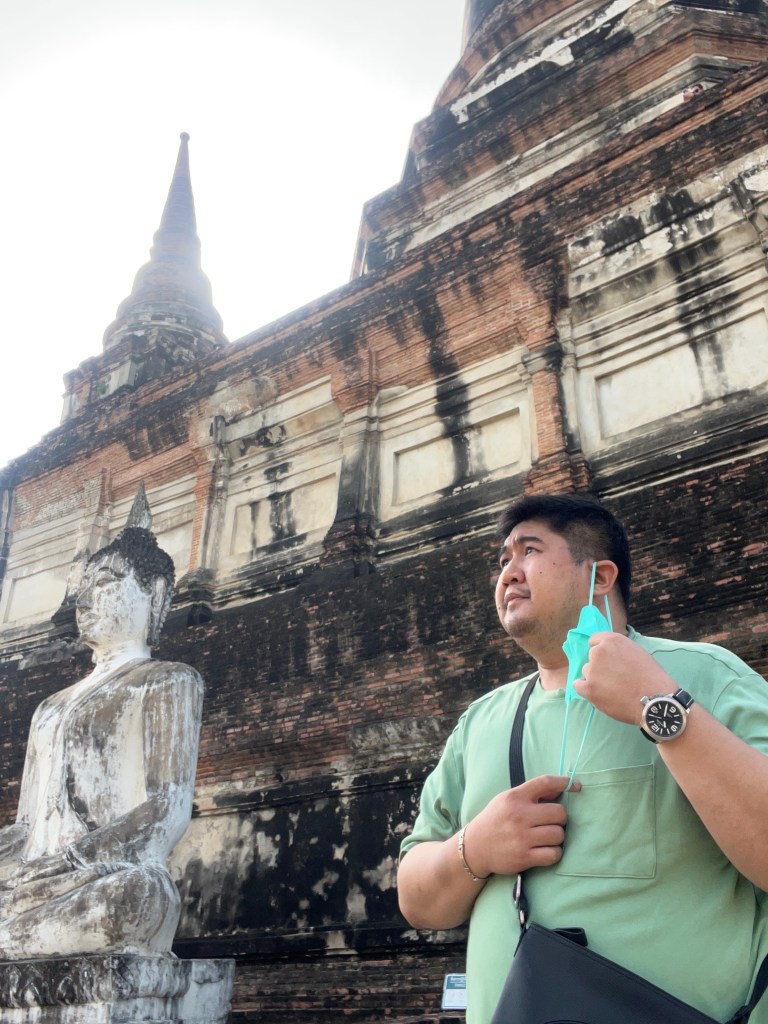


The architecture of Ayutthaya is a fascinating entanglement of Khmer and early Sukhothai styles. Khmer architecture is known for the use of brick, sandstone, laterite and wood for their main structures. It is believed that many woodworks disappeared because several of Khmer structures in this Southeast Asian region were gutted by fire during a series of conflicts among warring kingdoms. In Ayutthaya, the structures were burned by the Burmese Army who attacked the city in the late 18th century.
Khmer architecture is known for two elements: the bas reliefs and the presence of elaborate stairs. The former depicts scenes of local lores (often religious iconographies of Hinduism, particularly ideas of heaven and hell). In other sites, depictions of the stories of the rulers of the kingdom mixed with mythologies are carved on the reliefs. The stairs are commonly steep which represents the long and difficult way to the heaven / nirvana / realm of the gods. According to Angkor-scholar Maurice Glaize, the monumental point of view for this peculiarity is that “the square of the base not having to spread in surface area, the entire building rises to its zenith with a particular thrust”.
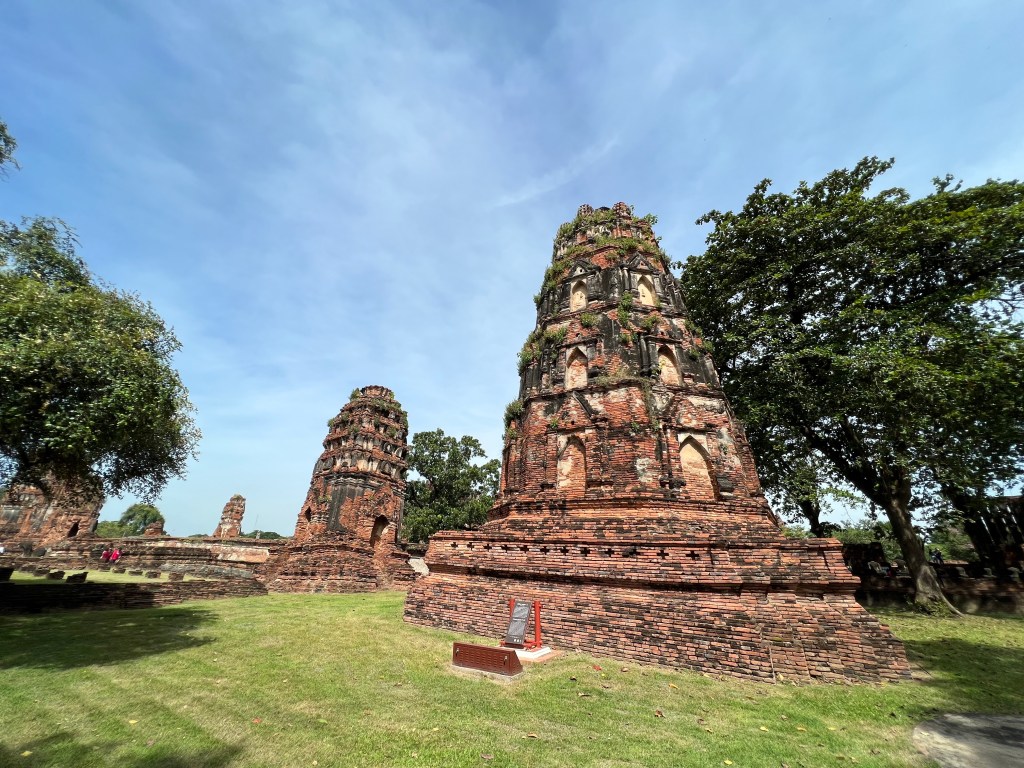
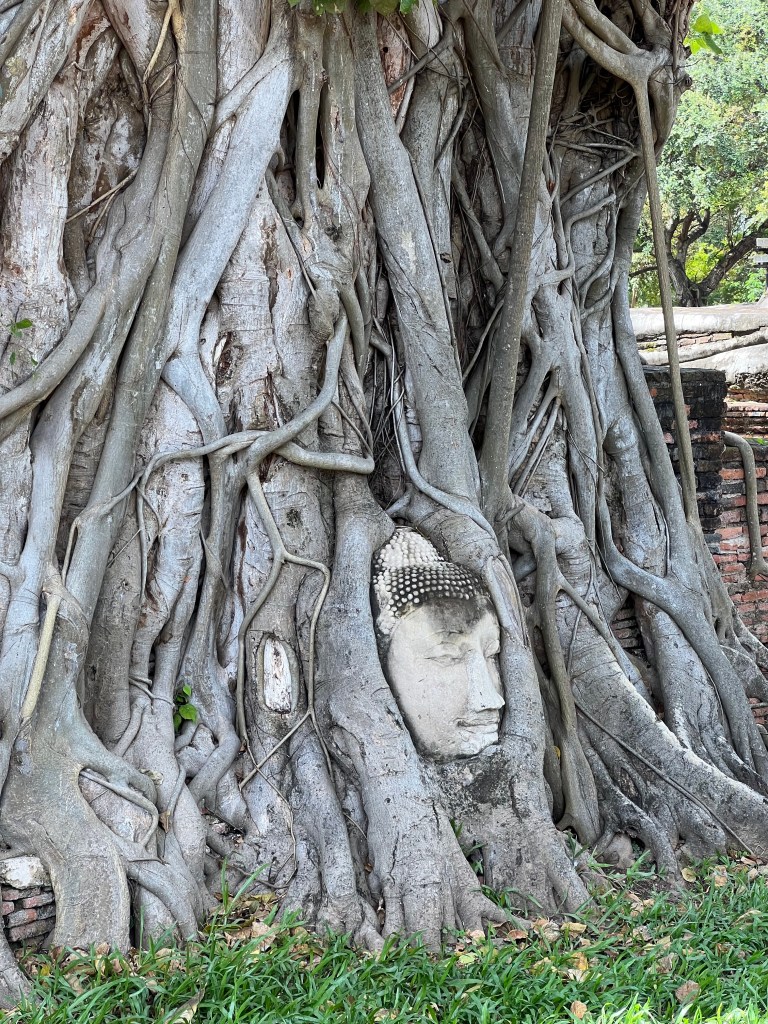


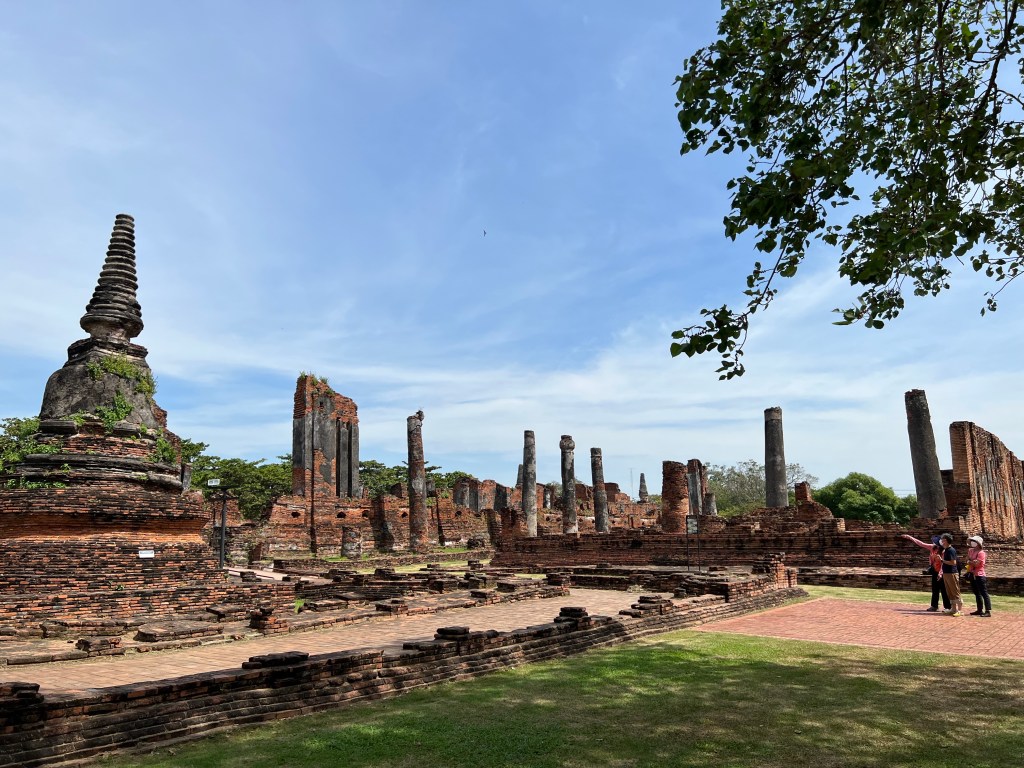
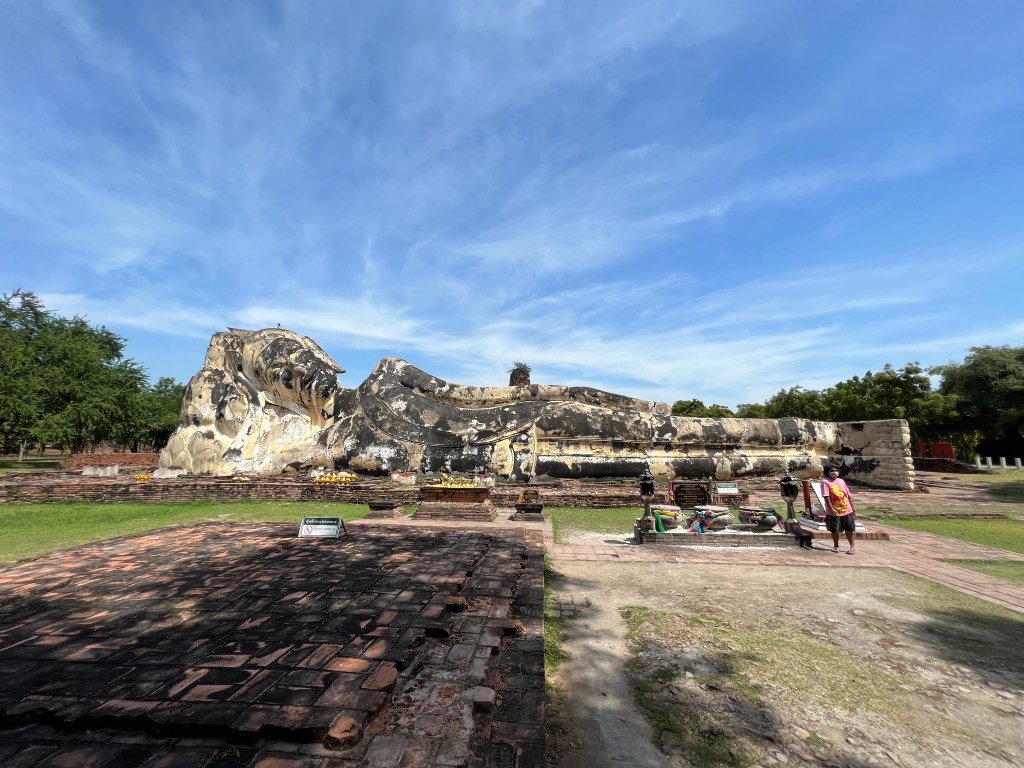

Some cactus-shaped obelisks, called prangs, are believed to have influenced by the Khmer architecture. For visitors who are familiar with the temples at Angkor Wat may find the ruins at Ayutthaya similar to those in Seam Reap.
On the other hand, the more pointed stupas are ascribed to the Sukhothai influence, a very important canonical artistic style in Buddhism, which is believed to have originated in the Tai Kingdom (Northern Thailand). The Sukhothai style is composed of sinuous curves and cylindrical forms, creating a boneless, weightless elegance in depicting Buddha. According to some sources, the various portions of Buddha’s body follow abstract ideals based on analogy with natural forms, such as shoulders like an elephant’s trunk, a torso like a lion, and a nose like a parrot’s beak. The face and features are elongated, and the brows, eyes, nose, and mouth are a series of strongly marked curves. The head typically bears a flamelike protuberance above a cranial bump, which is believed by the faithful to contain an extra brain cavity. The Buddhas in this traditional architecture are typically either seated in the half-lotus posture with right hand performing the earth-touching gesture or walking with one foot forward and the right hand raised to the chest. The so-called walking Buddha is an ancient Thai creation and did not exist in India as a canonical type.
According to UNESCO: “The Ayutthaya school of art showcases the ingenuity and the creativity of the Ayutthaya civilization as well as its ability to assimilate a multitude of foreign influences. The large palaces and the Buddhist monasteries constructed in the capital, for example at Wat Mahathat and Wat Phra Si Sanphet, are testimony to both the economic vitality and technological prowess of their builders, as well as to the appeal of the intellectual tradition they embodied. All buildings were elegantly decorated with the highest quality of crafts and mural paintings, which consisted of an eclectic mixture of traditional styles surviving from Sukhothai, inherited from Angkor, and borrowed from the 17th and 18th century art styles of Japan, China, India, Persia and Europe, creating a rich and unique expression of a cosmopolitan culture and laying the foundation for the fusion of styles of art and architecture popular throughout the succeeding Rattanakosin Era and onwards.”
 Tanghal Kultura