In 2022, while preparing my Reykjavik trip for the International Federation for Theatre Research Annual Conference, one lay-over consideration was Helsinki in Finland. The reason: to cross the Baltic Sea and visit Tallinn in Estonia. Why would I want to visit Estonia’s capital city? Because, why not? The historical centre (Old Town) of Tallinn is a UNESCO World Heritage Site and it is considered a cheaper option for travelers in the Nordic-Baltic region. Above all, I am fascinated with Medieval culture in Europe.
The buzz about Tallinn is its fabulous charm as an example of a well-preserved Medieval City. My curiosity about its shared history with Russia has also motivated my desire to travel to the city. However, the option of traveling to Reykjavik via Helsinki (and a side trip to Tallinn) did not materialize. My colleagues and I ended up traveling from Manila via Doha then Oslo before Reykjavik. At that time, this route was more practical – both in terms of travel time and travel expenses.
When I was asked to join a group of professors at UP Diliman to conduct benchmarking and consultation with experts on indigenous studies at the Aalto University and the University of Helsinki, I immediately thought of Tallinn. I remember a colleague from Helsinki informing me that there is nothing much to see in Helsinki and that I should consider a day tour to Tallinn, which is just a two-hour ferry ride away from Helsinki’s Western Harbour.
And alas, the magic of Tallinn was finally experienced on 23 March 2024. Thank goodness, my colleagues were also excited to do a day-tour in Tallinn.
Our visit to Tallinn was a combined bus and walking tour. Thanks to our very reliable and informative tour guide Katarina who as we learned is also a school teacher. Moonlighting as a tour guide, her stories about the city were super interesting and super entertaining. From the Tallinn Harbour, our bus drove drove us around the famous Old Town. We saw the towers of the wall, including the Stout Margaret and the Tall Herman. We also saw the mighty wall of Toompea Castle on the hill, before driving to what is known as the district of high tech architecture – Tallinn’s “New” City.
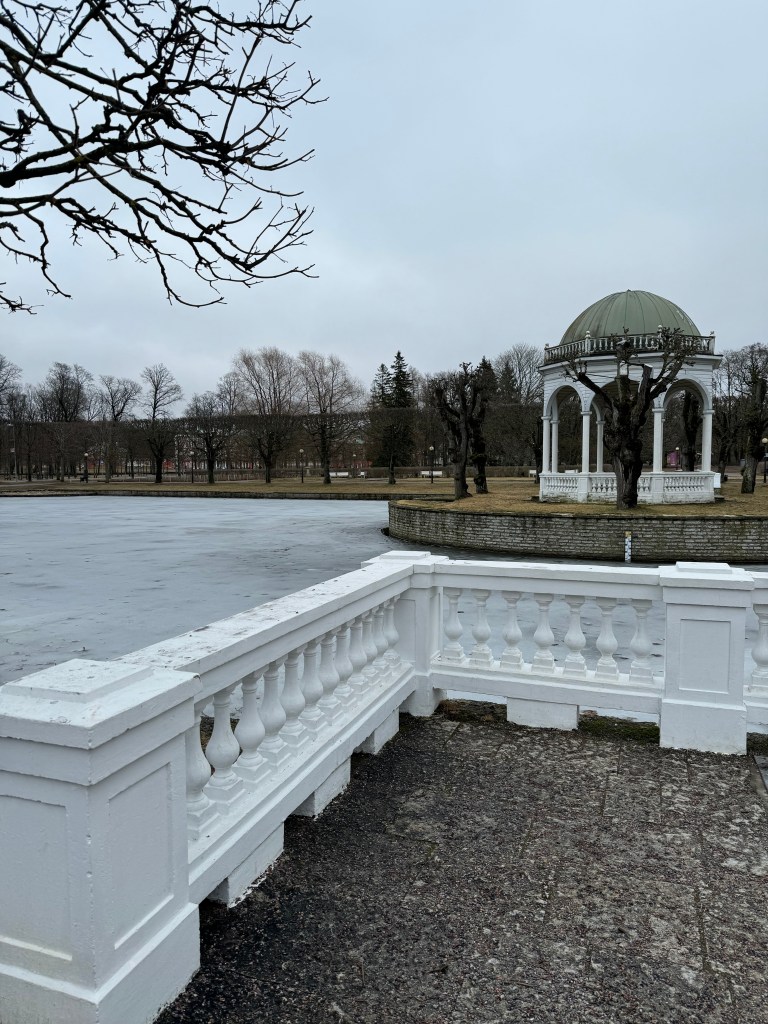

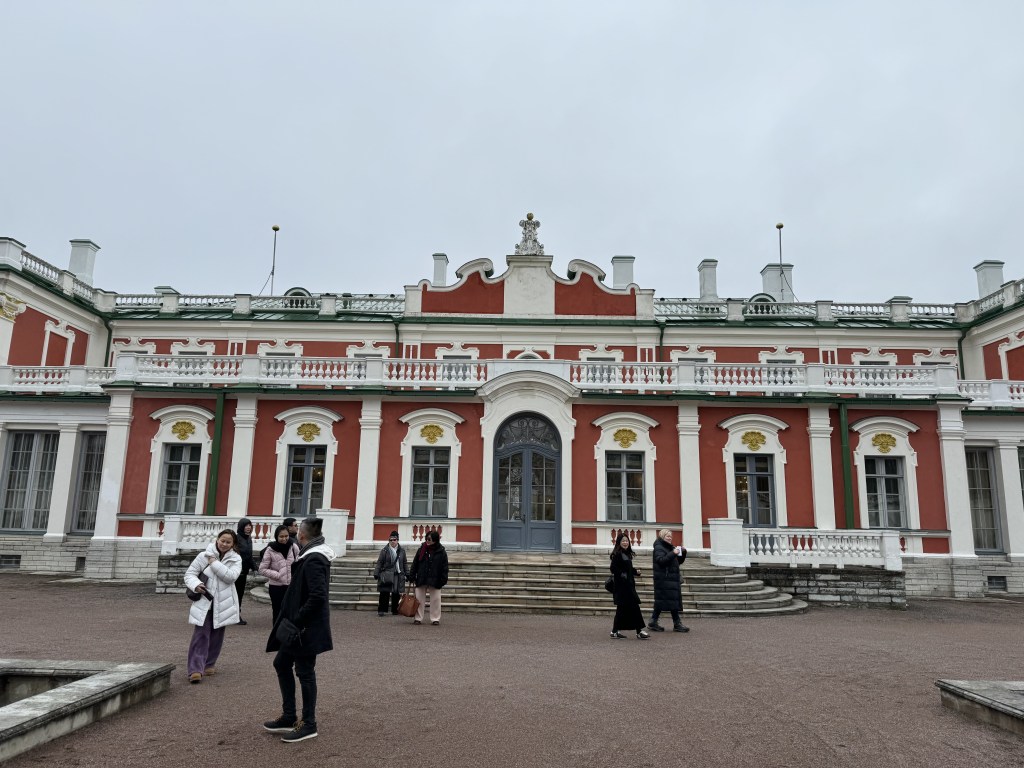
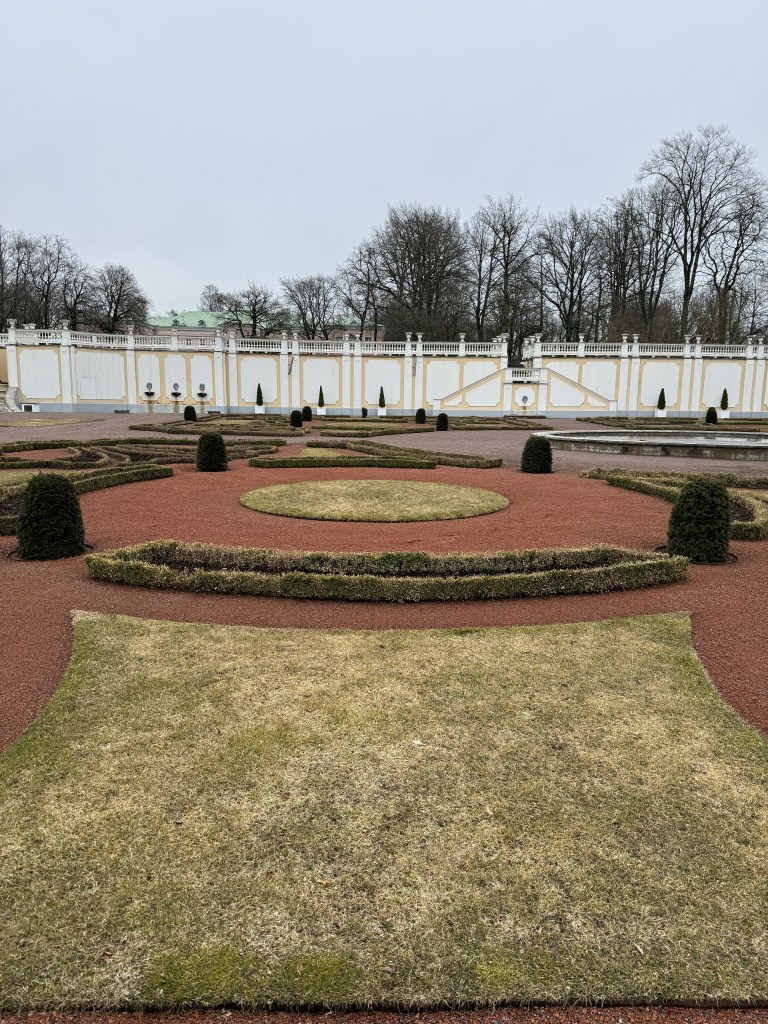
We were brought to the districts of wooden architecture which Tallinn is famous for. We saw and learned about the history of the baroque style of Kadriorg Palace and the park which Peter the Great of Russia presented to his wife. After a little stroll in the garden (unfortunately, it was winter, so we did not have a chance to capture its extravagant beauty), we continued our exploration of the city through the Tallinn Song Festival Grounds, a very important place for the people of Estonia, where the Estonian Song Festival is held every 5 years.
What I learned from Katarina, the Estonia Song Festival is one of the largest choral events in the world and it is listed as a UNESCO Masterpiece of the Oral and Intangible Heritage of Humanity (UNESCO Masterpiece, inscribed together with the song festival of Latvia and Lithuania, collectively known as the Baltic Song and Dance Celebrations). This means, it is a very important intangible cultural tradition in Estonia for demonstrating an outstanding value as a masterpiece of the human creative genius. At the same time, it provides a clear genealogical description of the cultural tradition or cultural history of the community concerned. In this case, the Estonian people. UNESCO also stipulates that any intangible cultural tradition maybe inscribed as a UNESCO Masterpiece if the tradition affirms the cultural identity or if the tradition is a testimony of their valuation of living cultural tradition/s of the cultural communities involved. As per the very passionate story of Katarina, the inclusion of the festival in the list of UNESCO Masterpiece is indubitable.
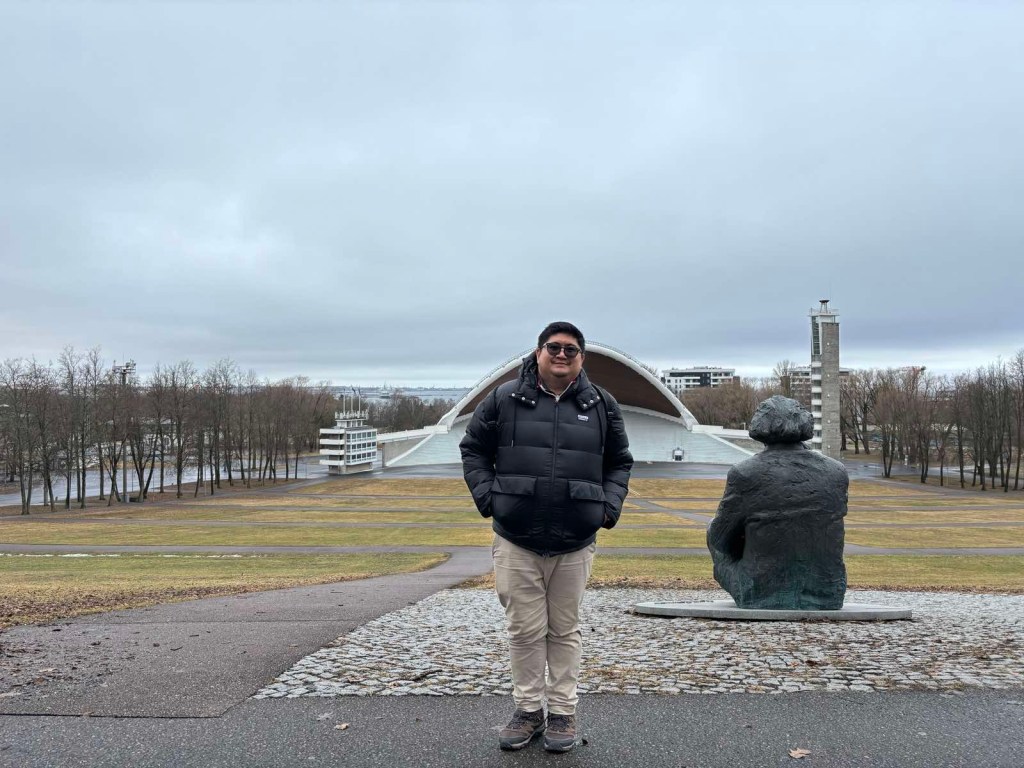
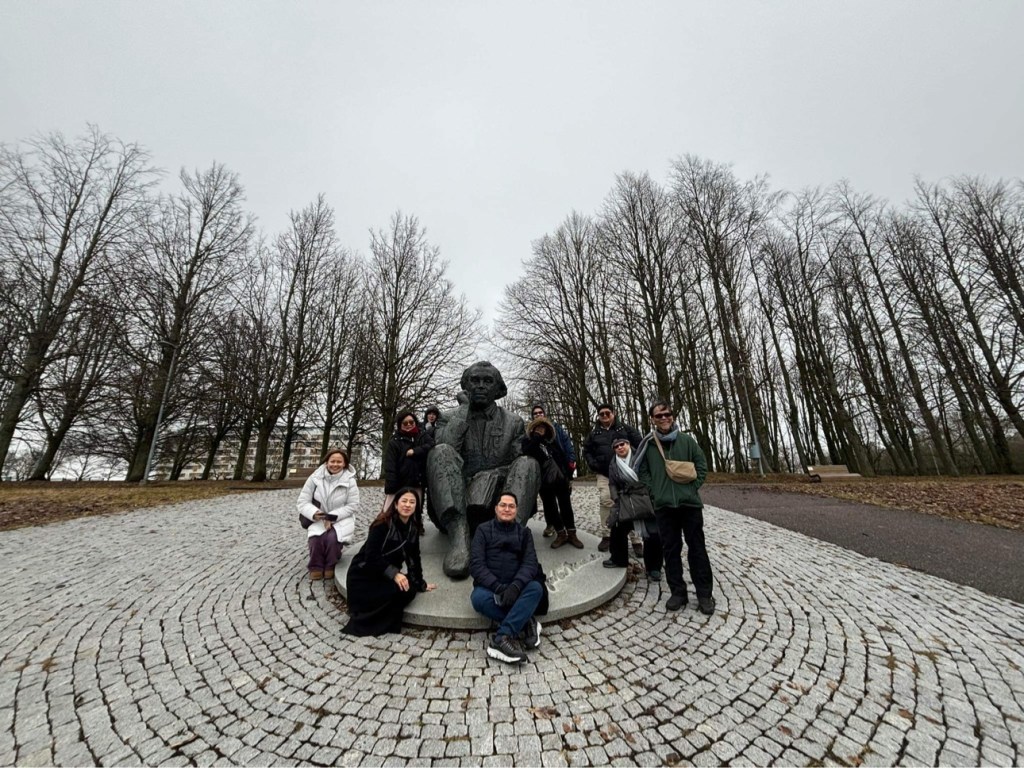

The festival was born side-by-side the nationalist awakening of the Estonian people. Originally held in Tartu in 1869, Johann Voldemar Jannsen is considered the primary brain behind its institution. In the first three festivals only men’s choirs and brass orchestras participated. In 1896, the festival tradition moved to Tallinn. According to UNESCO, choirs and musical ensembles first became institutionalized in Estonia during the eighteenth century. Subsequently, choir singing spread throughout rural and urban areas, spurred by the growing popularity of choral music, singing societies and song festivals in Western Europe. Once the Baltic States gained independence from Russia after the First World War, the celebrations acquired widespread popularity as a means of asserting Baltic cultural identity. In the three countries, special venues and festival sites were constructed to host the events. After the incorporation of the Baltic States into the Soviet Union at the end of the Second World War, the celebrations adapted to the prevailing communist ideology.
Today, the festival is a celebration of Baltic cultural identity and their respective nationalist identity. Communist ideology is no longer the subject of the songs but once in a while, there are nostalgic songs that talk about the relationship of these countries to the then Soviet Union. The festival was also the inspiration of what is known in the Baltic region as the Singing Revolution, a series of singing events from 1987 to 1991 that led to the restoration of independence of the three Soviet-occupied Baltic countries at the end of the Cold War.
 Tanghal Kultura