It’s the time of the year for the United Nations through UNESCO to inscribe new world heritage sites (WHS). The period between July and August is often the World Heritage Convention (WHC).
UNESCO cancelled its usual face-to-face conventions since 2020 due to the global health crisis caused by Covid-19. July last year, UNESCO announced on its website that the 45th WHC would be held face-to-face in 2023 (to be hosted by Saudi Arabia), with the intention of inscribing cultural and natural world heritage sites nominated in 2021 and 2022. This year, the WHC was scheduled in September. Nevertheless, the list of nominated sites are already available on the UNESCO website. I was hoping to see familiar sites, and of course, sites from the Philippines. While there is no nomination from the Philippines, I am super glad to see the Historic City of Yogyakarta to be in the list of sites nominated for inscription as WHS this year.
Yogyakarta has a very significant mark in my heart. Indonesia is my second favorite Southeast Asian country after my home nation of the Philippines. Its cultural diversity reminds me so much of the multi-cultural feature of my home country. Also, it was our (Al and me) favorite destination: Bali, Jakarta, and Yogyakarta. Yogyakarta was the last city Al and I travelled together for our anniversary before his untimely passing in 2020.
The charm of Yogyakarta is magnificent. It is a chaotic metropolitan city as much as it offers a one of a kind serenity. Its cultural landscape inspires the senses to reevaluate modernity and progress. It is highly urbanized but it is embracing its heritage past. In fact, the city is mighty proud of its urban landscape as much as it celebrates its indigenous roots.

The nomination for its WHS status is now titled The Cosmological Axis of Yogyakarta and its Historic Landmarks. According to the available document found on the website, the site includes the Kraton (Palace) Complex and a series of linked landmarks, monuments and spaces located along a six-kilometer-long south-north axis in central Yogyakarta. Also, the site is cited as an exceptional testimony to Javanese civilization and culture, and exhibits an important interchange between diverse belief systems and values. In relation to this, the landmarks are connected spatially, in their design, through rituals, and by the traditional management system of the Sultanate of Ngayogyakarta Hadiningrat.
Landmarks include the Tugu Monument, Sumbu Filosofi Utara, Kepatihan Complex, Beringharjo Market, Inner Complex of the Palace and its Squares, Great Mosque Complex, the Northern Square, the Outer Walls, Gates and Fortifications, Southern Square, Sumbu Filosofi Selatan, Panggung Kapyak Monument, and Tamansari Royal Garden Complex. Of these landmarks, Al and I visited the Inner Complex of the Palace and Tamansari, and we passed by the Tugu Monument along our way to Borabudor, another WHS in Indonesia, in the island of Java.


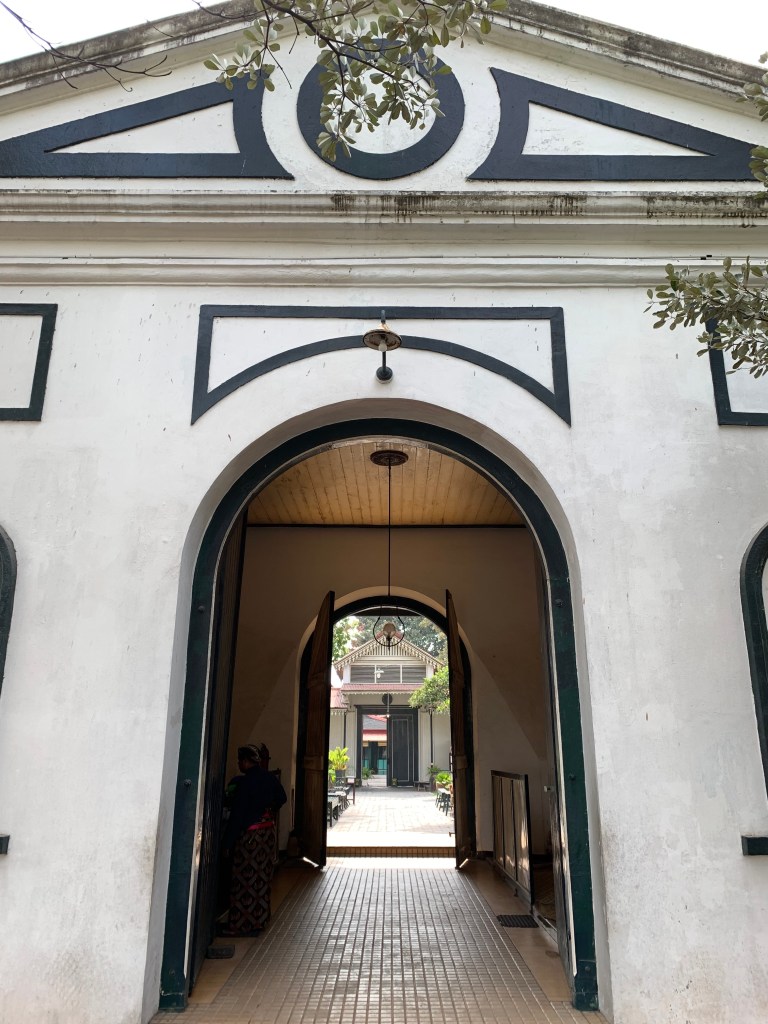
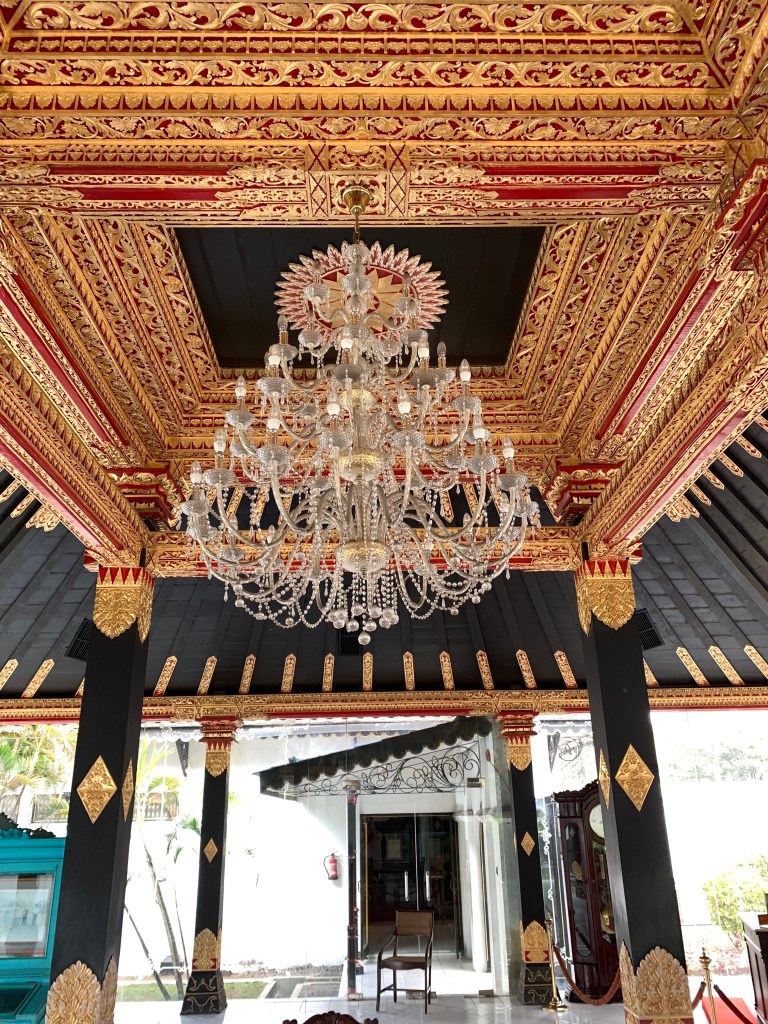
The Palace Complex known as the Keraton in the vernacular was built to be the official residence of the Royal Family. Planted all around the complex are tamarind and Spanish cherry trees, creating a tunnel like walk-way, leading towards the many structures designated as performance spaces and prayer spaces. I am super amazed that the complex has its own structures for wayang performances, for a balinese dance, for a gamelan orchestra, and in between these performance spaces are temple-like structures for different gods and goddesses. This proves how Javanese theatre is performed before mortals and Divine. But of course, the mortals here are not ordinary people. In other words, in the scheme of things, they belong to the higher strata, which may be considered to be closer to the Divine.
My favorite complex is the Tamansari.
Tamansari was the main royal garden complex and was furnished with artificial ponds, smaller gardens, houses, kitchens, mosques, and other buildings. It was built to function as a rest and recreational area as well as a meditation and religious worship area. We were told that it also functioned as a defensive structure for the Sultanate of Ngayogyakarta Hadiningrat. There were fortresses within the complex and hidden underground tunnels.

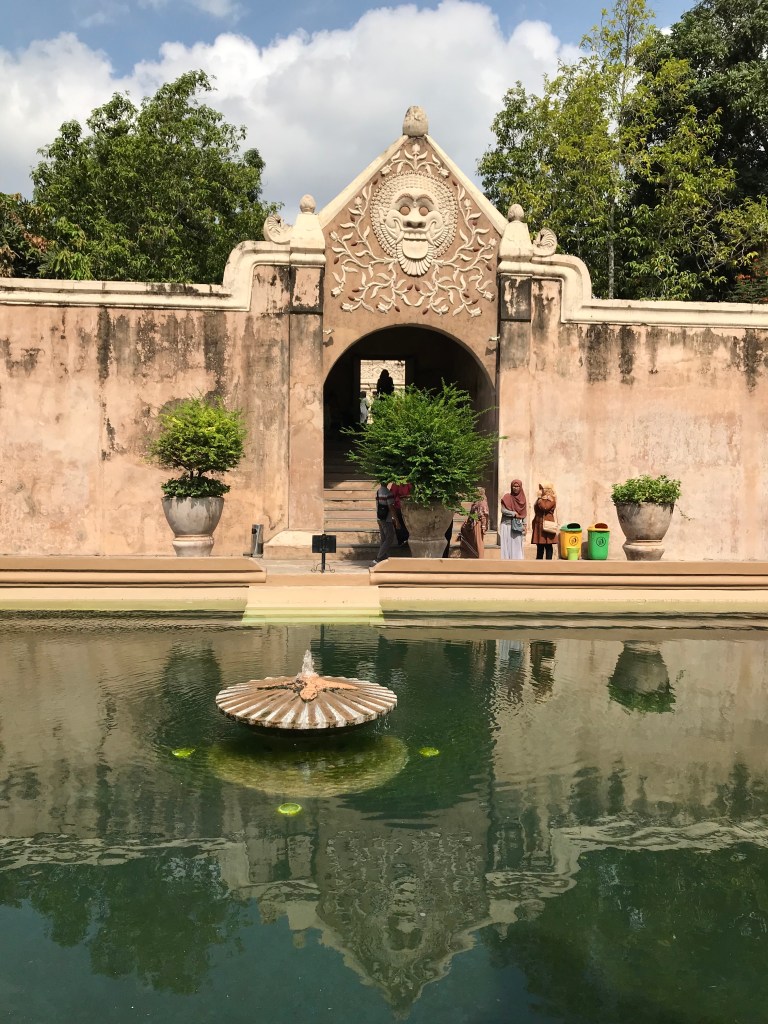

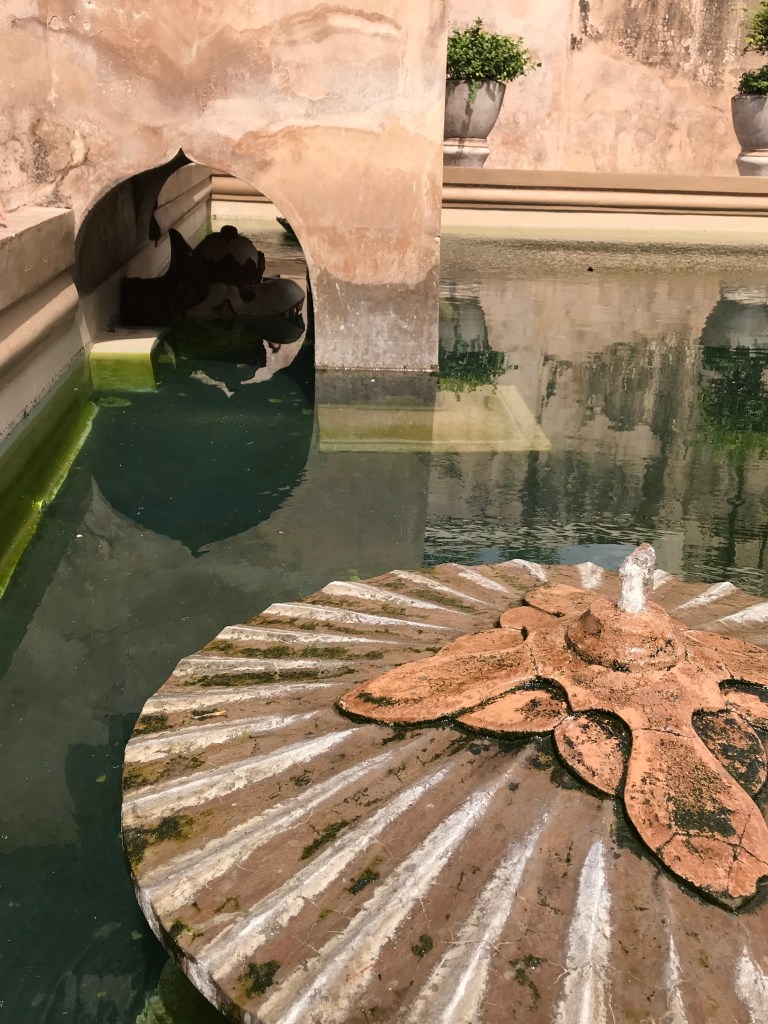


Today, the Tamansari no longer functions as a garden for the Sultan or the ruler of the city. However, it still has ongoing significance to the entire city. Offerings are made the main gates of Tamansari each year, as people’s prayers for the protection of the city.
In September, the fate of Yogyakarta will be in the hands of the members of the WHC. I pray that the spirit of Khalik, Javanese God of Creation, guide the decisions of the WHC and include The Cosmological Axis of Yogyakarta and its Historic Landmarks in the UNESCO World Heritage Sites list.
The last photograph I had with Al was taken in front of the south gate. It was a selfie and it was Al who took the photo. I remember him remarking that we needed to have our photograph taken with one of the most beautiful and most ornamentally-detailed gates we ever entered and exited. I am not a fan of taking selfies, but so glad that I said yes to this selfie with the love of my life.
 Tanghal Kultura