Finally, I have been to Egypt! I told my friends. Too excited, they anticipated stories about the Sphinx and the Pyramids but instead I recalled my Sinai experience first and thought it would also excite them. Did it excite them? Well, I think it did.
From Eilat in Israel, the first Egyptian city to welcome a traveler is Taba. One important fact I learned from this border crossing is this: while Egypt is an African nation, stepping in Taba does not mean, stepping in Africa already. We crossed the border separating two nations but not the continental plates dividing Asia and Africa. In short, the traveler is still in Asia as soon as their passport is stamped by the Taba immigration officer.
Anyway, Taba is located in the Sinai Peninsula, between the Mediterranean Sea to the north and the Red Sea to the south. To the people in the Middle East, it is a land bridge between Asia and Africa. For enthusiasts in culture and religion, the interesting part about this peninsula is that the current name Sinai in modern times is due to the assumption that a mountain near Saint Catherine’s Monastery is the biblical mountain and one of the most religiously significant places for many religions including Catholicism, Christianity, and Islam.
I wanted to join my fellow travelers in their Mount Sinai trek. But decided not to for two reasons. First, I was too tired – those who decided to trek to the top of the mountain would leave at 12 midnight. Second and most important, I thought the six to eight hours of trekking was too much for me. I did not think I would be able to climb the summit, considering the guide reminded us of the mountain’s slippery treks and steep climbs.
My family and I decided to see the Sinai Desert and interact with the bedouins. Aside from the interaction, we were so happy to join this desert trekking and had a chance to experience the spectacular picture-perfect scenery. We were told that once upon a time, the entire area we were trekking was part of the Red Sea.


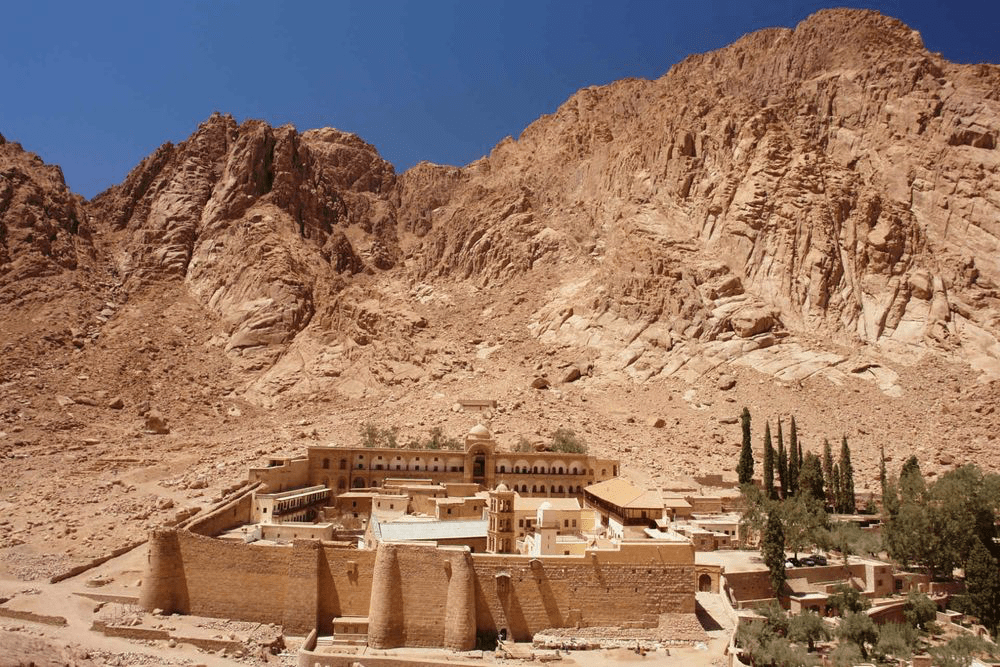
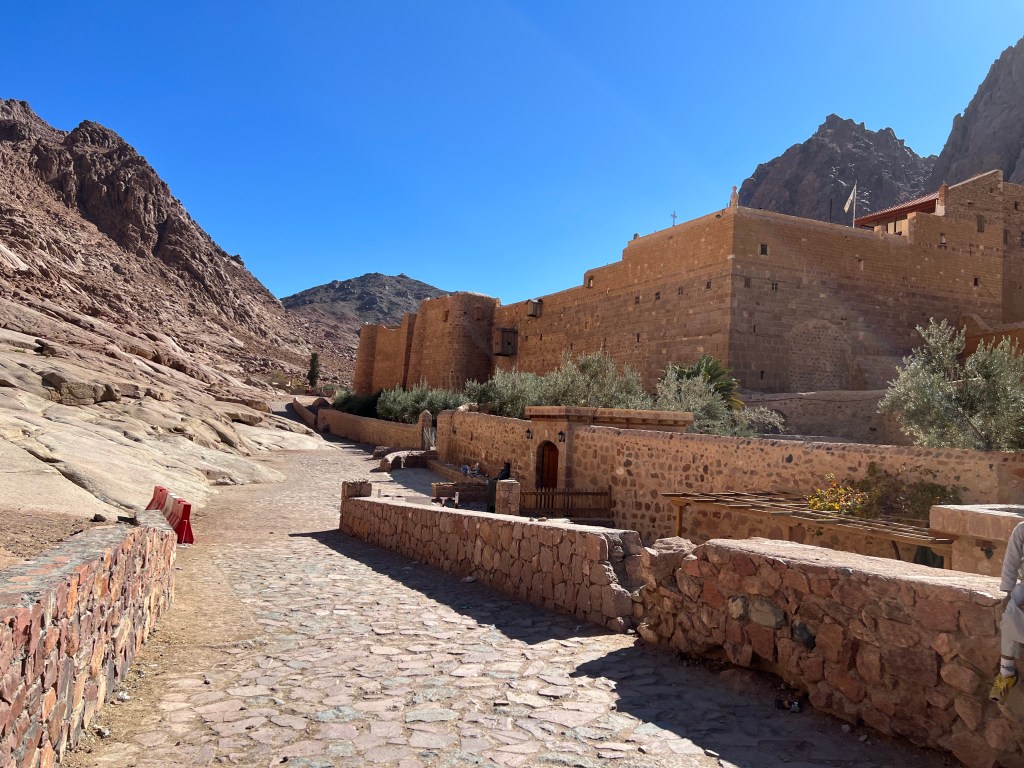
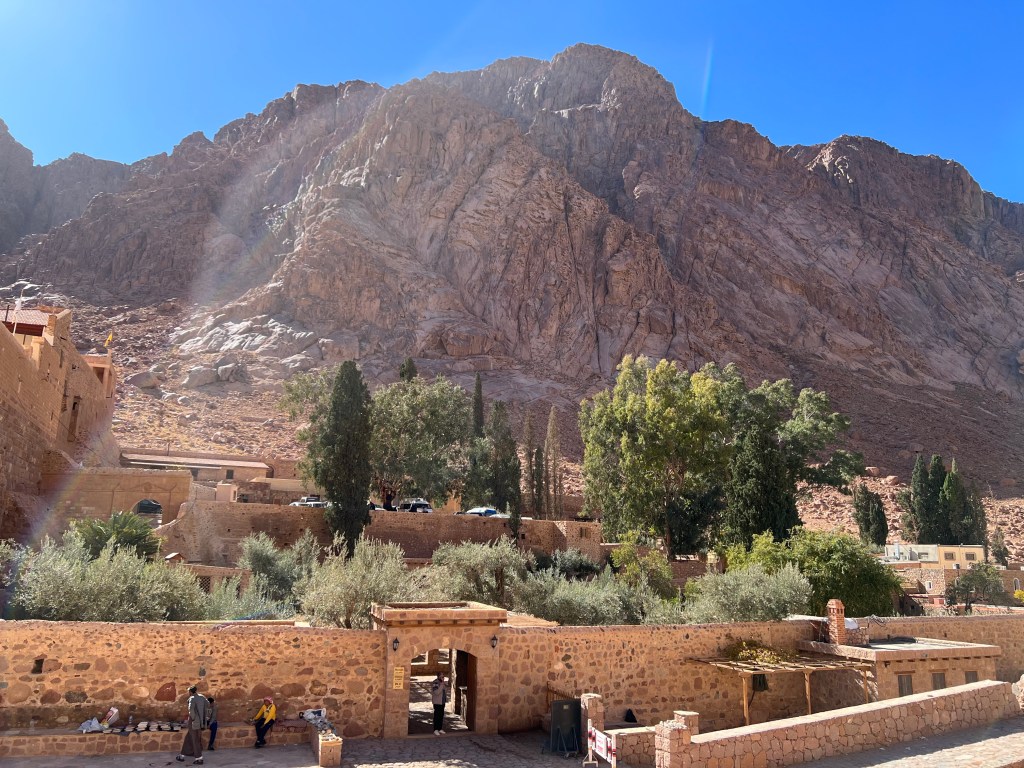
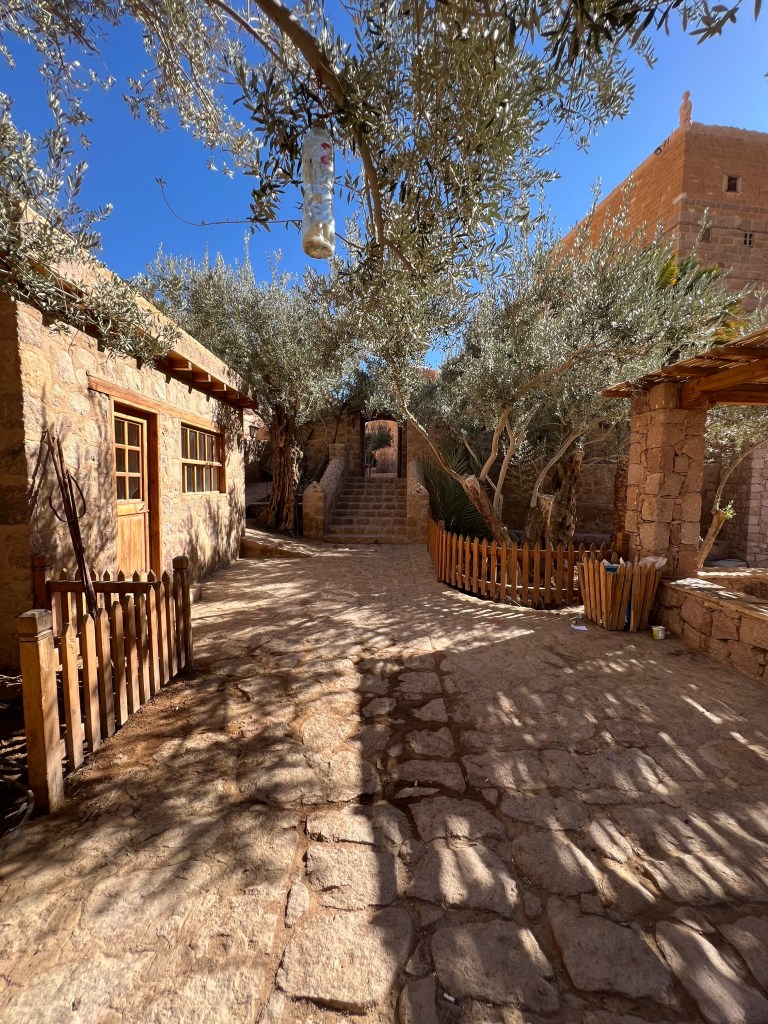
But the highlight of this Sinai experience is the St Catherine’s Monastery, an ancient fortress located in a desert between Jebel Musa and the Jebel al-Dayr. According to our guide, the monastery’s church was built by the order of Roman Emperor Justinian in 527. There was a service when we arrived, so I was not able to see it. However, our guide informed us that it is basilica in form and it features great granite columns supporting the nave. I wish this would help in visualizing the grandiosity of the church.
Some other artifacts / treasures found inside the church but did not have a chance to see: a 6th-century mosaics portraying the Transfiguration of Christ and side aisles lined with chapels decorated with ancient and modern icons. There is also a small alcove in the sanctuary opens into the Chapel of the Burning Bush, where God spoke to Moses from a flaming shrub. I thought I captured it but my guide was not sure it was the flaming shrub.
As the world’s oldest Christian monastery still in use for its initial function, the monastery was listed as a UNESCO World Heritage Site in 2002 for the following criteria:
- The architecture of St Catherine’s Monastery, the artistic treasures that it houses, and its domestic integration into a rugged landscape combine to make it an outstanding example of human creative genius.
- St Catherine’s Monastery is one of the very early outstanding examples in Eastern tradition of a Christian monastic settlement located in a remote area. It demonstrates an intimate relationship between natural grandeur and spiritual commitment.
- Ascetic monasticism in remote areas prevailed in the early Christian church and resulted in the establishment of monastic communities in remote places. St Catherine’s Monastery is one of the earliest of these and the oldest to have survived intact, being used for its initial function without interruption since the 6th century.
- The St Catherine’s area, centered on the holy mountain of Mount Sinaï (Jebel Musa, Mount Horeb), like the Old City of Jerusalem, is sacred to three world religions: Christianity, Islam, and Judaism.


 Tanghal Kultura